
Reviewed · OSLO TOURS
Oslo City Walks: Historic River Walk
Akerselva gives you a side of Oslo that museums and cruise stops often miss. This two-hour walk follows the river from Grønland’s industrial past toward parks, waterfalls, bridges, and Mathallen, showing how work, pollution, nature, and city life share one narrow corridor. I like the Beier Bridge waterfall and the way the route links Oslo’s past to its present.
I also like that an authorized Oslo guide leads the walk. The route is practical for a first afternoon in the city, and the stop at Mathallen adds a useful food break without forcing you to buy anything. The main consideration is simple: this is a walking tour, not a food tour, so the $52 price makes the most sense if you value local context and guidance.
What makes this walk worth your time
- Akerselva in one compact route: See the river as both a natural corridor and the cradle of Oslo’s industrial growth.
- A clear city transformation: Grønland, old factories, green paths, and modern culture fit into one short walk.
- Two memorable river sights: The waterfall at Beier Bridge and the storybook Fairytale Bridge give the route visual variety.
- Mathallen without a fixed meal: Browse Norwegian and international food on your own budget.
- A guide-led experience: An authorized Oslo guide explains the places you pass instead of leaving you to guess at their importance.
- Easy planning: The tour lasts about two hours, begins at Oslo S, and is offered in English or Norwegian.
Following Akerselva from Oslo S
The walk begins at 14:00 in front of the Oslo Visitor Center inside Østbanehallen at Jernbanetorget 1. This is a sensible meeting point because Oslo S is the city’s main railway station, and the Visitor Center is easy to locate inside the station complex.
Arrive about 10 minutes early. You will meet an authorized Oslo guide and begin a route that uses Akerselva as its thread. The river is often described as Oslo’s green lung, but the more useful way to think of it is as a line through the city’s story. It connects areas that feel different from one another, while the water quietly ties them together.
This setting also makes the tour a good first or second activity in Oslo. You are not being carried from one isolated sight to another by vehicle. Instead, you walk through changing parts of the city and get a sense of how they relate.
The starting area near Oslo S is urban and busy. That contrast matters. Within the same outing, you move from a central transport hub toward river paths, trees, bridges, and water. I like tours that help you understand a city’s shape, and this one does that without taking a full day.
More City Tours in Oslo
- Oslo: City Sightseeing Hop-On Hop-Off Bus Tour
★ 3.6 · 724 reviews - Oslo: Grand City Sightseeing Tour by Bus with Fjord Cruise
★ 4.6 · 647 reviews - Oslo Combo Tour: Grand City Tour and Oslo Fjord Cruise
★ 4.5 · 555 reviews
Grønland and the story of industrial Oslo
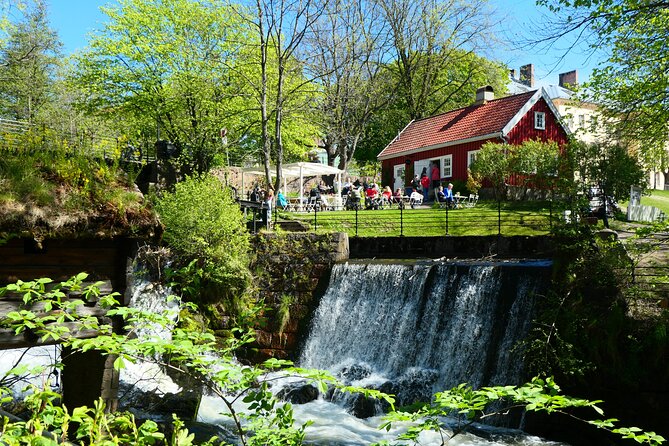
One of the strongest parts of the route is the look at Grønland. The area was formerly industrial, but it has become a cultural and recreational part of the city. That change is not just a background detail. It gives the guide a chance to explain how Oslo has shifted from a working city shaped by factories and river power to a modern capital that makes room for parks, food, and leisure.
The industrial story is tied closely to Akerselva. Rivers supplied water and power, but they also carried waste. Akerselva was once polluted, which makes its later recovery especially important. Your guide explains the environmental work that helped turn the river into a living ecosystem with plant and animal life.
That topic gives the walk more weight than a pleasant stroll beside water. You are seeing a real example of urban repair. The river is not presented only as pretty scenery. It is also evidence that city waterways can change when people take responsibility for them.
I find this kind of explanation useful because it helps you notice details you might otherwise pass without thought. Green space beside a river can look natural, but in a city it often reflects years of planning, cleanup, and public effort. The route lets you connect the visible parks and trails with that larger story.
The waterfall at Beier Bridge
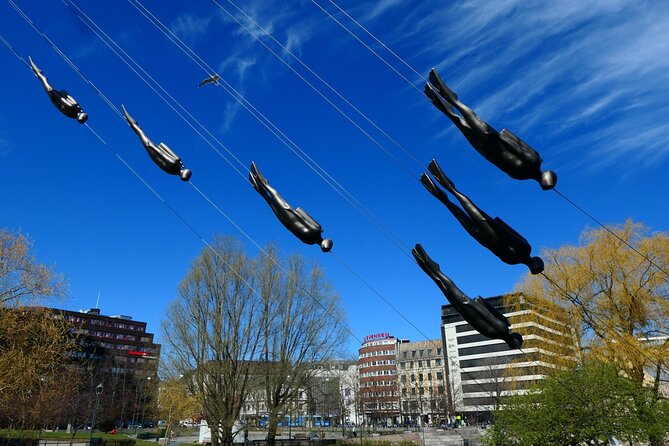
The waterfall at Beier Bridge is one of the clearest visual stops on the walk. A waterfall adds sound and movement to the route, and it breaks up the slower rhythm of walking beside a river. This is the sort of place where you can pause, take photographs, and listen while the guide explains its place in the river corridor.
The stop also reinforces the point that Akerselva is not merely a narrow strip of water passing through Oslo. It has changing levels, flowing sections, paths, bridges, and natural features. The city’s industrial past depended on this water, while modern Oslo treats the same river as a place for walking and contact with nature.
You should keep your expectations sensible. The information provided does not describe the length of the stop or promise a private viewing area. Think of Beier Bridge as a scenic point along a guided walk, not a major attraction with a long visit built around it.
Still, it is an important part of the route. The best city walks often depend on a handful of strong moments rather than a long list of formal sights. The waterfall gives you one of those moments.
Crossing Oslo’s Fairytale Bridge
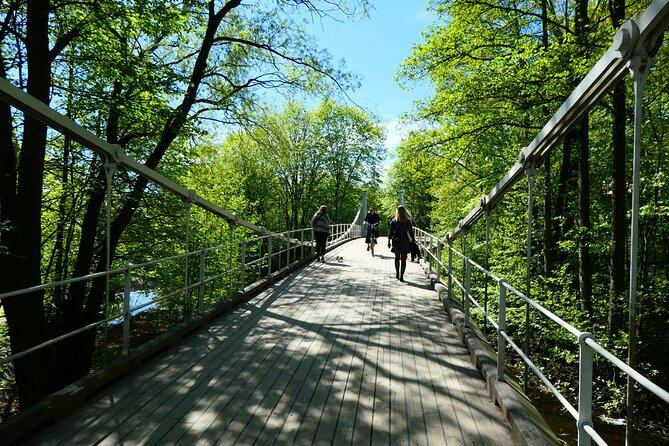
The Fairytale Bridge brings a lighter note to the route. Its name suggests a more playful side of Oslo, and crossing it gives the walk a change of mood after the industrial history and environmental discussion.
Bridges matter on a river walk because they change your view. From the path, you follow the water. From a bridge, you can look along it, across it, and back toward the route you have taken. The Fairytale Bridge is therefore more than a crossing. It is part of the visual rhythm of the outing.
I like that this tour includes both the serious and the charming. You hear about pollution, industry, and environmental work, then cross a bridge with a storybook name and continue through greenery. That mix keeps the experience from feeling like a lecture.
The guide’s role is important here. Without context, a bridge can be a quick photo stop. With an authorized local guide, you have a better chance of understanding why it belongs in the story of Oslo’s river corridor. The company lists English and Norwegian as the tour languages, so check your selected departure when booking if language matters to you.
More Historical Tours in Oslo
- Oslo: Historic Myths & Legends Evening Walking Tour
★ 4.8 · 408 reviews - Oslo: History, Art and Secrets Tour
★ 4.7 · 62 reviews - Oslo City Walks – Historic River Walk
★ 5.0 · 31 reviews - A Well Balanced History and Food Tour with Focus on the Scandinavian Kitchen
★ 4.5 · 29 reviews
Green paths and a repaired river
After the urban and industrial sections, the route continues through lush greenery and nature trails along Akerselva. This is where the tour’s central contrast becomes most clear. Oslo’s industrial past and its modern outdoor culture are not separated into distant parts of the city. They sit beside one another.
You can expect a calm walk in places, with the river and vegetation providing a break from central Oslo streets. The route is not presented as a demanding hike, but it is still a two-hour walk. Good walking shoes are recommended, and you should dress for the weather. Norwegian conditions can change, and the walk continues outdoors rather than moving between enclosed attractions.
The green sections are valuable for another reason. They show that a city visit does not have to mean choosing between culture and nature. Here, the two are linked. You learn about industrialisation while walking through spaces that now support plants, animals, and recreation.
The details of the trail surface, elevation, and accessibility are not provided, so you should not assume the route suits every mobility need. If those details are important to you, ask the operator before booking. For most people who are comfortable with a normal two-hour city walk, the main preparation is footwear and weather-ready clothing.
Mathallen, Oslo’s food destination
The stop at Mathallen adds a useful taste of contemporary Oslo. It is described as a major food destination with Norwegian and international delicacies, giving you a chance to see the city’s food culture in one place.
Food halls work well during a walking tour because you can choose your own level of spending. You might browse, buy a small snack, or simply look around. Food is not included in the $52 price, so set aside extra money if you want to eat.
That separate food cost is worth noting when you judge the tour’s value. This is not a package with tastings or a fixed lunch. You are paying for the guided walk and the interpretation of Oslo’s history, with Mathallen used as a stop where you can explore independently.
I like this arrangement for a short city experience. A fixed meal can make a two-hour tour feel rushed or limit your choices. At Mathallen, you can decide what fits your appetite and budget. The drawback is that the stop may feel brief if you want time to sample several foods. The available information does not state how long you stay there, so treat it as part of the route rather than a full food-focused visit.
What the $52 price really covers
At $52 per person, this is not the cheapest way to walk beside Akerselva. You can walk through Oslo without a guide and spend nothing on the route itself. The value comes from learning what you are seeing, finding places you might overlook, and following a prepared route through several parts of the city.
That value depends on your travel style. If you enjoy reading signs, using a map, and making your own route, the price may feel high for two hours. If you want a local voice to connect Grønland, Akerselva, Beier Bridge, the Fairytale Bridge, and Mathallen, the cost is easier to justify.
The tour is also efficient. In two hours, you get history, nature, city planning, a scenic waterfall, bridges, and a food stop. You do not need to arrange transport between each point, and transport is not included because the experience is built around walking.
I would see it as a focused orientation walk rather than a full survey of Oslo. It can help you decide where to return later, especially Mathallen or parts of the river route. It may also be a useful choice early in a stay, when you want a better sense of the city before exploring on your own.
The guide makes or breaks the experience
The information supplied does not name the individual guides, so you cannot choose a particular person in advance. The experience is led by an authorized Oslo guide, with tours available in English and Norwegian.
The strongest praise in the available feedback focuses on the guide’s kindness, engagement, sympathy, and competence. One short comment simply highlights the guide’s kindness, while another describes the guide as especially committed, pleasant, and capable. That is encouraging because this route depends on explanation more than on formal attractions.
A guide can turn a polluted river into a lesson about environmental recovery, and an old industrial district into a way to understand Oslo’s growth. A less engaged guide would leave you with a pleasant walk but less sense of why the route matters.
The Spanish-language feedback also points to the value of discovering Oslo’s industrial side and enjoying the views, while noting that a good guide is essential. That is exactly the right way to judge this outing. The scenery helps, but the interpretation is the main product.
Timing, comfort, and practical planning
The scheduled start is 14:00, and the walk lasts approximately two hours. That timing leaves your morning open and places the tour in the afternoon, though you should check the available date and starting time when booking.
Meet at the Oslo Visitor Center inside Østbanehallen, not simply somewhere outside Oslo S. The full address is Jernbanetorget 1, 0154 Oslo. Arriving 10 minutes early gives you time to find the center and locate the guide without starting the outing in a hurry.
Wear shoes suited to walking. The route includes city streets, river paths, bridges, parks, and nature trails, but the available details do not specify the exact surface throughout. Dress for the forecast, since the activity takes place outdoors.
Food and transport are not included. You should also remember that the Mathallen stop is an opportunity to buy food, not a supplied meal. The booking terms allow free cancellation up to 24 hours before the activity for a full refund, and you can reserve now and pay later, which helps if your Oslo plans are still shifting.
Who should book the Akerselva walk
I would recommend this tour to you if you want history explained while you walk, rather than delivered inside a museum. It suits first-time visitors who want an introduction to Oslo’s changing neighborhoods and people who enjoy seeing how environmental work affects everyday city life.
It is also a good fit if you like a mix of scenery and urban detail. The river, waterfall, bridges, and greenery keep the outing visual, while Grønland and the industrial story give it substance. Mathallen makes the route appealing to anyone who wants a food stop without committing to a full food tour.
You may want to skip it if you dislike guided walks, have limited walking ability, or mainly want a long, leisurely meal at Mathallen. The $52 cost is harder to defend if you do not care about local history or prefer exploring at your own pace.
Should you book this Oslo river walk?
Book it if you want a compact, guided explanation of how Oslo grew around Akerselva and later worked to restore it. The waterfall at Beier Bridge, the Fairytale Bridge, Grønland, green river paths, and Mathallen give the two hours a good range of sights and subjects.
Skip it if your main goal is free time, extensive food tasting, or a self-guided stroll. For everyone else, this is a thoughtful way to see Oslo beyond the postcard center. The best reason to book is not one single sight. It is the connection between the river’s industrial past and the city life built around it today.
FAQ
Where does the Historic River Walk start?
The tour starts in front of the Oslo Visitor Center inside Østbanehallen at Jernbanetorget 1, 0154 Oslo.
What time does the tour start?
The stated start time is 14:00. Check availability for the date you want to book.
How long does the walk last?
The walk lasts approximately two hours.
What language is the tour offered in?
The live tour guide speaks English or Norwegian.
Is the guide authorized?
Yes. The walk is led by an authorized Oslo guide.
Is food included in the price?
No. Food is not included, although the route stops at Mathallen, where you can explore Norwegian and international food.
Is transport included?
No. Transport is not included. The experience is a walking tour.
What should I wear?
Wear good walking shoes and dress according to the weather.
How early should I arrive?
You should arrive at the departure point 10 minutes before the tour begins.
Can I cancel for a full refund?
Yes. You can cancel up to 24 hours in advance for a full refund. You can also reserve now and pay later.
More Walking Tours in Oslo
- Oslo: Best of Oslo Walking Tour
★ 4.5 · 458 reviews - Oslo: Guided Walking Tour of Central Oslo
★ 4.7 · 438 reviews - Taste of Oslo Walking Tour
★ 4.5 · 282 reviews - Central Oslo Guided Walking Tour with Local Guide
★ 4.5 · 278 reviews
Recently added around Oslo
- The Vigeland Park in Oslo: Insta-Perfect Walk with a Local★ 5.0 · 3 reviews
- Oslo: Best of Oslo Walking Tour and Hop-on Hop-off Bus Tour★ 3.7 · 3 reviews
- Best of Oslo: Walking Tour with a local guide★ 4.6 · 3 reviews
- Afternoon Tea and Classic Concert on the Fjord★ 4.5 · 3 reviews
- Lake walk and campfire★ 4.7 · 3 reviews
- Maral Kunst : Jewelry Bar Experience (Jewelry Making)★ 5.0 · 3 reviews
- Oslo: Yoga & Hiking with a dog★ 5.0 · 3 reviews
- Oslo: Skjennungstoppen Wildlife Forest Hiking Tour★ 5.0 · 3 reviews
Oslo Tours, compared.

Scenic Fjord Cruise with Audio Guide Commentary
Read our review →

Guided Sightseeing Fjord Cruise on Premium Silent Boat
Read our review →
Browse the lists this tour appears in