
Reviewed · OSLO TOURS
Oslo: City Sightseeing Hop-On Hop-Off Bus Tour
Oslo’s hop-on hop-off bus is most useful as a first look at a spread-out city. In one 90-minute loop, you can connect the Royal Palace and Karl Johans Gate with Frogner Park, Bygdøy’s museum cluster, the harbor, the Opera House, and MUNCH without sorting out several local bus routes.
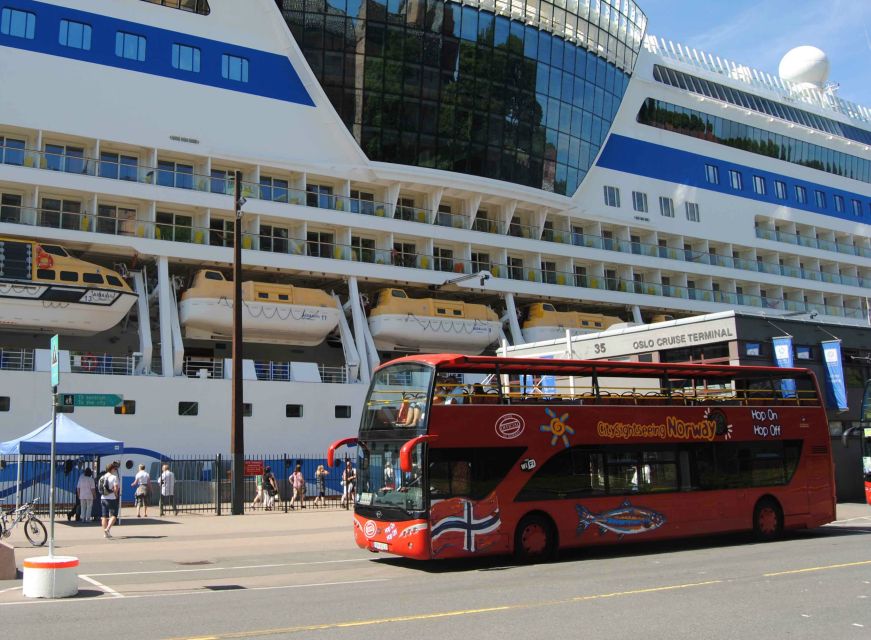
I like the well-placed stops, especially the one near the cruise terminals, and the 24 or 48-hour validity, which lets you use the bus as sightseeing and transport. The open top gives you broad city views, while the audio guide adds useful context in eight languages.
The main catch is timing. Buses run about every 30 minutes, but service starts at 10 a.m. and the last departure from the National Theatre is at 4 p.m. On a crowded or rainy day, waiting, traffic, and limited operating hours can cut into your sightseeing.
Key points to know before you board
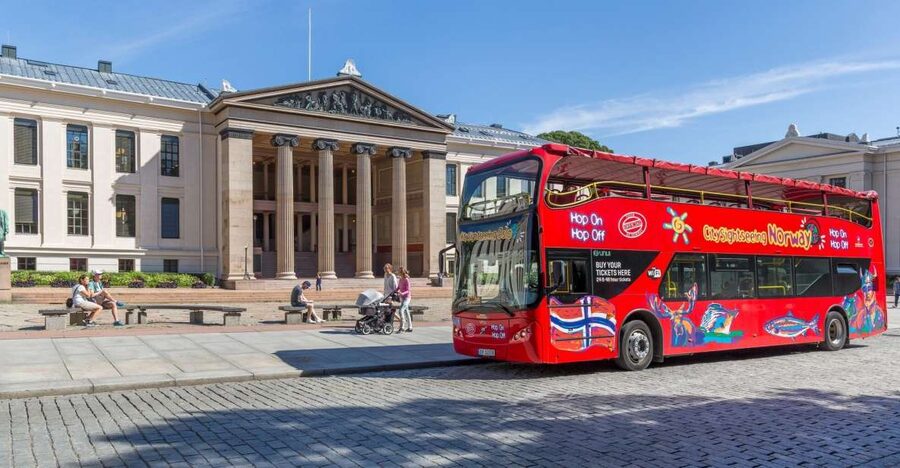
- A 90-minute loop links Oslo’s main sightseeing zones: You can see the central city, Frogner, Bygdøy, the harbor, and Bjørvika in one circuit.
- Bygdøy is the key stop area: The Viking Ship Museum, Fram Polar Ship Museum, Kon-Tiki Museum, Maritime Museum, and Norwegian Museum of Cultural History are grouped around the route.
- Cruise passengers get especially useful access: Stops serve Oslo Cruise Terminal, Color Line Terminal, Filipstad Cruise Terminal, and the Go Nordic Cruiseline ferry port.
- The pass works for a full 24 or 48 hours: It is not limited to one calendar day, so your start time matters.
- Eight audio languages are included: Choose English, Spanish, German, French, Chinese, Italian, Dutch, or Japanese.
- The bus is better for orientation than deep sightseeing: Attraction admission is not included, and the short operating window rewards a carefully planned route.
Start at the National Theatre and get your bearings
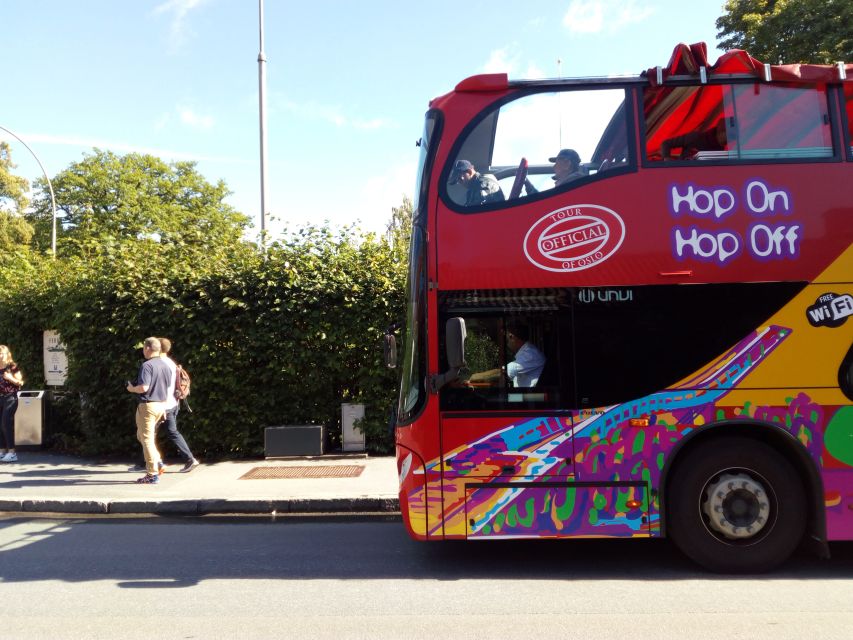
The main boarding point is at the National Theatre on Karl Johans Gate. This puts you close to the Royal Palace, the city’s grand central avenue, and several of Oslo’s most useful tram and rail connections.
The stop can be a little hard to spot. Look for the bus near the National Theatre rather than assuming it will be directly on the most obvious part of the square. You can also board at any designated stop, but starting at Stop 1 gives you the best chance of finding a seat and hearing the full introduction.
The first bus leaves at 10 a.m. and the last departure from Stop 1 is at 4 p.m. The loop itself takes about 90 minutes, and buses are scheduled roughly every 30 minutes. That schedule sounds generous, but it leaves little room for a long museum visit late in the day.
For a first ride, I would stay aboard for most or all of the loop. Use the audio guide to get a basic sense of Oslo’s layout, then decide where to get off on the next circuit. This works especially well if you arrive in the morning and plan to use the bus again after lunch.
More City Tours in Oslo
- Oslo: Grand City Sightseeing Tour by Bus with Fjord Cruise
★ 4.6 · 647 reviews - Oslo Combo Tour: Grand City Tour and Oslo Fjord Cruise
★ 4.5 · 555 reviews - City Sightseeing Oslo Hop-On Hop-Off Bus Tour
★ 3.0 · 455 reviews
The Royal Palace, Karl Johans Gate, and central Oslo
The National Theatre stop serves three central sights: the theatre itself, the Royal Palace, and Karl Johans Gate. This is the best starting point if you want Oslo’s formal city center before heading toward the museums.
The Royal Palace is the official home of Norway’s present monarch and was also connected with the Norwegian and Swedish King Charles III. From the bus, you get the setting and exterior view, but palace entry is not included in the ticket.
Karl Johans Gate is Oslo’s main ceremonial street, stretching through the center toward the Royal Palace. It gives you a quick sense of the city’s scale and public life. If you get off here, you can walk around central Oslo before rejoining the route at the same stop.
The Ibsen Museum is also highlighted along this central section. It is devoted to the life and work of the 19th-century Norwegian playwright and poet Henrik Ibsen. The bus gives you a practical way to connect it with the palace and theatre area, but allow extra time if the museum is a priority.
Frogner Park and the Vigeland sculptures

The Frogner Park and Vigeland Sculpture Park stop is one of the route’s strongest reasons to get off. Vigeland is known for its large collection of sculptures by Gustav Vigeland, arranged through the park in a setting that is easier to appreciate on foot than from a moving bus.
The route may pass this area on the loop, but passing by is not enough if you want to see the sculptures properly. Get off, walk through the park, and plan to spend more time here than the 30-minute bus interval allows. If you need to return quickly, check the position of the next bus before wandering too far from the stop.
Oslo Museum is also connected with this stop. That makes Frogner a good choice for you if you want a mix of outdoor art and city culture without crossing to Bygdøy. The park also gives you a break from sitting on the bus, which can make a full sightseeing day feel less tiring.
Bygdøy’s museums, one stop cluster at a time
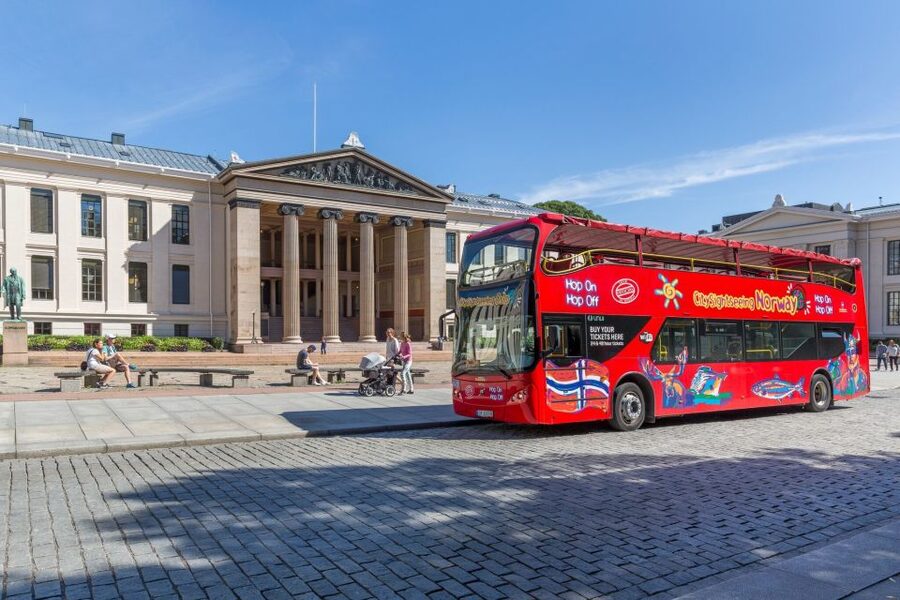
The bus route is particularly useful for Bygdøy, the museum area across the harbor from central Oslo. Instead of arranging separate transport between several museums, you can use the bus to reach the district and move between its main attractions.
The Norwegian Museum of Cultural History is the first major stop in this group. It presents Norwegian cultural heritage, and the setting makes it a natural pairing with the maritime museums nearby. The bus stop is useful, but museum admission is extra.
The Viking Ship Museum is listed on the route, along with the Fram Museum, the Kon-Tiki Museum, and the Norwegian Maritime Museum. The repeated appearance of Bygdøy stops in the route details reflects how important this area is to the tour.
You should not try to see every museum during one short stop. Pick one or two based on your interests, then use the bus for the next section of the route. The Viking Ship Museum suits you if early Scandinavian seafaring interests you. The Fram Museum focuses on polar exploration, while the Kon-Tiki Museum covers Thor Heyerdahl’s famous expeditions. The Norwegian Maritime Museum gives you a broader connection to Norway’s seafaring past.
The provided information does not promise entry to any of these museums, so budget separately for admission. Discounts on attractions are included with the bus ticket, which may improve the overall value if you plan to visit more than one participating site.
More Hop-On Hop-Off Tours in Oslo:
- Oslo: 24 or 48-Hour Hop-On Hop-Off Sightseeing Bus Ticket
★ 4.1 · 1,470 reviews - Oslo Shore Excursion: City Sightseeing Oslo Hop-On Hop-Off Bus Tour
★ 3.0 · 121 reviews - Oslo: Best of Oslo Walking Tour and Hop-on Hop-off Bus Tour
★ 3.7 · 3 reviews - Geiranger: City Sightseeing Hop-On Hop-Off Bus Tour
★ 3.7 · 546 reviews
Cruise terminals and the harbor stops
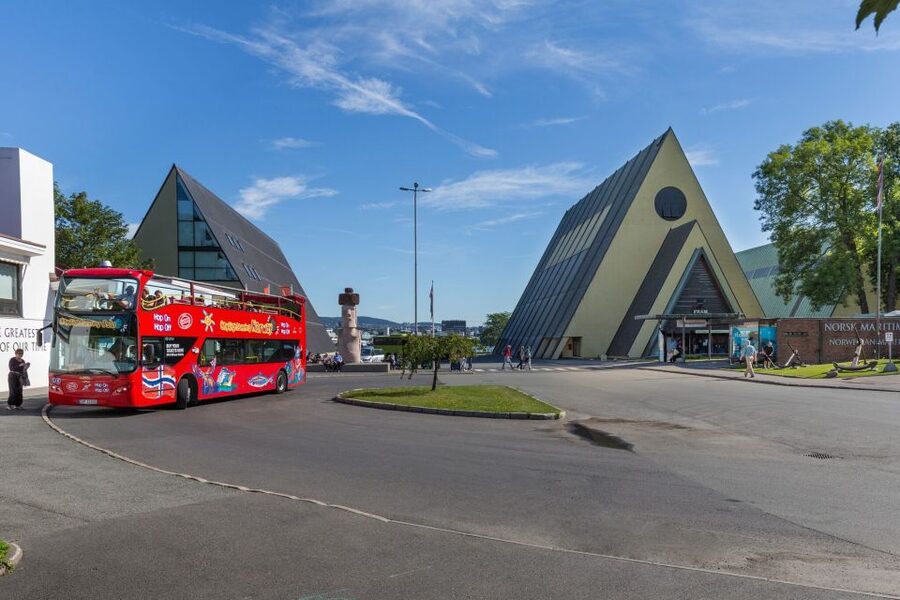
Cruise passengers are one of the clearest target groups for this tour. Stops serve Oslo Cruise Terminal, the Color Line Terminal at Hjortnes, Filipstad Cruise Terminal, and the Oslo ferry port used by Go Nordic Cruiseline and DFDS.
That matters because a short port call leaves little room for trial and error. You can board near the ship, ride into the center, get off for a museum or central sight, and return toward the port using the same route. The flexible 12-month voucher also gives you some protection if your plans change before the trip.
The route includes Tjuvholmen as an alternative stop and connects with the harbor district around Akershus Fortress. Tjuvholmen offers a more modern waterfront setting, while Akershus gives you a historic landmark close to the water. The bus is helpful for covering the distance, but you will need to walk after getting off to explore either area properly.
Traffic can slow the central part of the route. A past ride became very slow when a major royal visit closed or crowded city streets. You should not plan an airport-style tight connection based on the bus schedule. For a cruise, leave a healthy buffer before your ship’s departure.
Akershus Fortress, Langkaia, and the Opera House
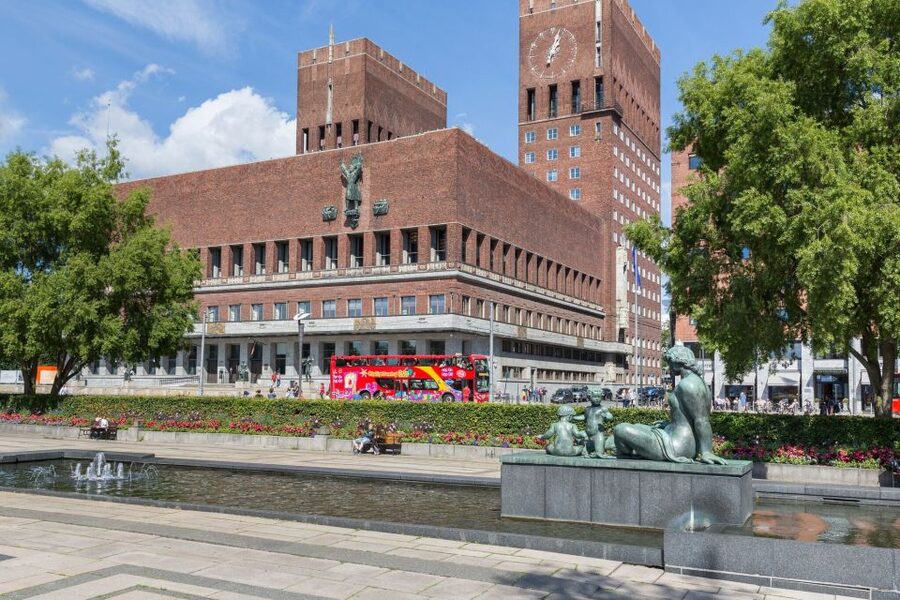
The Oslo Cruise Terminal and Akershus Fortress stop brings you close to one of the city’s most recognizable historic sites. The fortress overlooks the harbor and adds a strong contrast to the modern waterfront districts farther along the route.
Langkaia continues the harbor section. This is a useful point for connecting the old fortress area with Oslo’s newer cultural buildings. The route does not turn the bus ticket into a guided walking tour, so use the audio commentary for orientation and explore on foot once you get off.
The Opera House and MUNCH Museum stop is in Bjørvika, one of the most visually distinctive parts of central Oslo. The Opera House is known for its walkable sloping roof, while MUNCH is devoted to the work of Edvard Munch.
These are good stops for you if you want Oslo’s modern cultural side. They are also convenient near Oslo Central Station, making the bus practical for visitors arriving by train. Plan your museum timing carefully, since the buses do not run all evening.
Audio commentary, Wi-Fi, and the open-top view
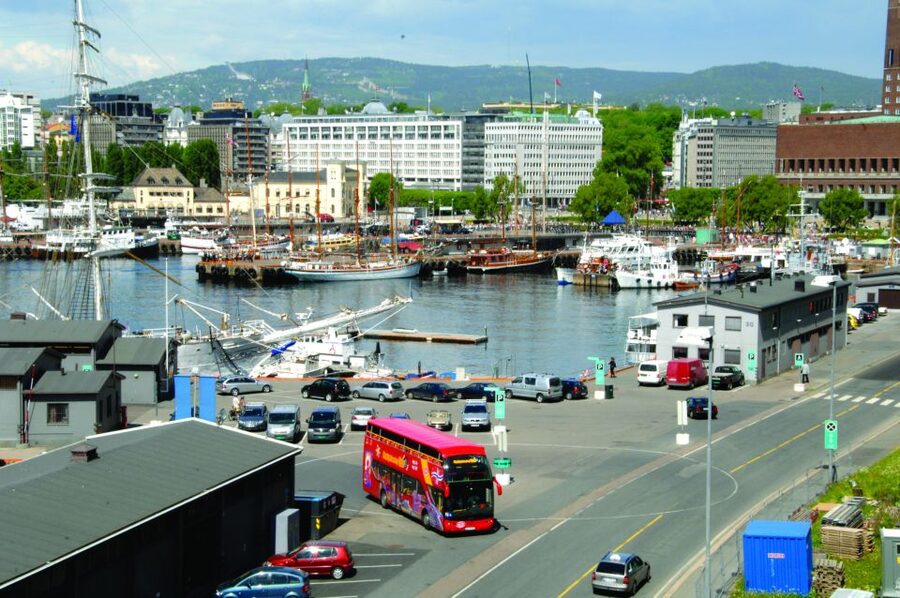
The audio guide is available in English, Spanish, German, French, Chinese, Italian, Dutch, and Japanese. Headphones are included, and you can also use the guide on your own device.
The commentary gives you background while you ride, but sound quality can vary. Some passengers have found the guide hard to hear, and a few headphone ports have not worked. Test your audio before the bus pulls away and change seats or ports if needed.
The upper deck gives you a 360-degree view, which is the main visual advantage over an ordinary city bus. It is excellent for seeing the harbor, palace area, and city streets from above. The roof may be covered with plastic panels in poor weather, and that can make photographs and outward views less clear.
Oslo’s weather is a serious part of the decision. Rain does not make the tour impossible, and the bus still lets you move between sights without walking long distances. Still, bring suitable clothing and do not assume the upper deck will be comfortable all day. The buses are described as electric, which gives the ride a quieter, cleaner feel than a conventional sightseeing coach.
Free Wi-Fi is included. Treat it as a useful extra rather than the main reason to buy the ticket, since the real value is the route between otherwise scattered sights.
What $46 means for your Oslo budget
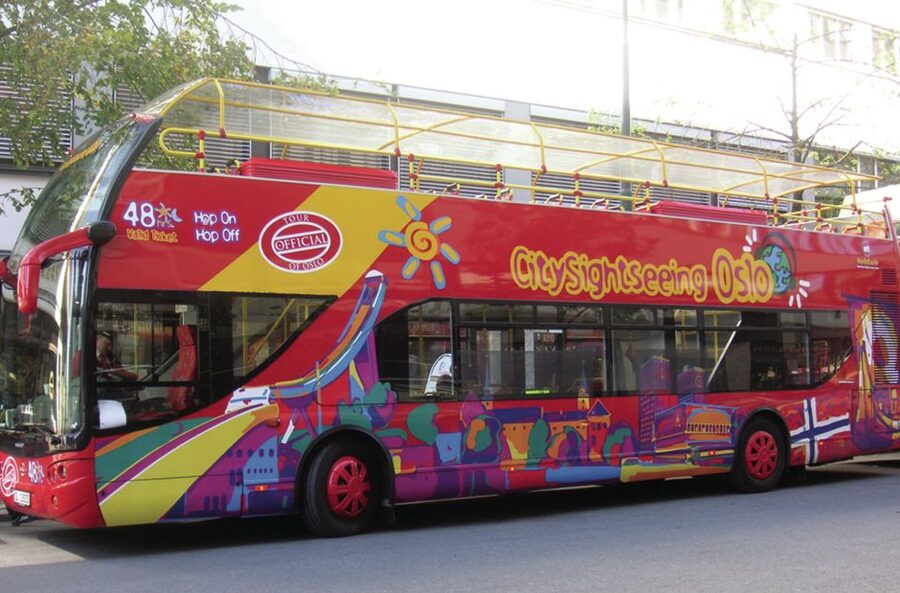
At $46 per person, the ticket is not automatically a bargain for a single 90-minute ride. If you remain on board for one loop and do little else, a cheaper local transport option may make more sense, though this tour adds the open-top view and recorded city commentary.
The price becomes easier to justify when you use the bus as a full-day connector. Visit Frogner Park in the morning, continue to Bygdøy for a museum, then ride back toward the Opera House, MUNCH, or Akershus Fortress. The attraction discounts can also help if you use them.
The 48-hour version is the better value for a slower visit. You can use the first day to see the whole route and choose stops, then return the next day for one or two museums or neighborhoods. The 24-hour pass suits a short city break or a cruise stop where you want a broad view without building a complicated schedule.
The ticket is valid for a full 24 or 48 hours from activation, not simply until midnight. That makes a late morning start more useful than it might first appear. The voucher itself can be used on any day within 12 months of the selected travel date, subject to the booking conditions.
Practical tips for a smoother ride
Use these simple habits to get more from the pass:
- Start early at Nationaltheatret: The first departure is at 10 a.m., and starting at Stop 1 helps you find a seat.
- Ride one full loop first: You will see how central Oslo connects with Frogner, Bygdøy, the harbor, and Bjørvika.
- Choose Bygdøy museums in advance: The cluster is excellent, but visiting every museum is unrealistic in one short stop.
- Keep checking the time: The final departure from Stop 1 is at 4 p.m., and a late afternoon wait can leave you stranded from the sightseeing route.
- Bring your phone and headphones: Mobile and printed vouchers are accepted, and the audio guide can be used on your own device.
- Check the audio at boarding: Some headphone ports may not function well.
- Use the lower deck in poor weather: The upper deck offers the best views, but plastic coverings can make sightseeing and photography less pleasant.
- Leave room before a cruise departure: Traffic and loading delays can happen in the center and near busy stops.
Pets and smoking are not allowed. Bring a passport or ID card, as requested for the activity.
Who will get the most from this tour?
I would recommend it most strongly to first-time visitors, cruise passengers, families, and anyone who wants a quick city orientation without piecing together several transport connections.
It is also a good fit if you want to see Oslo’s major zones but do not need a live guide walking beside you. The multilingual audio makes the tour accessible to international visitors, and the ability to hop off lets you set your own pace.
You may want another plan if your main goal is detailed museum time, local neighborhoods, or evening sightseeing. The route is designed to show the city from the road, not to replace walking tours or museum visits. The limited hours are the biggest practical weakness.
Should you book Oslo’s hop-on hop-off bus?
Book it if you have one or two days in Oslo, want a broad first view, or are arriving by cruise ship. The stops are well chosen, Bygdøy is easier to reach, and the pass can combine transport with sightseeing in a way that saves planning time.
For the best value, use the bus at least twice and get off at specific sights rather than treating it as a one-time loop. Start at the National Theatre, visit Frogner Park or Bygdøy, then use the harbor and Opera House stops on the return.
Skip it if you plan to stay almost entirely in central Oslo or prefer a guided walking experience. At $46, it earns its price through flexibility, coverage, and convenience, not through the depth of its commentary. Keep your expectations realistic, watch the clock, and it becomes a practical introduction to Oslo.
FAQ
How long does the complete Oslo bus route take?
The full sightseeing loop takes about 90 minutes.
How often do the buses run?
Buses run approximately every 30 minutes.
What time does the service begin and end?
The first departure from Stop 1 at the National Theatre is at 10 a.m. The last departure from Stop 1 is at 4 p.m.
Where can I board the bus?
The first stop is at the National Theatre on Karl Johans Gate. You can also board near Frogner Park and Vigeland Sculpture Park, the Norwegian Museum of Cultural History, the Viking Ship Museum, the Kon-Tiki and Fram museums, the Maritime Museum, Oslo Cruise Terminal, and the Opera House.
Which languages are available for the audio guide?
The audio guide is available in English, Spanish, German, French, Chinese, Italian, Dutch, and Japanese.
Does the ticket include admission to museums and other attractions?
No. Entry to attractions is not included, although discounts on attractions are included with the bus ticket.
Can I use a mobile voucher?
Yes. Mobile and printed paper vouchers are accepted and can be redeemed at any stop along the route.
Recently added around Oslo
- The Vigeland Park in Oslo: Insta-Perfect Walk with a Local★ 5.0 · 3 reviews
- Oslo: Best of Oslo Walking Tour and Hop-on Hop-off Bus Tour★ 3.7 · 3 reviews
- Best of Oslo: Walking Tour with a local guide★ 4.6 · 3 reviews
- Afternoon Tea and Classic Concert on the Fjord★ 4.5 · 3 reviews
- Maral Kunst : Jewelry Bar Experience (Jewelry Making)★ 5.0 · 3 reviews
- Lake walk and campfire★ 4.7 · 3 reviews
- Oslo: Yoga & Hiking with a dog★ 5.0 · 3 reviews
- Oslo: Skjennungstoppen Wildlife Forest Hiking Tour★ 5.0 · 3 reviews
Oslo Tours, compared.
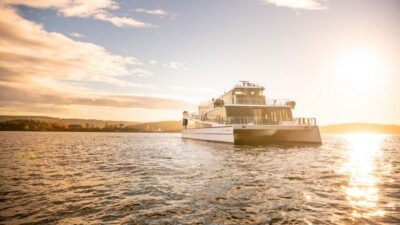
Scenic Fjord Cruise with Audio Guide Commentary
Read our review →
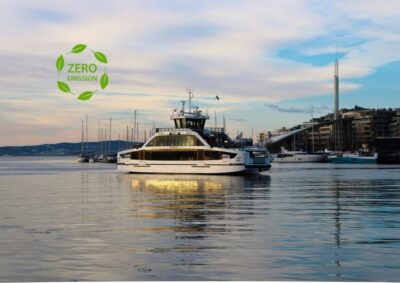


Guided Sightseeing Fjord Cruise on Premium Silent Boat
Read our review →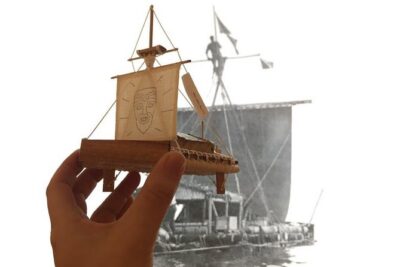
Browse the lists this tour appears in