
Reviewed · OSLO TOURS
Jewish Heritage Tour in Oslo
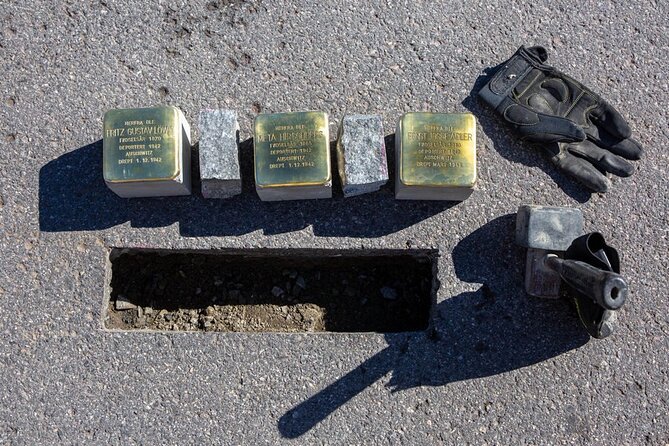
Oslo’s Jewish story is easy to miss unless someone points out where it happened. This private walk does exactly that, tracing the first Jewish family to settle in Oslo, Jewish-owned shops along Karl Johans Gate, wartime sites near the Royal Palace, and the city’s synagogue.
I like the small private format, which lets Rami Kafarov adjust the pace and answer your questions. I also like the use of old and current photographs, a personal touch that helps you see how Jewish life once fit into familiar city streets.
The main limitation is that the synagogue cannot always be visited. You should also expect a full two hours on foot, with a moderate level of fitness needed, and the tour requires good weather.
Key points to know before you book
- Follow Oslo’s Jewish story through ordinary city streets: The tour puts Jewish life into the setting of railway squares, shops, hotels, government buildings, and royal gardens.
- Meet at Jernbanetorget: The walk begins beside The Tiger, a handy central meeting point near public transportation.
- Expect a private English-language tour: Your group alone takes part, with up to five people included in the $256.18 price.
- Allow time for thoughtful questions: Rami has been praised for adjusting the walk to personal interests and explaining Norwegian history around the Jewish experience.
- The synagogue visit is not guaranteed: Oslo Synagogue is an important final stop, but entry depends on circumstances.
- Book ahead for a popular departure: This experience is booked an average of 107 days in advance, so last-minute availability may be limited.
Why this two-hour walk matters in Oslo
Many city tours show you grand buildings and famous names. This one asks you to look again at places you might otherwise pass without a thought.
The Jewish population of Norway has always been small, and that makes the story especially personal. You are not being led through a large historic quarter with obvious signs on every corner. Instead, Rami connects scattered locations across central Oslo, showing where Jewish families lived, worked, worshipped, and faced persecution.
That approach gives the tour its value. You see the city as both a present-day capital and a place shaped by decisions made long ago. Norwegian political history, the constitution, the German occupation from 1940 to 1945, and the lives of ordinary Jewish residents all meet along the route.
Rami is the main guide named for this experience. He is multilingual and has created a photo-book that places modern Oslo beside historic images of Jewish life. Asking him about the book may add another layer to the walk, especially if you care about visual records and vanished places.
The experience is private, so you are not trying to keep up with a large group or wait for strangers to finish questions. That matters on a subject that can call for pauses and careful explanation.
More Historical Tours in Oslo
- Oslo: Historic Myths & Legends Evening Walking Tour
★ 4.8 · 408 reviews - Oslo: History, Art and Secrets Tour
★ 4.7 · 62 reviews - Oslo City Walks – Historic River Walk
★ 5.0 · 31 reviews
Jernbanetorget and the first Jewish family in Oslo
The starting point is The Tiger at Jernbanetorget, marked by the familiar tiger sculpture outside Oslo Central Station. It is an easy place to reach by public transportation and a practical spot for a city walk.
The opening ten minutes introduce the first Jewish family settled in Oslo. You also see the actual location connected with their property, rather than hearing only a general story about Jewish settlement.
That detail sets the tone. The tour is not limited to famous institutions. It looks for physical traces in the modern city, even when the original buildings or surroundings have changed.
Jernbanetorget can be busy, so arrive ready to identify the meeting point. A mobile ticket is provided, and the activity is offered in English.
Stortorvet, the cathedral, and a king’s monument

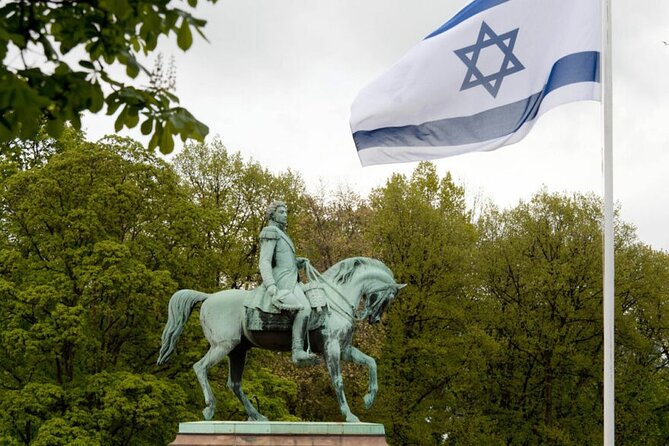
From Jernbanetorget, the walk continues to Stortorvet. Here, the Oslo Cathedral and the monument to Christian IV provide a setting for discussing the city’s older civic and religious framework.
The stop lasts about ten minutes. You should not expect a long interior visit or a separate cathedral tour. Instead, the square works as a place to connect Oslo’s public identity with the position of Jewish residents within Norwegian society.
This is one of the tour’s useful habits: a Jewish story is not treated as something sealed off from the rest of Oslo. Christian institutions, royal authority, public squares, and Jewish life all belong to the same city story.
Parliament and Jewish voices in Norwegian politics
The Norwegian Parliament is the next short stop. The focus is the Norwegian constitution and notable Jewish members of Parliament.
For me, this is an important change of scale. The walk moves from individual settlement to national law and public service. You begin to consider not only where Jewish people lived, but also how they took part in the country’s political life.
The ten-minute visit is primarily an outdoor explanation. The value comes from the context Rami supplies, particularly for first-time visitors still learning how Norway’s national story fits together.
If you arrive with questions about citizenship, representation, or Jewish participation in Norwegian public life, this is a good point to raise them. The private format makes that sort of conversation much easier than it would be on a fixed large-group tour.
A different way to spend a day from here:
- Oslo: Scenic Fjord Cruise with Audio Guide Commentary
★ 4.5 · 5,375 reviews - Oslo Nature Walks: Island Hopping Tour
★ 4.8 · 2,713 reviews - Oslo: 100% Electric Oslofjord Sightseeing Cruise
★ 4.4 · 2,041 reviews - Oslo: Fjord Evening Cruise with Shrimp Buffet
★ 4.5 · 1,956 reviews
Grand Hotel and the city’s commercial center
At the Grand Hotel, the subject shifts to Jewish shops that once occupied this part of Oslo. The stop also touches on the Nobel Peace Prize, linking the hotel and central city to Norway’s international public image.
The hotel is a useful backdrop because it brings the discussion into everyday commerce. Jewish history here is not only about worship or politics. It is also about shopkeepers, businesses, customers, and the normal working life of a city.
This ten-minute stop may appeal to you if you like social history more than a list of dates. Jewish-owned stores help make the past concrete, even though the surrounding city now looks different.
Fifty minutes along Karl Johans Gate
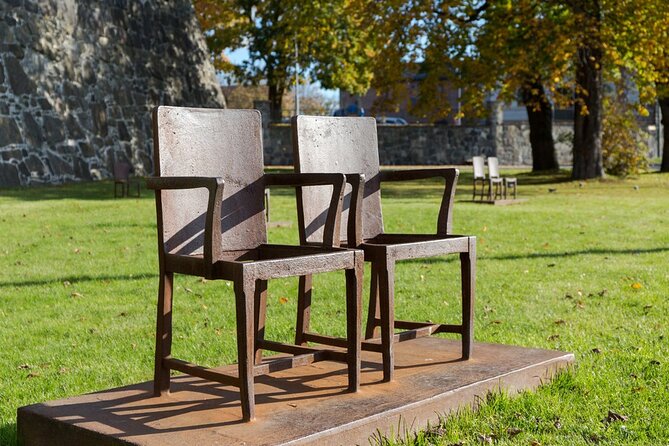
Karl Johans Gate receives the longest section of the tour, about fifty minutes. That time is well used because this central avenue held many Jewish-owned stores and several monuments tied to Jewish history in Oslo and Norway.
A long walk here gives Rami room to connect separate stories instead of rushing from plaque to plaque. You may hear how Jewish commercial life fit into the main street of Oslo, then move toward the monuments and memories that mark the community’s place in the country.
This is also where the photo comparisons can be especially useful. A present-day storefront or intersection can feel ordinary until an older image shows who worked there and what disappeared. Rami’s photo-book, which pairs current and historic views, grew from that same interest in making lost scenes visible.
The route is still a city walk, not a museum visit. You will be outdoors, among normal Oslo traffic and pedestrians. If you prefer a tour with many indoor exhibits, this may feel too focused on streets and explanation. If you like reading a city through its buildings and addresses, Karl Johans Gate is likely to be the strongest part.
Because this section is longer than the others, comfortable shoes matter. The full route calls for moderate physical fitness, and there is no promise of a seated break at each stop.
The Royal Palace and the years of occupation
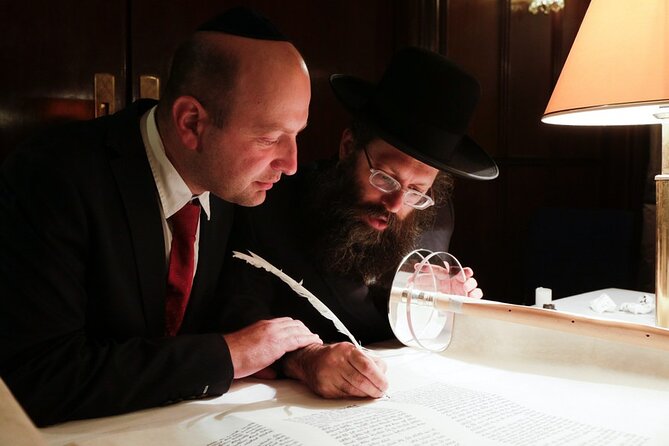
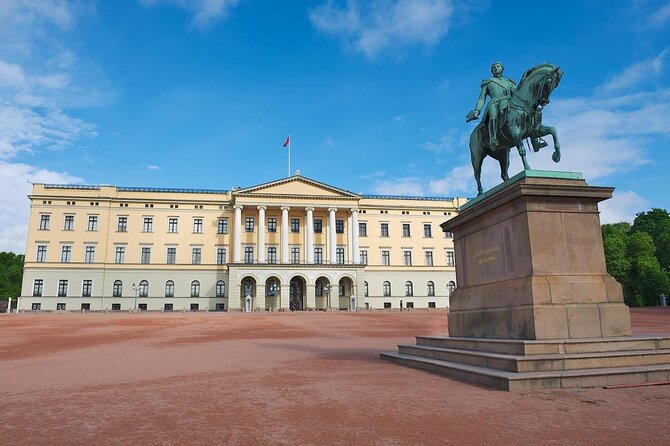
The walk continues toward the Royal Palace. Around the royal garden are several locations linked to Jewish life during the German occupation from 1940 to 1945.
This part gives the tour its most serious turn. The palace area is associated with national power and ceremony, but the Jewish stories connected with nearby places concern fear, exclusion, and the pressures of occupation.
Rami’s role here is to provide Norwegian context around the Jewish experience. That balance is one of the strongest reasons to choose this tour. You are not given a detached account of wartime events, but neither is the subject reduced to a single dramatic moment.
The Royal Palace stop lasts about ten minutes. It is an outdoor stop, and good weather matters. In poor conditions, the provider may offer another date or a full refund.
Oslo Synagogue and the final part of the walk
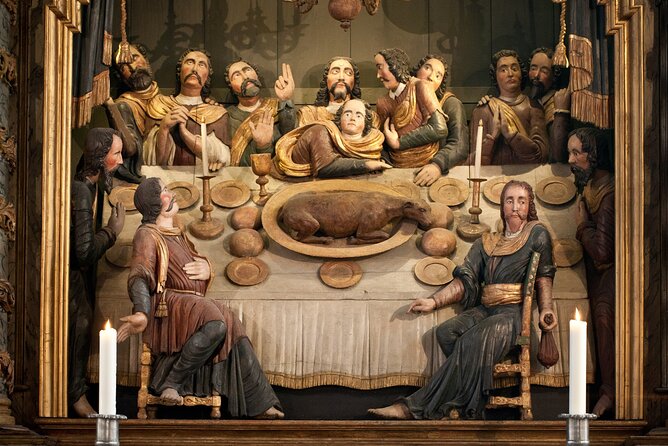
The final stop is Oslo Synagogue, reached after the route through central Oslo. The synagogue is described as the first synagogue built in Norway, and the nearby area is connected with what is called the Jewish street in Oslo.
The planned visit lasts about twenty minutes, but you need to understand one important condition: it is not always possible to enter. Do not book the tour solely on the assumption that you will see the interior.
When a synagogue visit can take place, it can give the walk a more direct connection to Jewish life in Oslo today. The experience provider may arrange for Janine to be involved, and the visit can include her explanation of the synagogue and its meaning. Ask at booking if the visit is particularly important to you.
Even without entry, the exterior and surrounding street help bring the earlier stops together. The tour begins with the location of an early Jewish home and ends at a place of communal Jewish life. That arc is more meaningful than a simple list of city sights.
The activity ends in a different location from the starting point. Since the exact final meeting details are not fully specified, confirm where the walk finishes when you book.
Rami’s guiding style and the private format
The strongest feature here is the guide-led discussion. Rami has been praised for being responsive, personable, well prepared, and willing to shape the experience around a group’s interests.
That flexibility is useful for families, small groups, and visitors who already know some Jewish or Norwegian history. You can ask for more attention to politics, architecture, wartime events, business, photography, or present-day Jewish life rather than receiving the same fixed speech as everyone else.
His sense of humor also helps keep the walk human. A serious subject does not need to be delivered in a cold or gloomy way. The best moments on a tour like this often come from a clear answer to a question or a small detail that changes how you see a familiar street.
Janine is another named member of the guiding team. If she leads or assists with the synagogue visit, she can explain that part of the experience in detail. The synagogue visit has been singled out as a particularly moving element, but again, entry is not always possible.
The private setup costs more than a standard shared walking tour, but you are buying time, focus, and flexibility. The price is $256.18 for the whole group of up to five, not per person. With five people, that works out to about $51 per person. For one or two people, the per-person cost is much higher, so the value improves when you can fill the group.
Timing, fitness, and practical planning
The tour lasts approximately two hours, with the stops adding up to a full walking itinerary. The fifty-minute section along Karl Johans Gate is the largest block, while most other locations receive about ten minutes.
You should plan for:
- An English-language walk
- A mobile ticket
- A private group of no more than five people
- A moderate level of physical fitness
- A start at The Tiger at Jernbanetorget
- A finish at another location
- Good weather for the activity to operate
Service animals are allowed, and the meeting point is near public transportation. The stated operating information includes Monday hours from 8:00 in the morning to 8:00 in the evening, with the activity offered during the published period through December 8, 2026. Confirm the exact departure time and date before setting other plans.
The tour is often booked well ahead, with an average booking lead time of 107 days. That does not guarantee that every date sells out, but it is a strong reason to arrange it early if your Oslo schedule is fixed.
Free cancellation is available up to 24 hours before the start time for a full refund. Changes or cancellations inside that 24-hour window are not accepted for a refund. If bad weather cancels the activity, you can be offered another date or a full refund.
Who will get the most from this tour
I would choose this walk if you want Jewish history tied directly to the streets of Oslo rather than presented only inside a museum. It suits anyone interested in minority history, wartime Norway, civic life, architecture, social history, or the ways communities leave traces in a city.
It is also a strong choice for a first visit to Oslo. Rami uses Norwegian history to explain the Jewish experience, so you gain a wider introduction to the city at the same time.
Families and small private groups should appreciate the chance to ask questions without holding up a large party. The tour can also suit people with a personal connection to Jewish history, though the subject matter around the occupation is serious and may require some emotional preparation.
I would be more cautious if you have limited walking ability, need a guaranteed indoor visit, or want certainty about entering the synagogue. The synagogue visit is an important possibility, not a fixed promise.
Should you book the Jewish Heritage Tour in Oslo?
Book it if you want an informed, personal walk through Oslo’s Jewish past and present, and if you value a guide who can adjust the discussion to your interests. The first family’s property, Jewish-owned shops, Jewish members of Parliament, wartime locations, and the synagogue create a clear route through a story that is otherwise easy to overlook.
The $256.18 group price makes the tour most attractive for three to five people. If you are a solo visitor, compare that cost with other Oslo activities, but remember that a private guide and two hours of focused conversation are included.
My main advice is simple: ask in advance about the synagogue visit, wear comfortable shoes, and leave room for questions. If you do that, this is a thoughtful and unusually focused way to understand Oslo.
FAQ
How long is the Jewish Heritage Tour in Oslo?
The tour lasts approximately two hours.
Where does the tour begin?
It begins at The Tiger at Jernbanetorget, 0154 Oslo, Norway.
Where does the tour end?
The activity ends at a different location from the starting point, after the route reaches Oslo Synagogue. Confirm the precise final location when booking.
Is the synagogue visit guaranteed?
No. A visit to Oslo Synagogue is not always possible.
How many people can join the private tour?
The price covers one private group of up to five people.
What is the cancellation policy?
You can cancel at least 24 hours before the start time for a full refund. Cancellations or changes made less than 24 hours before the start time are not refunded or accepted. If poor weather causes the provider to cancel, you will be offered another date or a full refund.
Recently added around Oslo
- The Vigeland Park in Oslo: Insta-Perfect Walk with a Local★ 5.0 · 3 reviews
- Oslo: Best of Oslo Walking Tour and Hop-on Hop-off Bus Tour★ 3.7 · 3 reviews
- Best of Oslo: Walking Tour with a local guide★ 4.6 · 3 reviews
- Afternoon Tea and Classic Concert on the Fjord★ 4.5 · 3 reviews
- Maral Kunst : Jewelry Bar Experience (Jewelry Making)★ 5.0 · 3 reviews
- Lake walk and campfire★ 4.7 · 3 reviews
- Oslo: Yoga & Hiking with a dog★ 5.0 · 3 reviews
- Oslo: Skjennungstoppen Wildlife Forest Hiking Tour★ 5.0 · 3 reviews
Oslo Tours, compared.

Scenic Fjord Cruise with Audio Guide Commentary
Read our review →


Guided Sightseeing Fjord Cruise on Premium Silent Boat
Read our review →
Browse the lists this tour appears in