
Reviewed · OSLO TOURS
Oslo City Private Walking Tour
The most useful thing about this private Oslo walking tour is its route. In about two hours, you move from the Nobel Peace Center and City Hall through the Royal Palace district and central shopping street to Akershus Fortress and the harbor. It gives you a quick, clear map of the city rather than parking you at one sight.
I like the personal format, since only your group joins the guide, and I like the blend of old stone fortifications, royal landmarks, modern architecture, and Norwegian cultural figures such as Edward Munch and Henrik Ibsen. The main drawback is pace: eleven stops in roughly two hours means short visits, and the $239.46 per-person price is easier to justify for a small group than for one or two people.
Key points
- A full downtown route: Cover City Hall, the Royal Palace, Karl Johans Gate, Parliament, Akershus Fortress, and the harbor promenade in one walk.
- Private attention: Your group alone takes part, allowing the guide to adjust the conversation and route.
- Strong local guides: Inger, Diana, Tine, and Anja have been singled out for warmth, clear explanations, and useful Oslo advice.
- A memorable finish: The walk ends near the Oslo Opera House, with a view of one of the city’s best-known modern buildings.
- Mostly outdoor sightseeing: The tour runs in all weather, and city traffic can be noisy, so dress for conditions.
- Fast orientation: This is best used early in an Oslo stay, when you want to learn the layout before exploring on your own.
Starting at the Nobel Peace Center
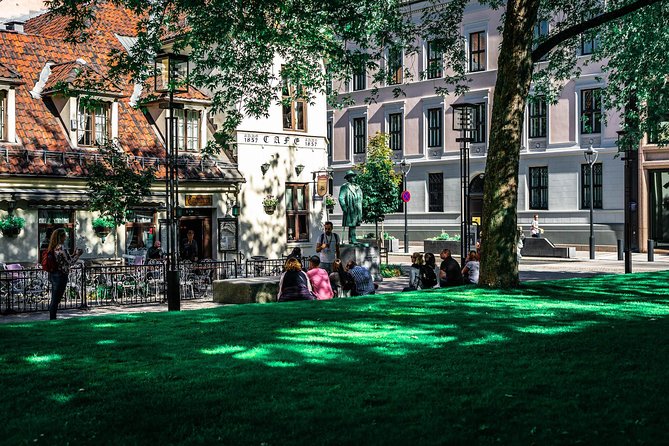
Meet your English-speaking guide at the Nobel Peace Center, Brynjulf Bulls plass 1. The building occupies a former train station and focuses on the Nobel Peace Prize, presented each year on December 10.
The center is a sensible starting point because it puts you close to Oslo’s waterfront, City Hall, and the central streets. The scheduled visit is short, about ten minutes, and admission is listed as free. You should not assume this walking tour includes a full museum visit, though. The main purpose here is orientation and context before the route heads inland.
One practical point matters: make sure you identify the Nobel Peace Center clearly before setting out. One person arrived late after receiving poor directions from a cruise ship, and the guide company managed the delay kindly, but a late start can make an already brisk walk feel rushed.
More City Tours in Oslo
- Oslo: City Sightseeing Hop-On Hop-Off Bus Tour
★ 3.6 · 724 reviews - Oslo: Grand City Sightseeing Tour by Bus with Fjord Cruise
★ 4.6 · 647 reviews - Oslo Combo Tour: Grand City Tour and Oslo Fjord Cruise
★ 4.5 · 555 reviews
City Hall and Norway’s public life
Oslo City Hall is only a short walk away. Its importance goes beyond the building itself: it houses Oslo’s local government and hosts the Nobel Peace Prize ceremony.
Inside, the building is known for artwork tied to Norwegian history, culture, and working life. The tour allows about ten minutes here, so your guide can explain why the building matters and point out its artistic character, but time may not allow a full interior visit.
I like this stop because it connects Oslo’s civic life with the international attention brought by the Peace Prize. It also gives you a useful contrast with the later royal and military sites. You are not simply collecting façades. You are seeing where city government operates and where one of Norway’s best-known annual ceremonies takes place.
Nationaltheatret and the Royal Palace
The National Theatre gets roughly five minutes. That sounds brief, but the stop helps explain Norway’s cultural identity. For more than a century, the theater has been a major home for classic and new Norwegian productions, as well as large public celebrations.
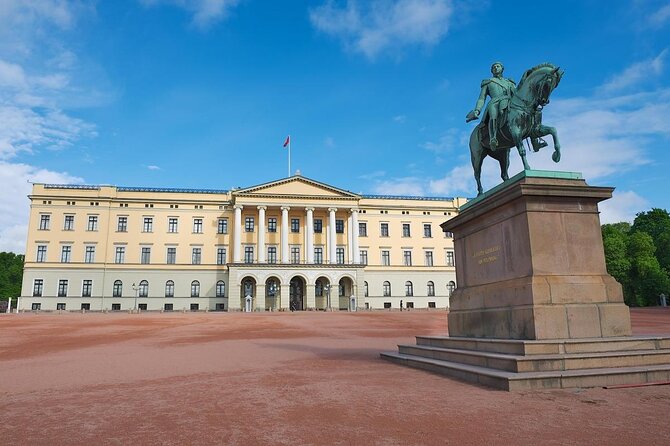
The Royal Palace follows, with about ten minutes. It is the official residence of the Norwegian monarch, and much of the Royal Court works there. The palace area gives the route a grand, formal pause after the theater and City Hall.
The guide can also bring in Oslo figures such as Henrik Ibsen, whose work belongs naturally in a conversation about Norwegian theater. The supplied tour information also highlights Edward Munch and other notable Norwegians, so this is a good place to ask how art, literature, and national identity fit together.
You will see these places as part of a walking circuit, not as extended palace or theater tours. If your main goal is to go inside the Royal Palace, this experience may not provide enough time or a confirmed interior visit.
Karl Johans Gate and the Storting
Karl Johans Gate is Oslo’s main pedestrian street, stretching about 1,020 meters. It links important central sights and is lined with impressive buildings, shops, and boutiques.
This is one of the most useful parts of the route for first-time visitors. You get a feel for the city’s main public spine and can note places to return to later. The street is also a practical link between the palace area and the Parliament building, known as the Storting.
The Parliament stop lasts about five minutes. The building sits directly along Karl Johans Gate and houses Norway’s national political work. Your guide can add the basic political and architectural context, but the short stop is mainly about seeing the building and understanding its place in central Oslo.
I would pay attention to the route here rather than treating it as a shopping break. The value is that you learn how the palace, theater, government, shops, and waterfront relate to one another. That orientation can save time during the rest of your stay.
More Walking Tours in Oslo
- Oslo: Best of Oslo Walking Tour
★ 4.5 · 458 reviews - Oslo: Guided Walking Tour of Central Oslo
★ 4.7 · 438 reviews - Oslo: Historic Myths & Legends Evening Walking Tour
★ 4.8 · 408 reviews - Taste of Oslo Walking Tour
★ 4.5 · 282 reviews
Christian IV’s Glove and the old street plan
The walk then reaches Kvadraturen, the district whose name means the Quadrature. Its rectangular street pattern comes from Christian IV’s Renaissance town.
The stop called Christian IV’s Glove lasts about five minutes. The name refers to a marker connected with the king and the city’s early planning. This brief pause adds a human detail to what might otherwise be just a grid of streets.
Kvadraturen is worth noticing because it gives you a different view of Oslo. The palace and Karl Johans Gate present the city in a grand, orderly way. Here, the focus shifts to the older urban plan and the decisions that shaped the center.
With such a packed itinerary, the guide’s storytelling matters. A good explanation can make five minutes feel worthwhile. The strongest guide feedback has praised a balance of history, architecture, personal stories, and humor. Tine, whose name was pronounced like Tuna, was specifically appreciated for that mix.
Akershus Fortress beside the fjord
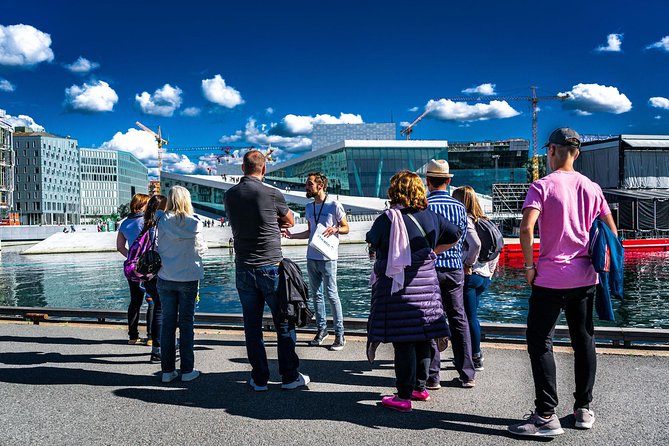
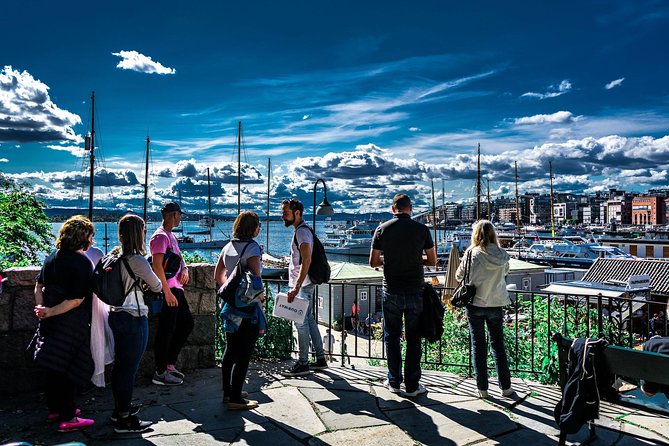
Akershus Fortress is the tour’s longest stop, at about fifteen minutes. Located beside the water, it overlooks the Oslo Fjord and is one of the city’s defining landmarks.
This is where the route gains physical drama. After the formal central streets, you reach defensive walls and a waterfront position that explains why the site mattered. The fortress also gives you a strong sense of Oslo’s relationship with the fjord.
The time is enough for a clear introduction and a look at the setting. It is not enough for an unhurried exploration of every corner. If military architecture or medieval history is your main interest, you will probably want to return independently after the tour.
I especially like the fortress as the middle-to-late anchor of the walk. It is the point where the route’s different themes come together: government, monarchy, city planning, trade, and defense. You also get a welcome change from busy central streets.
Bankplassen, Ibsen, and Munch
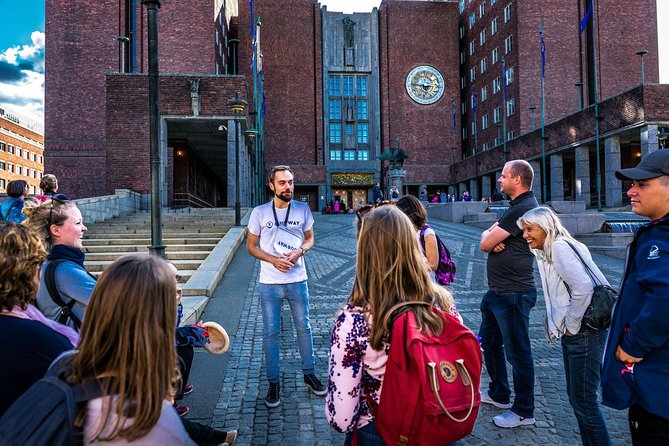
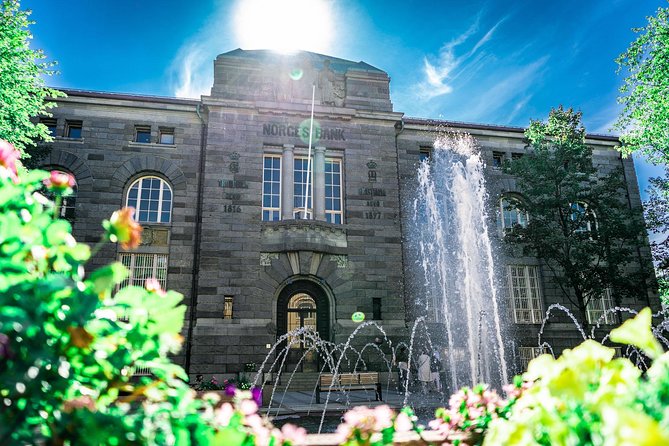
Bankplassen, or Bank Square, follows for about ten minutes. The square marks the former location of the Bank of Norway and is also associated with Engebret Café.
The café has been frequented by famous Norwegians including Henrik Ibsen and Edward Munch. That detail gives the square a more personal feel. Instead of hearing only about institutions and buildings, you get a glimpse of where notable cultural figures spent time.
This stop is a good example of why a local guide can add value beyond a map. You could walk past a square without knowing its banking connection or its link to Oslo’s artists and writers. Ask your guide about Munch and Ibsen here if those figures interest you.
The route does not promise a café stop or meal. Treat Bankplassen as a place for stories and orientation, not as a scheduled coffee break.
Oslo Stock Exchange and the route toward the water
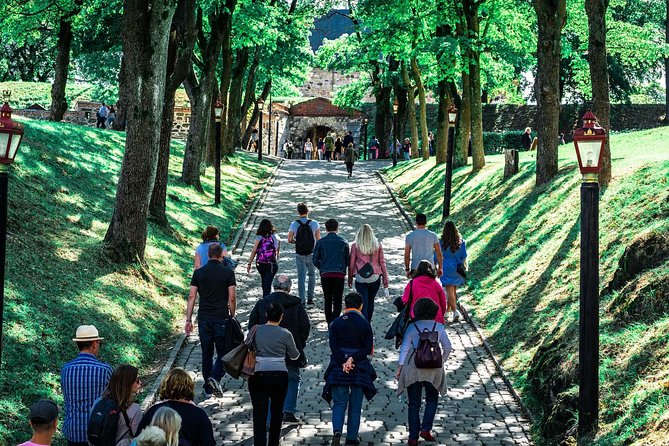
The Oslo Stock Exchange receives about five minutes. The building is roughly 180 years old, and its creation followed years of effort by Oslo businessmen seeking approval and funding.
This is a quick architectural and commercial-history stop. It helps explain that the city center was shaped not only by kings and governments, but also by trade and finance. The short visit keeps the tour moving toward the harbor.
At this point, you will have covered a surprising amount of ground. That is also where the main tradeoff becomes clear. The walk is efficient, but you will not have much time to linger, take long photo breaks, or examine every building closely.
The harbor promenade and Oslo Opera House
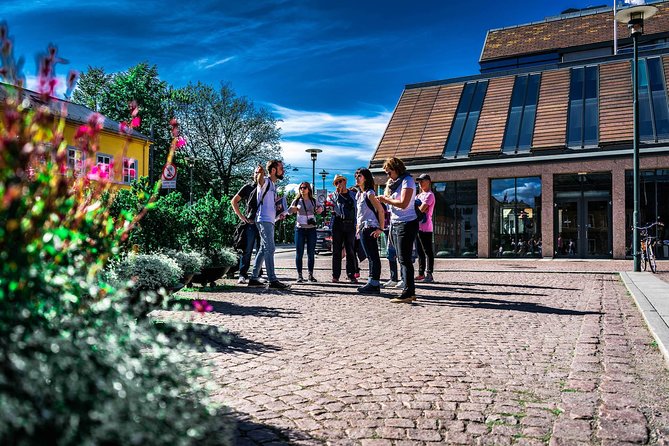
The final section reaches Oslo’s harbor promenade and ends at Langkaia 1, with a view of the Oslo Opera House. The Opera House is among Oslo’s best-known modern landmarks and hosts outdoor performances on selected dates each year.
This ending works well. You finish with a contemporary building and open waterfront views after spending much of the walk among palaces, government buildings, old streets, and fortress walls. It gives the tour a sense of visual progression from historic Oslo to its newer public spaces.
The end point is also useful for planning the rest of your day. You can continue exploring the harbor area on your own, though the tour itself ends with the view rather than a scheduled Opera House performance or interior visit.
One past itinerary was adjusted at the group’s request, replacing time at the palace with the Opera House and a library. That suggests it is worth discussing priorities with your guide, but you should not assume every requested change is guaranteed. With eleven planned stops, a change in one place may mean less time somewhere else.
What the private format is worth
The tour costs $239.46 per person, which places it firmly in the premium category for a two-hour walk. The value depends heavily on group size and what you want from the experience.
For a larger private group, the personal format can make sense. You are not sharing the guide with strangers, and the guide can respond to your interests, adjust the amount of detail, and pay attention to comfort. One guide, Inger, was praised for changing course when the weather turned cold and rainy, taking the group indoors when possible and offering ideas for the rest of the stay.
For one or two people, the price is harder to defend unless private guiding is especially important to you. You are paying for the guide’s time and flexibility, not entrance tickets. The listed stops have free admission, and the tour includes a professional guide.
The reported rating is 4.9 from 15 reviews, with 93 percent recommending the experience. The praise centers on guide quality, broad coverage, and quick orientation. Diana was credited with covering a great deal of ground, both geographically and historically, in two hours. Anja was praised for a pleasant history-focused walk. Those details point to the tour’s strongest feature: the person guiding you can shape the quality of the experience.
There is one clear warning. A guide arrived late on one occasion, and the group had to call before he appeared. The company apologized and acknowledged that the delay should have been communicated. That was an isolated problem in the supplied feedback, but it is a useful reminder to arrive at the meeting point with enough time and clear contact details.
Pace, weather, and practical comfort
This is a walking tour in the city center, and it operates in all weather. Dress comfortably and appropriately for the forecast. Cold rain can make a two-hour route feel much longer, even when the guide tries to use indoor spaces where possible.
Traffic noise is unavoidable for much of the walk. You will be near central roads and public streets, so this is not a quiet countryside stroll. If you have trouble hearing in noisy settings, stay close to the guide and ask for pauses when needed.
The route is near public transportation, and most people can participate. Service animals are allowed. Confirmation arrives at booking, and free cancellation is available up to 24 hours before the start time. Changes or cancellations inside that 24-hour window are not accepted for a refund.
Because the tour covers many sights quickly, I would schedule it near the beginning of your Oslo visit. You will finish with a better sense of where the center, palace, fortress, and harbor sit. Then you can return to the places that deserve more time.
Who should book this Oslo walk
I would choose this tour if you have only a short stay, are arriving by cruise, or want a private introduction before exploring alone. It also suits families and small groups who prefer to ask questions without sharing the guide with a larger crowd.
It is a particularly good fit for people who enjoy connecting buildings to people and events. You will hear about the Nobel Peace Prize, public government, monarchy, theater, city planning, finance, Ibsen, and Munch in one compact route.
I would think twice if you want extended museum time, a full fortress visit, or a slow photographic walk. The tour touches many places, but the schedule allows only brief stops. The price also makes the most sense when divided among a group.
Should you book it?
Book the Oslo City Private Walking Tour if your priority is a fast, personal city introduction with a strong guide and a broad central route. The combination of Akershus Fortress, Karl Johans Gate, the Nobel Peace Center, and the Opera House gives you a useful first picture of Oslo.
Skip it if you prefer to explore at your own speed or plan to spend most of your time inside museums and historic buildings. If you do book, tell the guide what matters most to you at the start. That is the best way to turn a packed two-hour circuit into a walk that fits your interests.
FAQ
Where does the Oslo City Private Walking Tour start?
The tour starts at the Nobel Peace Center, Brynjulf Bulls plass 1, 0250 Oslo, Norway.
Where does the tour end?
It ends at the harbor promenade at Langkaia 1, 0150 Oslo, with a view of the Oslo Opera House.
How long does the tour last?
The tour lasts approximately two hours.
Is this a private tour?
Yes. Only your group participates, so you receive a more personal experience with the guide.
What language is offered?
The tour is offered in English.
Are entrance tickets included?
A professional guide is included. The listed stops show free admission, but the tour information does not promise extended interior visits to each building.
Can I cancel for a full refund?
Yes. You can cancel at least 24 hours before the local start time for a full refund. Cancellations or changes made less than 24 hours before the start time are not accepted.
Recently added around Oslo
- The Vigeland Park in Oslo: Insta-Perfect Walk with a Local★ 5.0 · 3 reviews
- Oslo: Best of Oslo Walking Tour and Hop-on Hop-off Bus Tour★ 3.7 · 3 reviews
- Best of Oslo: Walking Tour with a local guide★ 4.6 · 3 reviews
- Afternoon Tea and Classic Concert on the Fjord★ 4.5 · 3 reviews
- Maral Kunst : Jewelry Bar Experience (Jewelry Making)★ 5.0 · 3 reviews
- Lake walk and campfire★ 4.7 · 3 reviews
- Oslo: Yoga & Hiking with a dog★ 5.0 · 3 reviews
- Oslo: Skjennungstoppen Wildlife Forest Hiking Tour★ 5.0 · 3 reviews
Oslo Tours, compared.

Scenic Fjord Cruise with Audio Guide Commentary
Read our review →


Guided Sightseeing Fjord Cruise on Premium Silent Boat
Read our review →
Browse the lists this tour appears in