
Reviewed · OSLO TOURS
The Fram Museum Admission Ticket
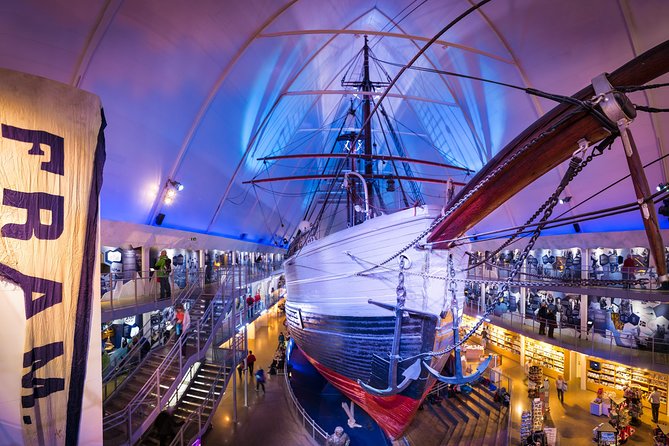
The most remarkable part of this Oslo museum is simple: the original Fram is inside the building, and you can walk through it. You see the cabins, engine room, lower sections, and cramped working spaces that carried explorers through polar seas. It turns maritime history into something you can feel under your feet.
I like the chance to board both Fram and Gjøa, and I like the strong mix of ship interiors, maps, artefacts, films, and hands-on displays. The storm and ice effects on the Fram make the voyage easier to picture. The main drawback is that the museum can feel crowded, and some areas may be dim or temporarily closed.
Key points to know before you go
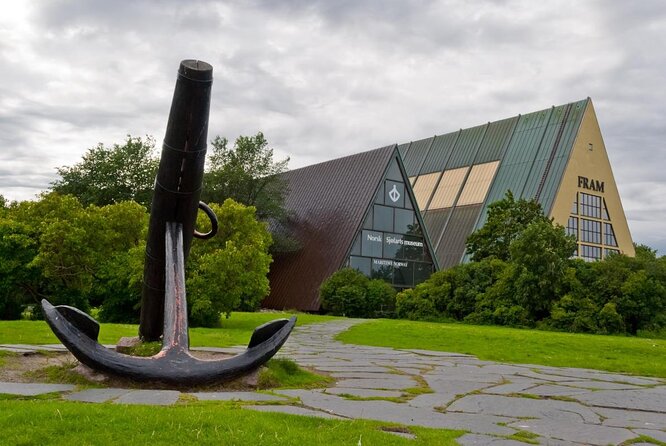
- Walk through two original exploration ships: Fram and Gjøa are the heart of the visit, not just objects behind glass.
- See how polar crews lived: Cabins, equipment, engine spaces, and working areas show the tight conditions on board.
- Learn the story in ten languages: The main Fram exhibition has explanatory text in ten languages.
- Catch a film every fifteen minutes: The 116-seat cinema presents a polar introduction movie, including the N25 flight experience.
- Allow two hours for a proper visit: You can rush through in about an hour, but the displays and ships reward a slower pace.
- Use the free-cancellation window wisely: A full refund is available if you cancel at least 24 hours before the start time.
Why the Fram changes the way you see polar exploration
A museum model can explain an expedition. A full-size ship can make you understand it.
Fram is the main reason to come here. The ship is preserved inside the museum, allowing you to walk through the spaces used by the crew. You can look into sleeping quarters, pass through narrow interior areas, and see the engine room and lower parts of the vessel. The visit gives you a practical sense of how little room the crew had and how much equipment had to fit on board.
I find this more useful than a long list of dates. Once you have seen the compact rooms and steep passages, the written accounts of long polar voyages carry more weight. You begin to picture daily chores, shared quarters, mechanical work, and the problem of staying warm and organized far from land.
The museum presents the three great Fram expeditions in the main building. Maps and wall displays help explain where the ship went and why its design mattered. Spend a little time with these panels before boarding, then return to the ship with the story in mind. You will notice more details that way.
The ship is also a good reason to bring older children. There is a sense of discovery in moving from deck to deck and below the main level. Some sections are tight, dark, or reached by stairs, so anyone who prefers a flat, open museum should plan for a more confined experience.
More Museums in Oslo
- Kon-Tiki Museum Entrance Ticket
★ 4.5 · 1,096 reviews - Oslo: Paradox Museum Entry Ticket
★ 4.3 · 799 reviews - Oslo: Oslo Discovery Tour with 2 Museums Included
★ 4.6 · 334 reviews
Gjøa and the Northwest Passage
An underground tunnel connects the Fram building with the newer Gjøa building. This keeps the visit focused while giving you a second ship and a wider story of exploration.
Gjøa is the centerpiece. It was the first ship to navigate the entire Northwest Passage, a feat that required endurance, careful planning, and long periods in difficult northern conditions. Seeing the actual vessel helps you compare it with Fram rather than treating polar exploration as one single story.
The Gjøa building also covers the Maud expedition, the N24 and N25 aircraft, and the airship Norge. The exhibitions widen the subject from ships to aviation and air travel. That matters because the search for routes through the High North did not end with the great sailing expeditions. Technology changed, but the cold, distance, and uncertainty remained.
You will also encounter material on John Franklin’s expedition, Henry Larsen, and Eivind Astrup. These displays add different chapters and personalities to the museum. They prevent the experience from becoming only a story about one famous ship.
The museum’s approach is not always arranged like one smooth story from beginning to end. I recommend watching the introductory film early, then following the displays and ships in a way that makes sense to you. If you simply wander, you may enjoy the objects but miss how the expeditions connect.
The cinema, storm effects, and cold-weather details
The 116-seat cinema shows a polar introduction film every fifteen minutes. That frequent schedule makes it easy to fit into your visit without planning around one fixed showing.
The film is especially helpful at the start because it gives you a quick sense of the conditions faced in the High North. The N25 flight material is included with admission, and the cinema adds movement and atmosphere to a museum otherwise built around text, objects, and ships.
One of the more memorable features is the storm simulation on the Fram. Sound and weather effects help you imagine the ship in rough conditions. A rocking bench on the deck adds to the sensation, though it is best understood as an educational display rather than a realistic substitute for being at sea.
There is also an ice bunker or cold-themed passage. It gives the museum a playful physical element, and younger visitors may enjoy it as much as the historical displays. These effects are brief, but they break up the reading and make the visit easier for families.
The cinema area has not always been available during every visit, so it is worth checking that all sections are open when you arrive. If part of the museum is closed, you may miss a sizeable portion of the presentation. This is one reason I would avoid scheduling the museum at the very end of a tight Oslo day.
What the exhibitions explain
The wall displays cover routes, expeditions, equipment, crew life, and the people behind the journeys. Explanatory text in ten languages makes the main Fram exhibition approachable even if English is not your first language. The experience is self-guided, so you can read deeply or move quickly.
I like that the museum does not rely only on the ships. The maps help you understand distance and direction. Historical artefacts give the expeditions a human scale. Timelines connect the major journeys, while the displays on aircraft and airships show how exploration methods developed.
The museum also addresses current concerns in the High North, including polar bears, melting ice, gas, and oil. This brings the subject into the present without removing the focus from the historical expeditions. You can compare the explorers’ world with the changes facing northern regions today.
Plan your energy. Several people can spend two hours just reading the panels before boarding Fram, and an additional hour is possible if you examine the objects carefully. If you have only one hour, begin with the film and then go straight to the ships. If you have two to three hours, read the expedition material first and take your time on board.
Some areas can be dark, and busy periods make it harder to pause at every display. Arriving near opening time is a smart choice if you want clearer photographs and more room around the ship. The listed hours are 10 a.m. to 5 p.m. daily for the stated operating period.
A different way to spend a day from here:
- Oslo: Scenic Fjord Cruise with Audio Guide Commentary
★ 4.5 · 5,375 reviews - Oslo Nature Walks: Island Hopping Tour
★ 4.8 · 2,713 reviews - Oslo: 100% Electric Oslofjord Sightseeing Cruise
★ 4.4 · 2,041 reviews - Oslo: Fjord Evening Cruise with Shrimp Buffet
★ 4.5 · 1,956 reviews
How much time and money should you plan?
The admission price is listed at $19.38 per person. For Oslo, that is a reasonable museum charge if you have an interest in ships, exploration, engineering, or polar science. You are not paying for a short guided talk and leaving; the ticket covers a substantial collection of displays, access to Fram and Gjøa, and the cinema material.
The value depends on your pace. A quick visit of one hour may feel expensive if you only glance at the displays. Give it two hours and the price makes more sense, especially if you read the expedition panels and walk through both ships.
The average booking time is 21 days ahead, which suggests that many people fit this into a planned Oslo itinerary. Still, the museum is a flexible stop because it is open daily and the film runs every fifteen minutes. A mobile ticket gives you prepaid entry, and the booking information lists English as the available offer language.
The stated booking details give a maximum of 14 participants. Since this is an admission experience rather than a named guided tour, the practical benefit is mainly a straightforward entry arrangement. You should not expect a personal guide or a scheduled expedition lecture.
Food and drinks are not included. Plan to eat before or after the visit rather than counting on the ticket to cover refreshments. The museum is near public transportation, though the location can feel somewhat remote from central Oslo, so check bus routes and departure times before setting out.
Who will get the most from the museum?
This is a strong choice if you like real objects more than polished modern displays. The ability to walk through the original vessels gives the visit its force. People interested in polar exploration, Norwegian maritime history, engineering, or survival stories will find plenty to hold their attention.
Families can also do well here. The ship interiors, storm effects, ice passage, cinema, and interactive elements give children something to do besides read panels. You may need to adjust the pace for younger children, since the museum still contains a good deal of text.
It suits independent visitors who prefer to set their own speed. You can spend ten minutes on a map or half an hour studying a cabin without being held to a group schedule. The mobile ticket makes arrival simple, but the museum itself is self-guided.
It is less suitable if you dislike stairs, narrow ship interiors, low lighting, or museums that ask you to read for context. The ships are the main attraction, but the surrounding displays are what explain why they matter. Skipping the text will leave you with an impressive walk through an old vessel but only a partial understanding of the expeditions.
Practical advice for a better visit
Start with the introductory film if the cinema is open. It gives you a quick framework before the maps, timelines, and ship interiors begin to compete for your attention.
Arrive close to 10 a.m. if photography and breathing room matter to you. Busy periods can make the ship passages feel cramped, and dim sections may make reading or taking pictures harder.
Wear shoes that are comfortable for stairs and uneven movement through a historic ship. The information provided does not promise that every area is step-free, so contact the museum directly if you have specific access needs.
Bring your phone for the mobile ticket and allow more time than you think you need. One hour covers the headline attractions, but two hours is the better target. Three hours makes sense if you read most of the wall material, watch the film, explore both ships, and pause over the aircraft and High North displays.
Service animals are allowed with identification. Most people can participate, and the site is near public transportation. The experience is offered in English, while the main Fram exhibition provides written explanations in ten languages.
The cancellation policy is generous if your plans are uncertain. Cancel at least 24 hours before the local start time for a full refund. A cancellation or change made within 24 hours is not accepted for a refund, and one late arrival meant the ticket could not be used. Do not book this for the last narrow opening in a cruise-day schedule unless you have plenty of travel time.
Is the Fram Museum worth booking?
Book it if you want to step inside authentic exploration vessels, not simply look at maritime objects in cases. Fram is the clear highlight, while Gjøa, the films, aircraft displays, and current High North material give the visit enough range to justify a longer stop.
I would give it two hours and visit early in the day. The $19.38 price is fair for access to the ships and exhibitions, especially for families or anyone fascinated by polar travel. If you are short on time, watch the film and board Fram first. If you have room in your Oslo plan, slow down for the maps, expedition stories, and Gjøa building.
Skip it only if confined spaces, stairs, or detailed museum reading are not for you. For everyone else, this is one of Oslo’s more hands-on history stops, with a rare chance to see how exploration looked from inside the ship.
FAQ
How long does the Fram Museum visit take?
The estimated visit lasts one to three hours. One hour covers the main highlights, while two to three hours gives you time to read the displays, watch the film, and explore Fram and Gjøa.
What ships can I see and board?
Admission includes Fram and Gjøa. You can walk through the original ships and see their rooms, working spaces, and equipment.
Is the cinema included with admission?
Yes. The ticket includes the N25 Flight 4D Cinema. A 116-seat cinema shows a polar introduction film every fifteen minutes.
What are the Fram Museum opening hours?
The listed opening hours are 10 a.m. to 5 p.m., Monday through Sunday, during the stated operating period from September 1, 2021, to April 2, 2027.
Is food included?
No. Food and drinks are not included with the admission ticket.
Is the museum accessible by public transportation?
Yes. The museum is near public transportation. The location can be somewhat remote, so check routes and times before leaving.
Can I cancel for a full refund?
Yes, if you cancel at least 24 hours before the experience start time. Cancellations or changes made less than 24 hours in advance are not eligible for a refund.
Recently added around Oslo
- The Vigeland Park in Oslo: Insta-Perfect Walk with a Local★ 5.0 · 3 reviews
- Oslo: Best of Oslo Walking Tour and Hop-on Hop-off Bus Tour★ 3.7 · 3 reviews
- Best of Oslo: Walking Tour with a local guide★ 4.6 · 3 reviews
- Afternoon Tea and Classic Concert on the Fjord★ 4.5 · 3 reviews
- Maral Kunst : Jewelry Bar Experience (Jewelry Making)★ 5.0 · 3 reviews
- Lake walk and campfire★ 4.7 · 3 reviews
- Oslo: Yoga & Hiking with a dog★ 5.0 · 3 reviews
- Oslo: Skjennungstoppen Wildlife Forest Hiking Tour★ 5.0 · 3 reviews
Oslo Tours, compared.
Scenic Fjord Cruise with Audio Guide Commentary
Read our review →



Guided Sightseeing Fjord Cruise on Premium Silent Boat
Read our review →

Browse the lists this tour appears in