
Reviewed · OSLO TOURS
Oslo: Paradox Museum Entry Ticket
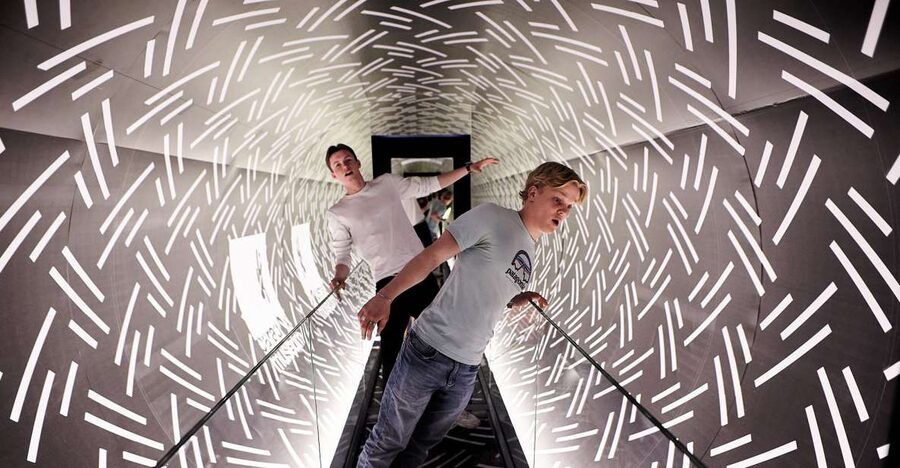
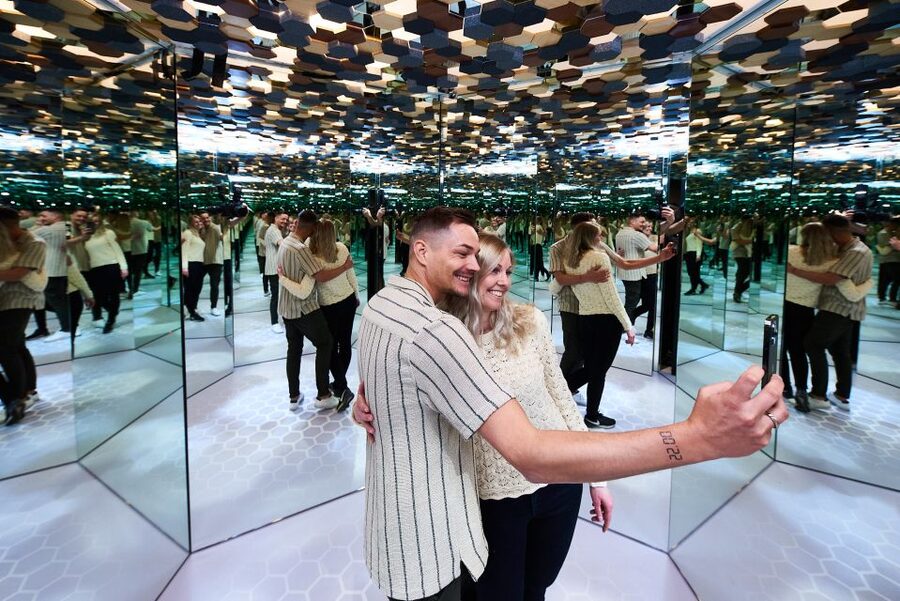
Paradox Museum Oslo turns your own senses into the main attraction. You walk through more than 70 exhibits that bend perspective, scramble scale, and make ordinary rooms behave in impossible ways. It is less a traditional museum than a hands-on playground with a science lesson tucked into every trick.
I like the clear photo points, which show you where to stand for the intended effect, and I like the short explanations and QR codes that reveal how each illusion works. The staff can also help with photographs, and Kseniia, known as the captain, has earned special praise for making the experience lively and welcoming.
The main drawback is value. At $29 per person for a listed one-hour visit, the ticket is not cheap, especially if you move quickly or arrive alone. Some exhibits may feel familiar, and a few have occasionally been unavailable, though families and couples can easily spend longer taking photos and trying each activity.
Key Points to Know Before You Go
- More than 70 hands-on exhibits: Expect optical illusions, perspective tricks, and interactive rooms rather than display cases.
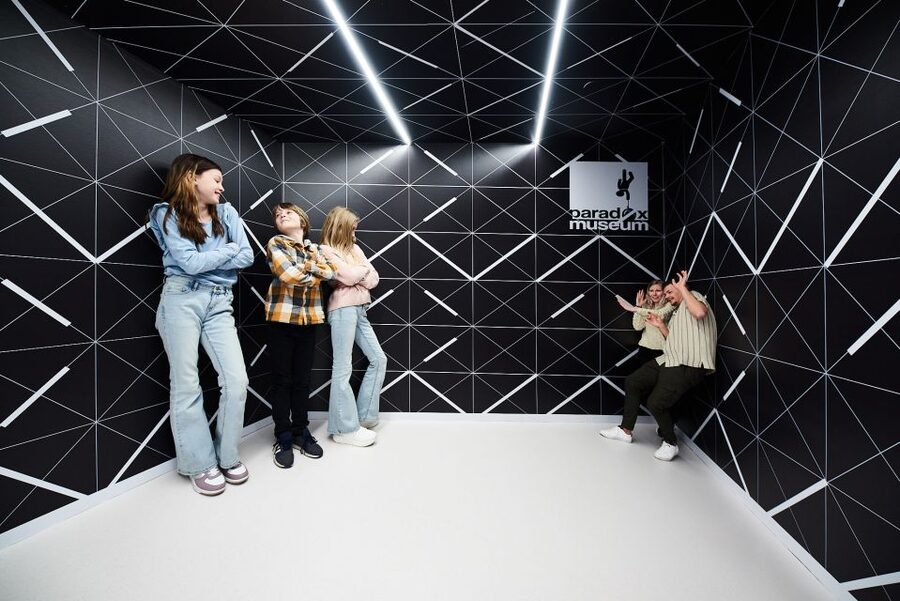
- Marked photography spots: Stand in the suggested position to make the visual effects work in your pictures.
- A one-way route: Follow the signs from one exhibit to the next, with no need to plan your own path.
- Best for playful groups: Families, couples, friends, students, and curious adults get the most from the photo-based activities.
- Central Oslo location: Nationaltheatret and Stortinget public transport stops are both only a couple of minutes away.
- Plan around one hour: You can finish in less time if you hurry, or stretch the visit toward two hours with a group.
What the Paradox Museum Actually Is
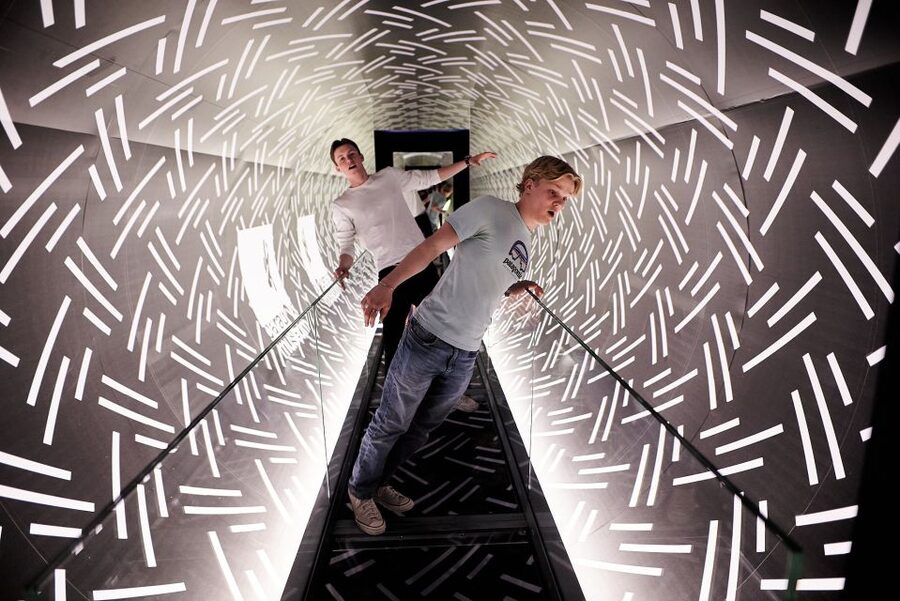
The Paradox Museum is built around a simple idea: your brain makes fast guesses about what your eyes see, and those guesses can be wrong. The exhibits use perspective, scale, mirrors, balance, and visual framing to expose the mistake.
That makes the museum more active than a gallery. You are not just looking at an illusion from behind a barrier. You step into the setup, stand on a marked spot, pose with a companion, or try to work out why the room appears to change.
The experience is designed to be fun first, but it also gives you useful hints about perception, physics, and perspective. Each exhibit has explanatory material, including QR codes, so you can learn the basic principle instead of simply taking a strange photograph and moving on.
You should expect a bright, playful setting made for participation. This is not the place for a quiet, serious museum hour. It is a good pick when you want something social, visual, and easy to understand without a long lecture.
More Museums in Oslo
- Kon-Tiki Museum Entrance Ticket
★ 4.5 · 1,096 reviews - The Fram Museum Admission Ticket
★ 4.5 · 490 reviews - Oslo: Oslo Discovery Tour with 2 Museums Included
★ 4.6 · 334 reviews
Following the One-Way Route Through 70 Exhibits
The museum uses a one-way flow. Signs direct you from one exhibit to the next, which keeps the route simple and helps prevent people from wandering backward through the rooms.
That layout has two benefits. First, you can arrive without a plan and still see the full collection. Second, it creates a natural rhythm: look, read, try the effect, take a picture, then move on.
At the start, give yourself a few minutes to understand how the exhibits work. Some are obvious right away. Others make more sense once you stand in the correct place or read the instructions. One useful lesson from the experience is that the marked position is not decoration. It is often the key to making the illusion appear properly.
You may find that the early displays are familiar forms of visual trickery. That is part of the trade-off. The museum does not present every idea as a new scientific discovery. Instead, it gathers well-known types of illusions into one accessible, attractive collection and makes you part of the picture.
The larger installations tend to provide the biggest payoff. Small displays can be amusing, but the room-sized effects give you more to do and usually produce the most memorable photographs.
How to Get the Best Photos
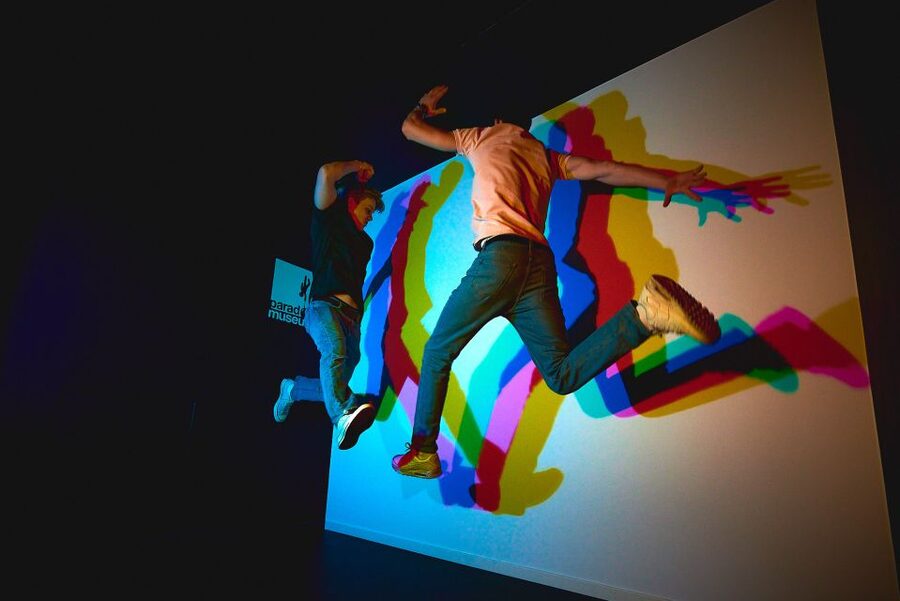
Photography is one of the main reasons to buy this ticket. The museum has clearly marked photo points that tell you where to stand for the intended angle. This saves you from taking a dozen confusing pictures and wondering why the trick did not work.
You will get better results if you follow the instructions closely. Ask your companion to frame the whole setup, not just the person posing. Many illusions depend on the surrounding lines, floor, wall, or furniture, so a close crop can lose the effect.
The staff may help with pictures, but do not assume someone will be waiting at every exhibit. Several people have enjoyed help from friendly staff members, while others found that assistance was available in only one area or not consistently along the route.
If you are visiting alone, this matters more. One kind staff member has offered to take photographs for solo visitors, and that can make a big difference. Still, the service is not presented as a dedicated photographer at each installation. If a particular picture matters to you, be ready to ask.
Couples and families have a natural advantage because you can take turns posing and photographing. Friends can make the most of the comic setups, especially when an illusion needs two people to show its full effect.
The Science Is Short, Clear, and Optional
Each paradox comes with information about how it is achieved. Descriptions and QR codes let you choose how much explanation you want.
You can move quickly if you are mainly interested in photographs. If you are visiting with children or students, stop and read more. The exhibits offer a straightforward way to discuss how the eye gathers information and how the brain fills in missing details.
This balance is useful because not everyone in a group wants a lesson at the same pace. One person can try the setup while another reads. Then you can swap roles.
The explanations could be more complete in some areas. A few installations may leave you unsure what to do until you watch someone else or study the instructions. Take that as a reason to slow down at the beginning rather than treating the whole museum as a quick photo stop.
The educational side is strongest when you treat the museum as an experiment. Do not only ask if a picture looks strange. Ask what your eyes expected to see, what changed when you moved, and why the suggested angle matters.
A different way to spend a day from here:
- Oslo: Scenic Fjord Cruise with Audio Guide Commentary
★ 4.5 · 5,375 reviews - Oslo Nature Walks: Island Hopping Tour
★ 4.8 · 2,713 reviews - Oslo: 100% Electric Oslofjord Sightseeing Cruise
★ 4.4 · 2,041 reviews - Oslo: Fjord Evening Cruise with Shrimp Buffet
★ 4.5 · 1,956 reviews
How Long You Need Inside
The stated duration is one hour, and that is a sensible planning figure for most people. You can reach the end in less time if you move briskly and take only a few pictures.
A solo visitor who does not stop long at each illusion may finish in under an hour. With children, a partner, or a group of friends, you are likely to pause more often, repeat photographs, and test the exhibits from different angles. Some people have spent close to two hours because the activities invite repeated attempts.
The important point is that the museum does not force you through at a frantic pace. You have time to explore and work with the interactive displays. Your actual visit depends more on your group and photography habits than on the size of the route.
For planning, allow one hour at minimum. If you have two hours before a flight, train, or dinner, the museum can fill that gap comfortably. Do not build your entire Oslo day around it, but it fits well into a flexible afternoon.
Is $29 a Fair Price?
The ticket costs $29 per person. That is a significant price for an attraction advertised around a one-hour visit.
The value improves if you visit with children, a partner, or friends and spend time using the installations instead of simply walking through. You are paying for access to a large collection of interactive setups, not just a short viewing of objects. The photographs and shared jokes are part of the experience.
The value is weaker if you are alone, in a hurry, or already familiar with several similar illusion museums. Some effects are not new, and a quick solo visit can feel brief for the cost. One practical way to judge it is to ask how much you value hands-on activities and unusual pictures compared with a conventional museum visit.
Oslo prices can make the ticket feel less surprising, but that does not automatically make it a bargain. I would book it when you want a light, social break from churches, galleries, and outdoor sightseeing. I would skip it if you are seeking a large museum with extensive historical or artistic content.
Who Will Enjoy It Most
Families are a strong match. Children can move, test, pose, and laugh while adults help read the explanations. The activities work across age groups because you do not need advanced science knowledge to understand the basic instructions.
Couples and friends also get good value from the format. Many of the best moments come from seeing someone else appear to shrink, float, tilt, or break the rules of an ordinary room. The museum gives you a reason to play together instead of simply looking at exhibits.
Students and curious adults may appreciate the perception and physics angle. The QR codes and exhibit descriptions add substance, though you should keep your expectations in check. This is an entertaining science experience, not a detailed academic museum.
Solo visitors can still enjoy it, especially if staff are available to help with photographs. The visit may be shorter because several activities become more fun with two or more people.
I would be cautious about booking it for someone who dislikes posing for pictures or prefers traditional museums. The collection is built around participation, and the social side is a large part of its appeal.
Location and Arrival in Central Oslo
The museum is in Oslo Municipality, in the heart of Oslo. The closest public transport stops are Nationaltheatret and Stortinget, each only a couple of minutes away.
That central setting makes the attraction easy to add between other plans. You do not need to arrange separate transportation as part of the ticket, so factor in your own route through the city.
Show your ticket at the museum entrance and arrive 10 minutes before your booked time for check-in. Timed entry helps manage the flow through the rooms, which matters in a photo-based attraction where people naturally pause.
Food and drinks are not allowed inside. Plan to eat before or after your visit rather than expecting to carry a snack through the exhibits.
The museum is wheelchair accessible. Since the route is one-way, it is sensible to follow the signs and allow enough time to move at your own pace through each area.
The Paradox Boutique at the Exit
The Paradox Boutique is included as part of the museum access, but purchases are separate. It sells games, souvenirs, and keepsakes tied to the museum’s visual trickery.
You do not need to shop, but the boutique makes sense as a final stop if you want to take home something that extends the experience. Games can also suit families who want to keep the puzzle theme going after leaving.
Do not treat the shop as a reason to buy the ticket by itself. Think of it as a short add-on at the end of the route.
What Could Be Better
The museum’s biggest weakness is uneven help at the exhibits. Staff members are often described as friendly, professional, and willing to assist, but you should not expect a guide stationed in every room.
That matters because the first few installations may be confusing. Read the instructions, look for the photo marker, and ask staff when you need help. A little guidance early on can prevent you from missing the intended effect.
A second issue is maintenance. At least one installation has sometimes been unavailable, and a few people have found some displays average compared with the larger rooms. A single faulty exhibit should not ruin the visit, but it is another reason not to judge the ticket by one favorite illusion.
Finally, the collection may feel familiar if you have visited other reality-changing room attractions. The difference here is the number of activities gathered into one route and the easy photo format. If you expect completely new tricks, you may be disappointed. If you want a well-organized hour of visual puzzles, it is a safer choice.
Should You Book Paradox Museum Oslo?
Book it if you want an easygoing, photo-friendly activity in central Oslo. It works especially well for families, couples, friends, and anyone who likes testing how the brain can be fooled.
I would allow at least an hour, arrive 10 minutes early, and keep your phone ready. Give the first exhibits time to make sense, use the marked photo points, and ask staff for help rather than guessing through every setup.
At $29, it is not an automatic bargain. Solo visitors and people who have seen several similar museums may find the route short or familiar. For a group that enjoys taking pictures, laughing at impossible angles, and learning the simple science behind the tricks, the ticket can be a pleasant change of pace from Oslo’s more traditional sights.
Free cancellation is available up to 24 hours before the booking, and you can reserve now and pay later if you want to keep your schedule flexible.
FAQ
How long does Paradox Museum Oslo take?
The listed duration is one hour. You may finish sooner if you move quickly, while families, couples, and groups can spend longer taking photographs and trying the interactive exhibits.
How many exhibits are inside the museum?
The museum has more than 70 interactive exhibits focused on optical illusions, perception, physics, and perspective.
Are photographs allowed at Paradox Museum Oslo?
Yes. The experience is designed to be photo-friendly, and clearly marked photo points show you the best angle for each effect.
Is staff help available for taking photographs?
Staff members can help with photographs, but assistance is not guaranteed at every exhibit. You should be ready to ask for help, especially if you are visiting alone.
Where is Paradox Museum Oslo located?
The museum is in central Oslo. Nationaltheatret and Stortinget are the closest public transport stops, both only a couple of minutes from the museum.
Is the museum wheelchair accessible?
Yes, Paradox Museum Oslo is wheelchair accessible. The exhibits follow a one-way route, so you should follow the signs through each area.
Recently added around Oslo
- The Vigeland Park in Oslo: Insta-Perfect Walk with a Local★ 5.0 · 3 reviews
- Oslo: Best of Oslo Walking Tour and Hop-on Hop-off Bus Tour★ 3.7 · 3 reviews
- Best of Oslo: Walking Tour with a local guide★ 4.6 · 3 reviews
- Afternoon Tea and Classic Concert on the Fjord★ 4.5 · 3 reviews
- Maral Kunst : Jewelry Bar Experience (Jewelry Making)★ 5.0 · 3 reviews
- Lake walk and campfire★ 4.7 · 3 reviews
- Oslo: Yoga & Hiking with a dog★ 5.0 · 3 reviews
- Oslo: Skjennungstoppen Wildlife Forest Hiking Tour★ 5.0 · 3 reviews
Oslo Tours, compared.

Scenic Fjord Cruise with Audio Guide Commentary
Read our review →




Guided Sightseeing Fjord Cruise on Premium Silent Boat
Read our review →

Browse the lists this tour appears in