

Reviewed · OSLO TOURS
Oslo & Vigeland Park Private Walking Tour
Oslo’s best introduction may be a walk that ends with one of the city’s most unusual art experiences: Vigeland Park, where more than 200 sculptures were created by one artist. Along the way, you move from Nobel history and royal buildings to the medieval walls of Akershus Fortress and the grand pedestrian spine of Karl Johans Gate.
I like the private format because you can ask questions and set the pace, and I like that public transport to the park is included. The main thing to consider is the balance: only about an hour is set aside for Vigeland Park, and one past guest felt the city portion took too much time.
- A private route through central Oslo: Your own group walks with an English-speaking guide rather than following a large shared party.
- Ten central sights in three hours: The route links the Nobel Peace Center, City Hall, the Royal Palace, Parliament, Akershus Fortress, and more.
- A useful first-morning orientation: The tour gives you a quick sense of Oslo’s main streets, civic buildings, royal quarter, and waterfront area.
- Vigeland Park is the artistic finale: You have about one hour to see more than 200 sculptures by Gustav Vigeland.
- Public transport is part of the plan: Your guide provides the ticket for the ride to Vigeland Park.
- Expect real walking: Gravel and unpaved paths are part of the route, and city traffic can be noisy.
Why This Oslo Walk Works as a First Look
This is not a museum-heavy tour. It is an outdoor introduction to Oslo, built around the city’s public spaces, landmarks, and stories. You begin at the Nobel Peace Center and finish at Vigeland Park, which gives the outing a clear shape instead of leaving you at the same central meeting point.
I especially like the route for your first morning in Oslo. One past guest said the tour helped with orientation and supplied fun facts about the city’s past. That is exactly where this experience makes sense: it helps you understand how the center fits together before you return to explore individual sites on your own.
The private setup matters. You can ask your guide to spend more time on politics, monarchy, architecture, Norwegian culture, or the Nobel Peace Prize. Guides named in the feedback include Diana, who was praised for making the first introduction to Oslo enjoyable, and another guide who helped a group with metro tickets after the scheduled portion.
Still, three hours goes quickly. The itinerary includes ten stops, and several receive only five or ten minutes. You will see a lot, but you will not study every building in detail. If Vigeland Park is your main reason for booking, tell the guide early that you want the park to receive plenty of attention.
From the Nobel Peace Center to Oslo City Hall
The tour starts at the Nobel Peace Center on Brynjulf Bulls plass. The center occupies a former train station, a fitting place to begin a walk about movement, public life, and the Nobel Peace Prize. Your guide explains Alfred Nobel and why the peace prize is presented in Norway.
The stop is scheduled for about ten minutes, so think of it as an introduction rather than a full museum visit. Admission to the tour stops is free, but this does not mean you have time for a full indoor visit. The value here is the story and the setting.
From there, you walk to Oslo City Hall. The building houses the local government and is known for its distinctive architecture and artworks tied to Norwegian history, culture, and working life. This is one of the places where a guide adds real value, since the building’s meaning is easier to grasp with context than from a quick photograph outside.
Again, the visit is short. You can see the building and hear the main points, but you should not expect a detailed art tour. If you later want to return, you will already know where it is and why it matters.
More Walking Tours in Oslo
- Oslo: Best of Oslo Walking Tour
★ 4.5 · 458 reviews - Oslo: Guided Walking Tour of Central Oslo
★ 4.7 · 438 reviews - Oslo: Historic Myths & Legends Evening Walking Tour
★ 4.8 · 408 reviews
The National Theatre and Royal Route
The National Theatre receives a brief stop of about five minutes. For a century, it has served as Norway’s main venue for classic and modern Norwegian theater, as well as major celebrations. The short pause gives you a useful cultural marker on the route, though theater lovers may wish for more time.
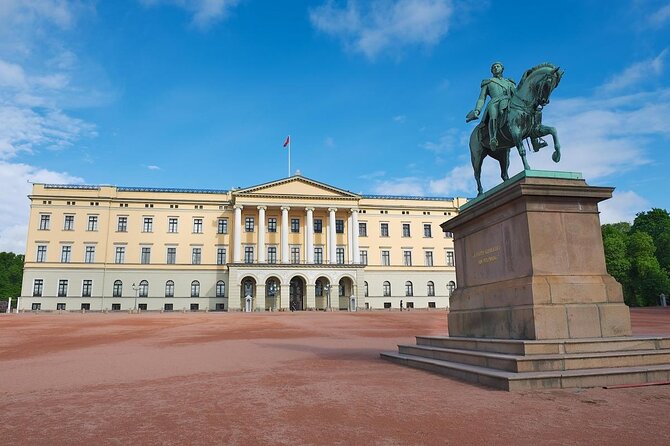
Next comes the Royal Palace, the official residence of Norway’s current monarch. Members of the Royal Court also work there. The palace grounds give the walk a change of mood, shifting from civic Oslo to the formal center of the monarchy.
The ten-minute stop is enough for an outside look and an explanation of the royal role. This tour does not promise an interior palace visit, so you should book it for the setting and background rather than access inside. If you have a strong interest in royal interiors, you will need separate plans.
Karl Johans Gate and the Norwegian Parliament
Karl Johans Gate is Oslo’s main pedestrian street and one of the easiest places to understand the city’s central layout. It was named for Karl III Johan, the Norwegian king who lived during the 1800s. Walking here connects the palace area with the political heart of town.
Your guide can help you read the street as more than a shopping route. It links important national institutions, public squares, and everyday city life. You also have the benefit of seeing Oslo at street level, with time to notice how locals use the center rather than simply passing landmarks by bus.
The next stop is the Norwegian Parliament, also called Stortinget. It overlooks Eidsvolls Plass and is described as the country’s most important symbol of democracy. The scheduled five minutes make this another concise exterior stop, but its position on the route is useful. The tour shows you where royal authority and elected government sit within the same central district.
Akershus Fortress and the Oslo Fjord
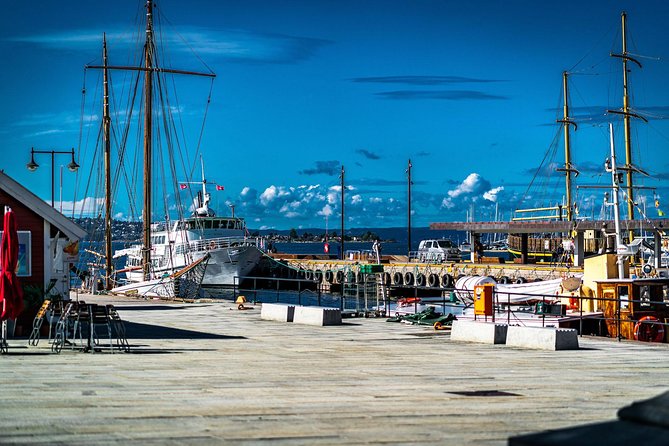
Akershus Castle and Fortress is the most substantial historic stop on the city portion. The site began as a medieval fortress and was later transformed into a Renaissance royal residence by King Christian IV in the 1600s.
You have about fifteen minutes here, making it the longest central-Oslo stop. The fortress also provides a view toward the Oslo fjord, which gives you a welcome break from streets and traffic. Bring a camera, but keep your expectations in check: fifteen minutes is enough for a guided look and a viewpoint, not a full exploration of every wall and building.
The route includes gravel and unpaved walkways in some areas. Wear shoes that can handle uneven ground, especially if the weather is wet. City traffic can also be noisy, since much of the walk takes place in the center. A private guide can help you pause where it is practical, but this is still an urban walking tour, not a quiet countryside stroll.
A different way to spend a day from here:
- Oslo: Scenic Fjord Cruise with Audio Guide Commentary
★ 4.5 · 5,375 reviews - Oslo Nature Walks: Island Hopping Tour
★ 4.8 · 2,713 reviews - Oslo: 100% Electric Oslofjord Sightseeing Cruise
★ 4.4 · 2,041 reviews - Oslo: Fjord Evening Cruise with Shrimp Buffet
★ 4.5 · 1,956 reviews
Bankplassen and Christiania Torv

Bankplassen is a small but useful piece of Oslo’s civic story. Its name refers to the former location of the Bank of Norway. The five-minute stop is brief, yet it helps show how the old center developed around government, commerce, and public institutions.
Christiania torv introduces an earlier name for Oslo: Christiania. The area is also known as Kvadraturen because of its rectangular street pattern, laid out as part of Christian IV’s Renaissance town.
This is the sort of detail that can slip past you if you walk alone. You may notice the straight streets and attractive older district, but the explanation gives the pattern a reason. The stop lasts about five minutes, so the guide will focus on the main idea rather than a long architectural lecture.
Taking Public Transport to Vigeland Park
After the central sights, the tour uses public transport to reach Vigeland Park. Your ticket is included, which is practical because it removes one small task from the middle of a guided walk.
The change from walking to public transport also makes the three-hour schedule possible. Oslo’s center and Vigeland Park are not treated as one continuous stroll, so the ride saves time and energy. You should still expect a physically active outing, since you will walk through the city, move across fortress paths, and continue through a large sculpture park.
The tour ends inside or at Vigeland Park near Nobels gate. You are free to keep exploring after the guide finishes, then return on your own by foot or public transport. That is a useful arrangement if you want extra time with the sculptures, and it directly addresses the main weakness of the fixed one-hour park visit.
Reading Gustav Vigeland’s Sculpture Park
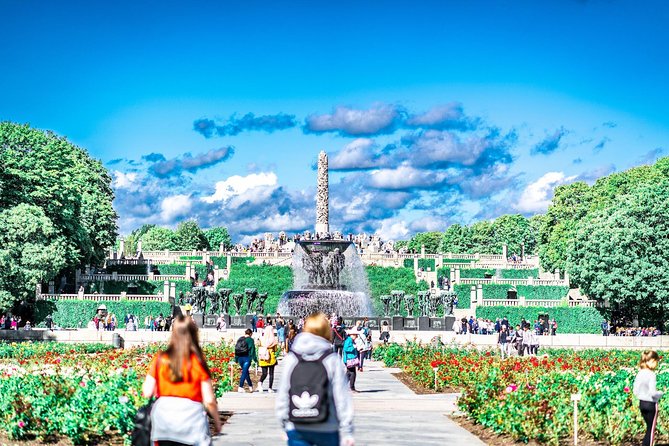
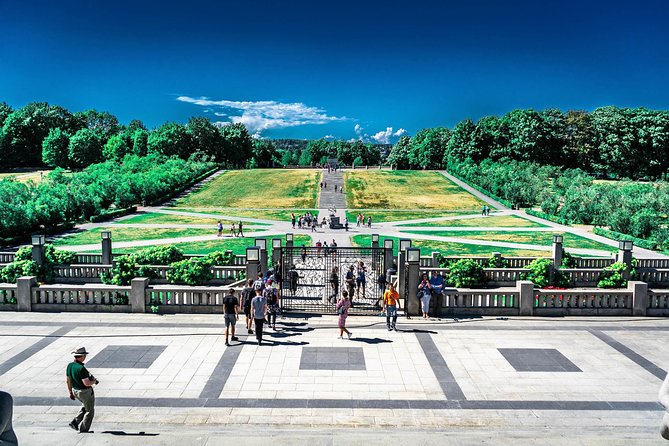
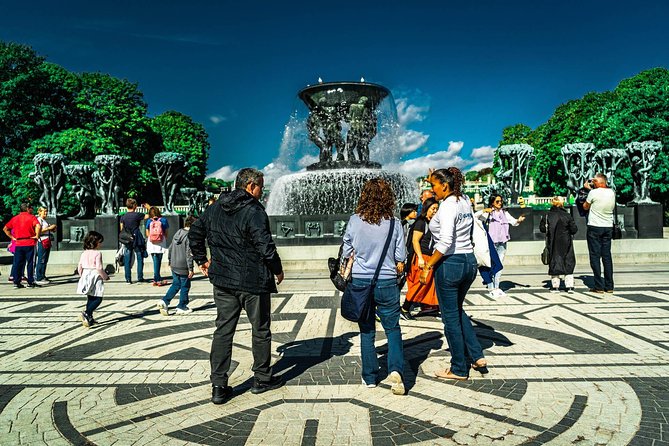
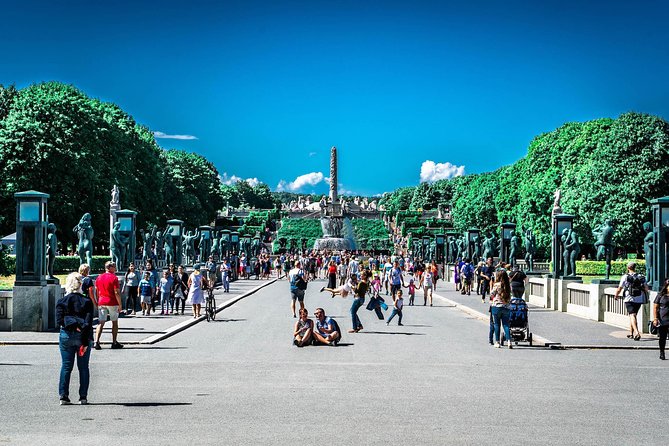
Vigeland Park is the tour’s strongest visual payoff. It contains more than 200 sculptures made by Gustav Vigeland, an extraordinary concentration of work by a single artist. Your guide introduces Vigeland and helps you look for themes, details, and a personal favorite.
The park is not presented as a quick photo stop. You have about one hour to walk among the sculptures, which is enough for an overview and a first impression. You may want to stay longer, especially if sculpture is your main interest. The tour’s end point makes that easy because you can continue without holding up the group.
A private visit is useful here because art can be personal. You can ask why a particular figure looks the way it does, compare works, or focus on the pieces that catch your eye. The supplied information does not promise a specialist art lecture, so expect an accessible introduction rather than an academic course on Vigeland.
The park also makes a good final stop because it changes the tone of the day. The earlier sites explain Oslo through government, monarchy, religion, urban planning, and defense. Vigeland Park asks you to slow down and look closely. That contrast gives the tour more range than a standard city-center walk.
What $278.71 Per Person Buys You
At $278.71 per person, this is not a bargain sightseeing walk. The price needs to be judged against the private format, not against a basic group tour. You are paying for a professional guide reserved for your group, a tailored pace, and public transport to Vigeland Park.
The value improves if you are traveling with family or friends and can use the available group discounts. A private tour can also save planning time. Instead of working out how to connect the Nobel Peace Center, Royal Palace, Akershus Fortress, and Vigeland Park, you receive one connected route with commentary.
The price is harder to justify if you only want a quick introduction and are comfortable walking Oslo independently. Several stops are short, and admission to the listed attractions is free. You are not paying for entry to a major museum or a long interior visit. The strongest reasons to pay are the guide, the private setting, and the efficient link to Vigeland Park.
For a group that values questions and personal attention, the cost may feel reasonable. For a solo visitor focused mainly on the sculpture park, you may prefer to visit Vigeland Park on your own and spend the full afternoon there.
Who Will Get the Most From This Tour
I would choose this for a first-time visitor who wants a clear introduction before exploring Oslo independently. It suits couples, families, and small groups who prefer a private guide and do not want to match their interests to a large party.
It is also a good fit if you want both national landmarks and art in one outing. The route gives you the Nobel Peace Center, Parliament, the Royal Palace, and Akershus Fortress, then shifts to Vigeland’s sculptures. That mix is particularly useful when your time in Oslo is limited.
You should be comfortable walking for around three hours, with some gravel and unpaved paths. The tour operates in all weather, so dress for the forecast and choose comfortable footwear. Service animals are allowed, and the route is near public transportation.
I would be cautious about booking it if you want long visits inside museums or buildings. You should also speak up at the beginning if you want extra time at Vigeland Park. The private format gives you a chance to shape the experience, but the guide needs to know your priorities.
Practical Details Before You Book
The experience is offered in English and lasts about three hours. You meet at the Nobel Peace Center, Brynjulf Bulls plass 1, and finish at Vigeland Park, Nobels gate 32.
Because the end point is different from the start, plan your onward route. You can continue enjoying the park, then make your own way back by walking or public transport. Your guide provides the public transport ticket used to reach the park during the tour.
The tour runs in all weather. Oslo’s changing conditions make layers and weatherproof clothing sensible, though the supplied details do not specify a recommended clothing list. Remember that traffic noise is unavoidable in much of the city center.
You receive confirmation when booking. Free cancellation is available if you cancel at least 24 hours before the start time. Cancellations or changes made within 24 hours are not refunded or accepted.
Should You Book Oslo and Vigeland Park?
Book this private walk if you want a well-organized first look at Oslo, value direct access to an English-speaking guide, and like the idea of ending among Gustav Vigeland’s remarkable sculptures. The strongest features are the private pace, the useful city orientation, and the included transport to the park.
Before booking, decide what matters most. If you want city context plus a taste of Vigeland Park, the route covers both well. If you mainly want Vigeland, ask for more park time or plan to stay after the official three hours. At $278.71 per person, it makes the most sense for a group that can use the discount and values a personal guide rather than a low-cost walk.
FAQ
How long does the Oslo and Vigeland Park tour last?
The tour lasts approximately three hours.
Where does the tour begin?
It begins at the Nobel Peace Center, Brynjulf Bulls plass 1, 0250 Oslo, Norway.
Where does the tour end?
It ends at Vigeland Park, Nobels gate 32, 0268 Oslo, Norway.
Is transportation to Vigeland Park included?
Yes. A public transport ticket to Vigeland Park is included.
Is admission to Vigeland Park included?
Yes. Vigeland Park has free entry, and admission is included as part of the tour.
Is this a private tour?
Yes. Only your group participates in the activity.
What language is the tour offered in?
The tour is offered in English.
What should I expect physically?
You should have a moderate level of physical fitness. Some parts use gravel or unpaved walkways, and the tour operates in all weather.
Can I cancel the tour for a full refund?
Yes, if you cancel at least 24 hours before the experience start time. Cancellations made less than 24 hours before the start time are not refunded.
Recently added around Oslo
- The Vigeland Park in Oslo: Insta-Perfect Walk with a Local★ 5.0 · 3 reviews
- Oslo: Best of Oslo Walking Tour and Hop-on Hop-off Bus Tour★ 3.7 · 3 reviews
- Best of Oslo: Walking Tour with a local guide★ 4.6 · 3 reviews
- Afternoon Tea and Classic Concert on the Fjord★ 4.5 · 3 reviews
- Maral Kunst : Jewelry Bar Experience (Jewelry Making)★ 5.0 · 3 reviews
- Lake walk and campfire★ 4.7 · 3 reviews
- Oslo: Yoga & Hiking with a dog★ 5.0 · 3 reviews
- Oslo: Skjennungstoppen Wildlife Forest Hiking Tour★ 5.0 · 3 reviews
Oslo Tours, compared.

Scenic Fjord Cruise with Audio Guide Commentary
Read our review →


Guided Sightseeing Fjord Cruise on Premium Silent Boat
Read our review →
Browse the lists this tour appears in