
Reviewed · OSLO TOURS
Oslo: 3-hour Private Walking Tour of Bohemian Grünerløkka
Grünerløkka is where Oslo trades grand monuments for street art, old factories, hillside cottages, and creative energy. This three-hour private walk follows the Akerselva river through one of the city’s most interesting districts, ending at Mathallen food hall, a useful place to stop for lunch.
I like the route’s mix of art and history, especially the chance to visit Edvard Munch’s grave alongside the graves of Henrik Ibsen and Bjørnstjerne Bjørnson. I also like the timing: you finish at Vulkan, close to Mathallen, rather than being dropped back at the starting point just as lunchtime begins.
The main drawback is the price. At $461 for a private group of up to one, this is a costly walk if you are visiting alone. It makes more sense when the cost is shared, and you should confirm the final price for your party before booking.
Key points to know before booking
- Munch’s Oslo connection: Visit Our Saviour’s Cemetery, where Edvard Munch is buried with two other major Norwegian cultural figures.
- A creative river route: Follow the Akerselva past industrial brick buildings, graffiti, street art, and former working-class neighborhoods.
- The best photo stops: Blå, Damstredet, and Telthusbakken each offer a different view of Oslo’s bohemian side.
- A practical lunch finish: The walk ends by Mathallen in Vulkan, so you can eat immediately after the tour.
- Private guiding: Your group has its own guide, with tours offered in English, Spanish, French, German, Italian, or Norwegian.
- A full three hours on foot: Comfortable shoes and clothing suited to the weather are essential.
Why Grünerløkka makes a better walking subject than central Oslo
Most first-time visits to Oslo begin with the familiar city-center sights. This walk takes a different route. It starts at Youngstorget, near the fountain in the middle of the square, then moves through Sentrum before heading toward Grünerløkka.
That change of scenery is the point. You begin among central Oslo streets, then gradually reach a district shaped by artists, free thinkers, music venues, independent culture, and old industrial buildings. The route gives you a sense of how Oslo changes from official capital to local neighborhood.
The guide explains the area as you walk, so you are not simply ticking off photo stops. You get stories about artists and local history, along with the role of street art and parkland in Grünerløkka’s identity. This is especially useful if you prefer to understand how a place developed rather than see only its postcard sights.
The private format should make it easier to ask questions or adjust the pace. That matters on a walking route with several stops, since you may want more time for photography at one location and less at another. Past guide examples include Tone and Diana, both named positively in the supplied information. Your assigned guide may be different.
More Walking Tours in Oslo
- Oslo: Best of Oslo Walking Tour
★ 4.5 · 458 reviews - Oslo: Guided Walking Tour of Central Oslo
★ 4.7 · 438 reviews - Oslo: Historic Myths & Legends Evening Walking Tour
★ 4.8 · 408 reviews
From Youngstorget to Ankerbrua
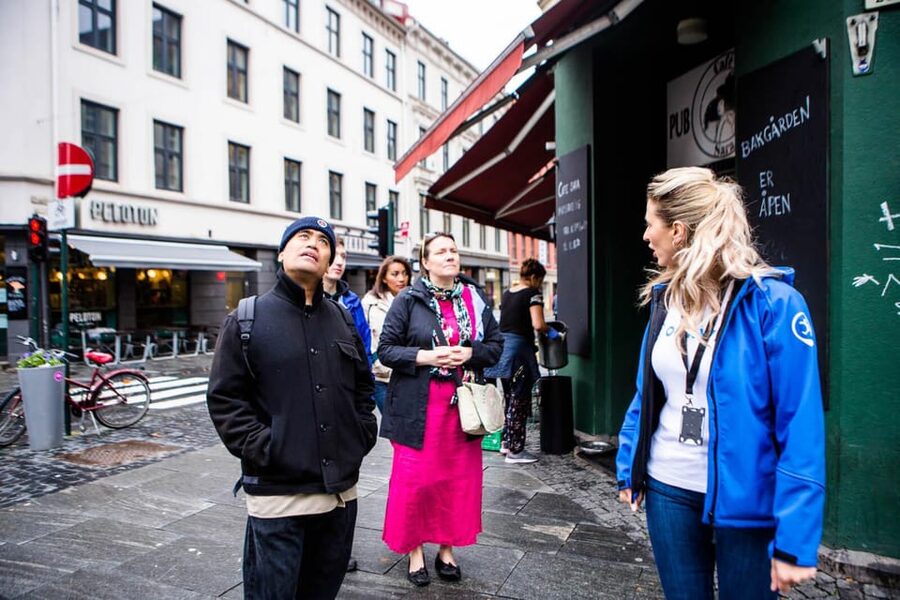
Meet your guide at Youngstorget, by the fountain in the center of the square. The guide is expected to arrive about 10 minutes before departure and carries a sign with the local partner’s name, which should make the meeting point easier to identify.
The first portion takes about 30 minutes through Sentrum. You then pass Torggata and Kulturkirken Jakob before reaching Ankerbrua. These early stops help connect the central city with the neighborhood ahead.
Ankerbrua is a useful transition point. From here, the route begins to feel less like a standard city-center walk and more like a neighborhood outing. The Akerselva river becomes an important part of the experience, with the path moving alongside flowing water, old brick structures, colorful houses, and signs of Oslo’s industrial past.
You should not expect a grand sightseeing route packed with famous monuments. The reward is the changing texture of the city. You see places where industry, housing, art, and public spaces sit close together. One past participant especially enjoyed the industrial side of the walk and its artwork, which is a good clue about the tour’s character.
Grünerløkka, where industrial Oslo meets street art
The tour spends roughly two and a half hours in Grünerløkka. That is enough time to cover a range of sights without rushing from one landmark to the next.
The route includes Olaf Ryes plass, a local square that helps introduce the neighborhood’s social side. From there, you continue toward Blå, a music venue known here for its large chandelier and the colorful street art around it.
Blå is one of the route’s strongest photo stops. The venue itself has a distinctive look, while the surrounding art gives the area a rougher, more playful feel than Oslo’s polished central streets. The stop also shows how music and visual art overlap in Grünerløkka.
Next comes Brenneriveien, another part of the district where old industrial buildings and painted walls shape the view. I like this section because it avoids presenting Oslo as only a tidy Scandinavian capital. You see brick, graffiti, reused industrial spaces, and creative work in the same walk.
The guide’s stories are important here. Without explanation, street art and converted industrial buildings can blur into a pleasant but vague stroll. With a private guide, you can ask why certain places matter and how the neighborhood connects to Oslo’s artists and free thinkers.
The tradeoff is that the route’s appeal depends on your interest in urban culture. If you want royal history, major museums, or a long list of famous monuments, this is not the best use of three hours. If you enjoy city neighborhoods with character, the route has much more to offer.
Damstredet and Telthusbakken: Oslo’s prettiest small-scale streets
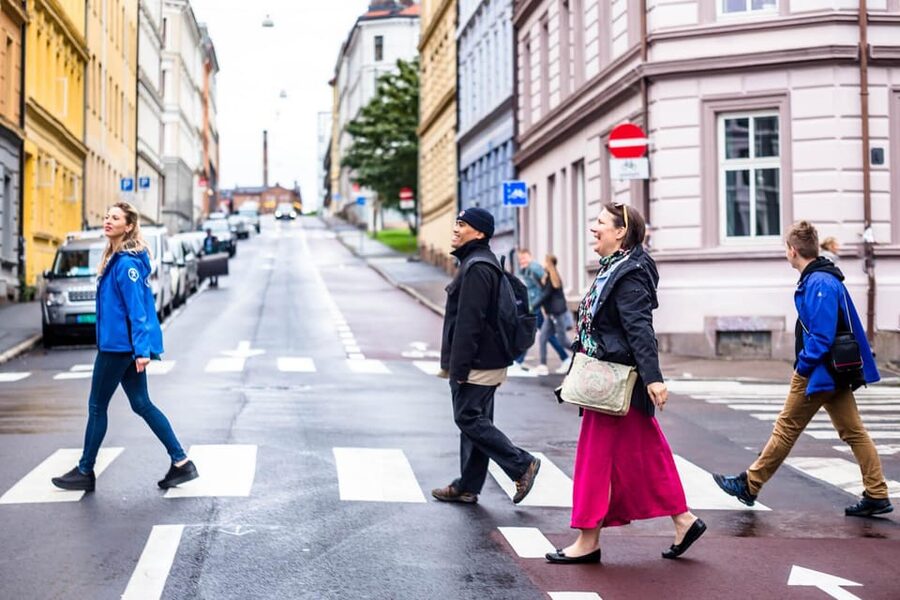
The walk then turns toward Damstredet and Telthusbakken, two of the most charming parts of the route. These streets offer a sharp change from the industrial brick and street art seen earlier.
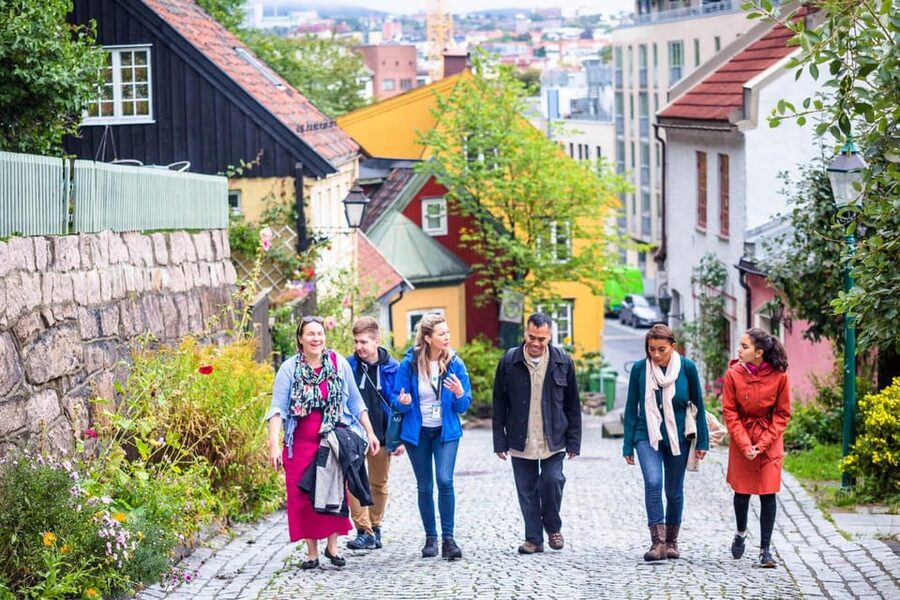
Damstredet is lined with colorful houses that make an easy photo stop. The scale feels intimate, and the painted facades give you a glimpse of an older Oslo that is easy to miss if you stay on the main avenues.
Telthusbakken is a hillside street with small houses and gardens. The route goes down the quaint street, giving you a chance to photograph the houses from a useful angle. It is the sort of place where you should slow down, look beyond the main view, and notice how the homes fit into the slope.
These stops are valuable because they prevent the tour from becoming only an urban art walk. You see two different sides of Grünerløkka: one shaped by industry and creative culture, the other defined by modest houses, gardens, and older residential streets.
Wear shoes with good support. The tour lasts three hours and includes river paths, city pavement, neighborhood streets, and a hillside section. The description does not provide a detailed accessibility assessment, so anyone concerned about slopes or walking conditions should ask the operator before booking.
A different way to spend a day from here:
- Oslo: Scenic Fjord Cruise with Audio Guide Commentary
★ 4.5 · 5,375 reviews - Oslo Nature Walks: Island Hopping Tour
★ 4.8 · 2,713 reviews - Oslo: 100% Electric Oslofjord Sightseeing Cruise
★ 4.4 · 2,041 reviews - Oslo: Fjord Evening Cruise with Shrimp Buffet
★ 4.5 · 1,956 reviews
Our Saviour’s Cemetery and Norway’s cultural giants
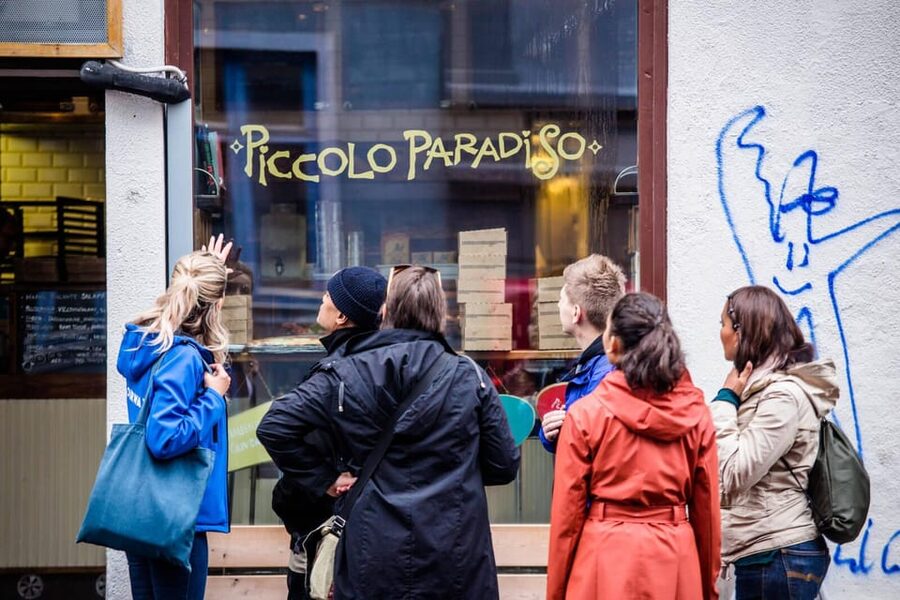
Our Saviour’s Cemetery gives the tour its strongest historical pause. Here you can visit the graves of Henrik Ibsen, Bjørnstjerne Bjørnson, and Edvard Munch, three major figures in Norwegian culture.
Munch is the name most likely to draw you here, especially if you have seen his work at Oslo’s museums. The tour adds a local connection by explaining that he lived at several addresses in this area. His grave also gives the walk a more personal link to Grünerløkka, rather than treating him as a distant museum figure.
Ibsen and Bjørnson broaden the story. Together, the three graves create a compact introduction to Norway’s literary and artistic life. You do not need to be an expert to appreciate the stop. The guide supplies the context, and the setting offers a quiet break after the busier streets.
A cemetery is also a place to behave respectfully. This is not a theatrical attraction or a quick celebrity photo stop. Allow the guide to set the tone, and use the time to understand why this small area matters to Norway.
Quan Thang Ancient House and the route’s surprises
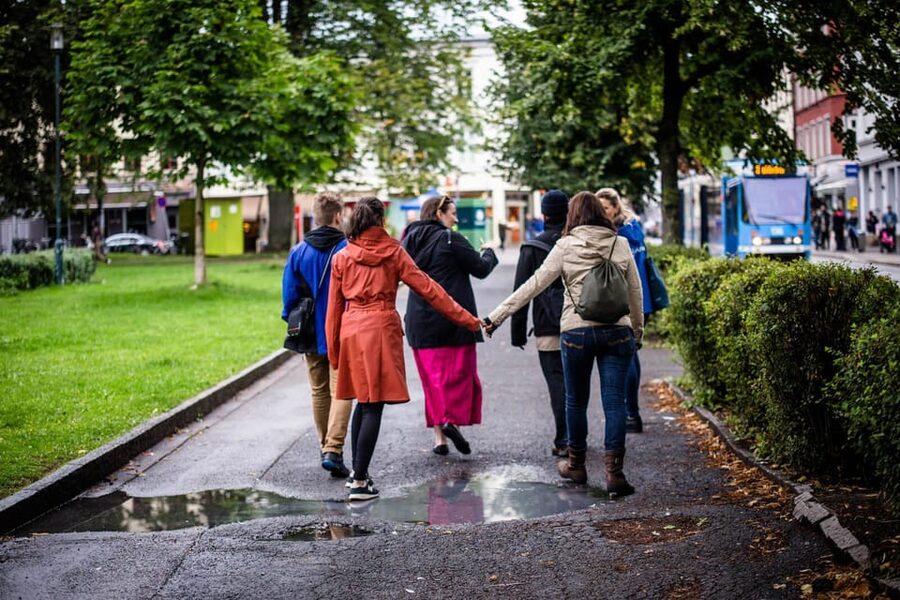
The itinerary also includes Quan Thang Ancient House, a stop that adds another unexpected note to the walk. The supplied details do not explain the building’s history or whether you enter it, so you should think of it as a sightseeing point rather than a promised interior visit.
That uncertainty is worth noting because the tour is built around a sequence of neighborhood discoveries. Some stops are major visual highlights, such as Blå or Telthusbakken. Others work mainly as links in the larger story of Grünerløkka.
This is one reason a private guide can be useful. You can ask for more background at a stop that interests you instead of moving on with only a quick photograph. One participant specifically wished for more stories and anecdotes, so if that is important to you, say so at the beginning. The guides appear prepared to explain the area, but the amount of detail may depend on your questions and the guide’s approach.
Finishing at Vulkan and Mathallen
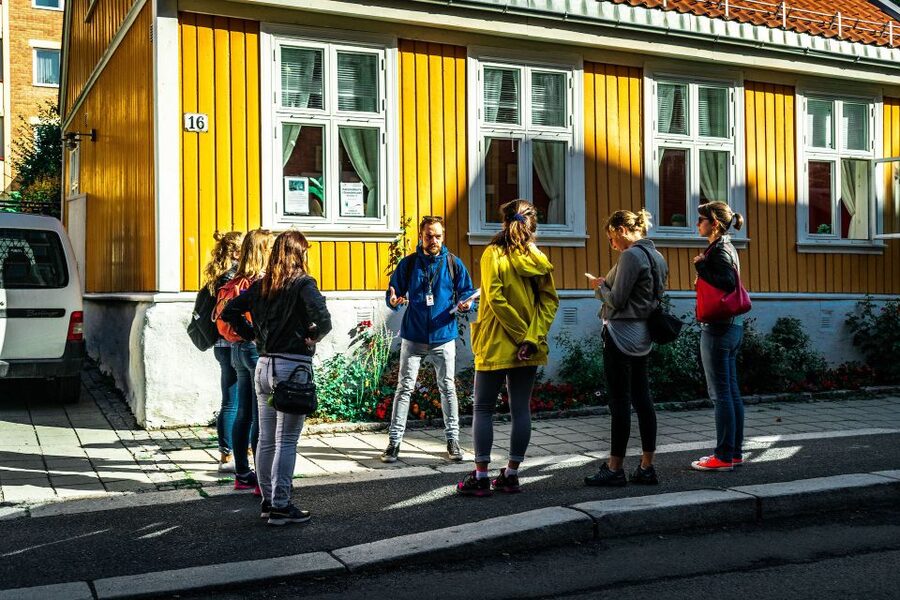
The tour ends at Vulkan, at the entrance area near Mathallen Oslo. This is one of the smartest features of the route.
Mathallen is Oslo’s food destination, with the tour placing you there just in time for lunch. The surrounding Vulkan district is presented as a sustainable neighborhood focused on food and environmental ideas, while the old industrial buildings and colorful graffiti continue the visual theme of the walk.
You are not required to eat at Mathallen, but it is a natural next step. Ending beside the food hall means you can choose your lunch without spending time finding another district or returning immediately to the center.
The return trip is your responsibility. You can walk about 1 kilometer, or roughly 15 minutes, back to Youngstorget, or use public transport. A transit ticket is not included. You can also stay in Grünerløkka and keep exploring after the walk, which makes the finish more useful than a simple return to the meeting point.
If you plan to eat at Mathallen, leave room in your schedule. The tour itself lasts three hours, and lunch afterward will turn this into a longer half-day outing.
Price, private format, and guide languages
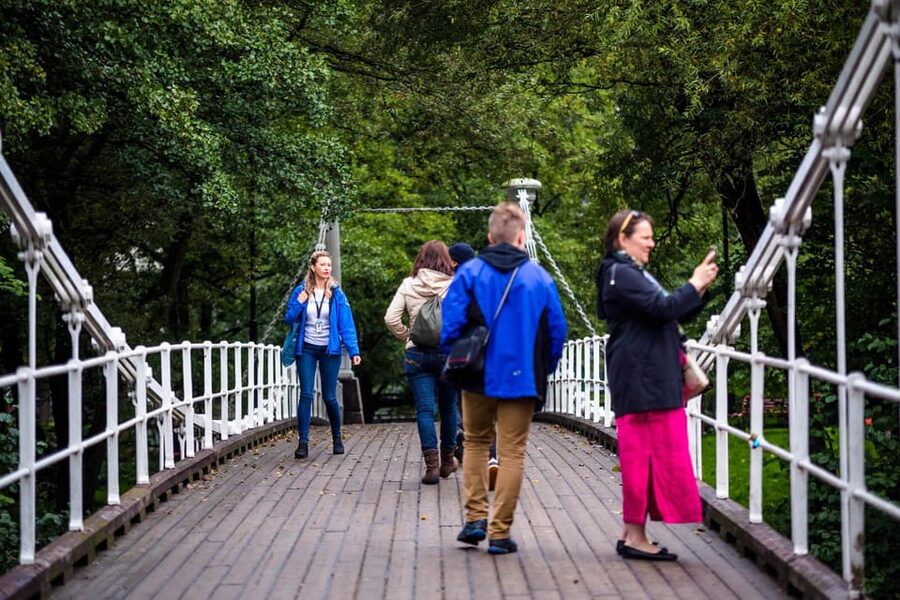
The listed price is $461 for a group up to one. That is a steep rate for a three-hour walk if you are paying alone. The private format gives you a dedicated guide and more control over questions and pace, but the value improves only if the price can be shared across the people in your booking.
Because the supplied pricing line specifies a group up to one, check the booking screen carefully before paying. Confirm how your party is counted and what the final total will be. Do not assume the displayed amount automatically covers a larger group.
The tour is offered in English, Spanish, French, German, Italian, and Norwegian. That range is useful if you want to discuss art, local history, or neighborhood details in a language you understand best.
The overall rating is 4.6 from 26 ratings, with particularly strong praise for the guides and the unusual route. Diana is described as flexible, warm, well informed, and fun to spend time with. Tone is praised for explaining the area well, especially its industrial side and artwork. Those comments suggest that the human side of the tour can make a major difference.
At the same time, one clear suggestion was for more stories and anecdotes. If you enjoy a talk-heavy walk, ask your guide for extra local stories rather than waiting for them to appear. The private setting gives you a good chance to shape the conversation.
Who should book this Grünerløkka walk
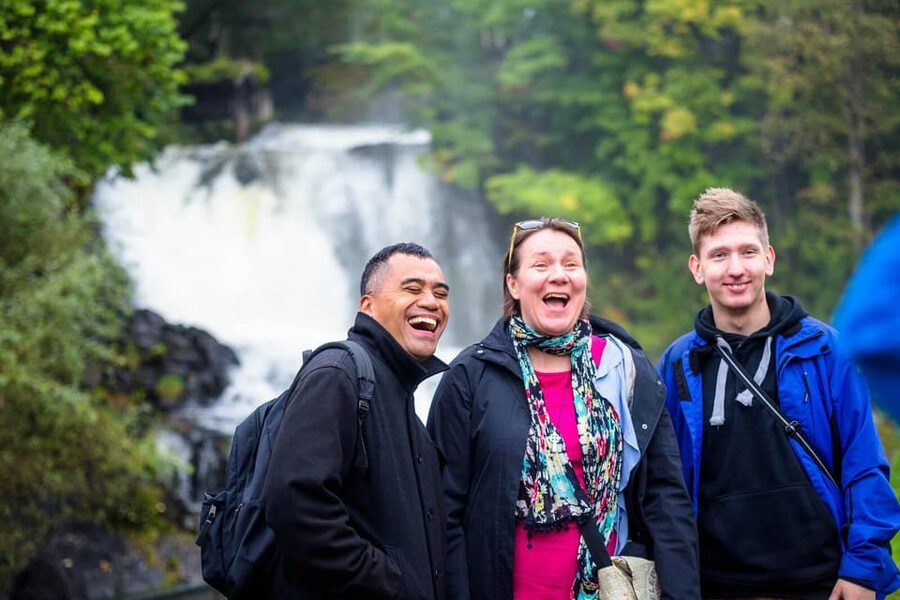
I would choose this tour if you have already seen some of central Oslo and want a closer look at the city’s creative neighborhoods. It also suits anyone interested in Munch, street art, industrial architecture, colorful wooden houses, or food markets.
The route works well for a first visit if you prefer local atmosphere to a checklist of famous sights. It gives you a broad introduction to Grünerløkka in one morning or early afternoon, with enough variety to keep the walk moving.
It may not suit you if you dislike three-hour walks, want a museum-heavy experience, or are looking for a low-cost activity. The route has several changes in setting, and the price is hard to justify for a solo booking unless private guiding is a major priority.
Book with weather in mind. Comfortable shoes and clothing suited to current conditions are essential, since this is an outdoor walk from start to finish. Free cancellation is available up to 24 hours before departure, and you can reserve now and pay later if those options appear for your chosen time.
Should you book it?
Book this private Grünerløkka tour if you want Oslo explained through its neighborhoods rather than only its headline sights. The strongest reasons are Munch’s grave, Blå’s street art, the charming streets of Damstredet and Telthusbakken, and the convenient Mathallen finish.
I would be more cautious if you are alone and the full $461 price applies to you. For a couple, family, or private group sharing the cost, the format becomes easier to justify, especially if you value a flexible guide and a route that avoids the usual tourist circuit.
FAQ
Where does the tour begin?
The tour begins at Youngstorget, by the fountain in the middle of the square in Oslo’s city center.
Where does the tour end?
The tour ends at Vulkan 16, near the entrance to Mathallen Oslo in the Grünerløkka district.
How long is the walking tour?
The tour lasts three hours. About 30 minutes are spent in Sentrum, followed by roughly two and a half hours around Grünerløkka.
Which languages are available?
The live tour guide may provide the tour in Spanish, English, French, German, Italian, or Norwegian.
Is the tour private?
Yes. It is offered for a private group.
Can I visit Mathallen after the tour?
Yes. The tour ends by the entrance to Mathallen, and you may stay in the area for lunch or continue exploring. You can walk about 15 minutes, or 1 kilometer, back to Youngstorget, or use public transport. A public transport ticket is not included.
More 3-Hour Experiences in Oslo
- Oslo: 3-Hour Highlights Bike Tour
★ 4.8 · 1,609 reviews - Oslo: 3-hour Kayaking Trip on the Oslofjord
★ 4.9 · 43 reviews - Private Bike Tour (3 hours)
★ 5.0 · 33 reviews - 3 Hours Walking Tour for Great Food in Oslo
★ 5.0 · 32 reviews
Recently added around Oslo
- The Vigeland Park in Oslo: Insta-Perfect Walk with a Local★ 5.0 · 3 reviews
- Oslo: Best of Oslo Walking Tour and Hop-on Hop-off Bus Tour★ 3.7 · 3 reviews
- Best of Oslo: Walking Tour with a local guide★ 4.6 · 3 reviews
- Afternoon Tea and Classic Concert on the Fjord★ 4.5 · 3 reviews
- Maral Kunst : Jewelry Bar Experience (Jewelry Making)★ 5.0 · 3 reviews
- Lake walk and campfire★ 4.7 · 3 reviews
- Oslo: Yoga & Hiking with a dog★ 5.0 · 3 reviews
- Oslo: Skjennungstoppen Wildlife Forest Hiking Tour★ 5.0 · 3 reviews
Oslo Tours, compared.

Scenic Fjord Cruise with Audio Guide Commentary
Read our review →


Guided Sightseeing Fjord Cruise on Premium Silent Boat
Read our review →
Browse the lists this tour appears in