
Reviewed · OSLO TOURS
Oslo: 3-hour Highlights & Vigeland Park Private Walking Tour
Oslo saves its biggest artistic surprise for the end of this tour: Vigeland Sculpture Park, a vast open-air collection where hundreds of human figures tell stories about life, family, struggle, and death. Before you reach it, you’ll walk through the city center, pass the Royal Palace and Parliament, and look across the harbor from Akershus Fortress.
I like the efficient route and the private format. In three hours, you see the main central sights, then use public transport to reach Frogner Park without wasting time on a long walk. I also like the guide’s flexibility. A previous booking with only two participants allowed the guide to respond to their interests and questions. The main consideration is the price: at $518 for a group of up to one person, this makes sense only if personal guiding and a short, carefully planned introduction to Oslo are worth a serious splurge.
Key points to know before booking
- Vigeland’s Monolith is the grand finale: See 36 human figures carved into a single soaring stone form at the center of Frogner Park.
- The route covers central Oslo quickly: City Hall, the National Theatre, the Royal Palace, Karl Johans gate, Parliament, and Akershus Fortress all fit into the first 90 minutes.
- Public transport saves your feet: A 30-minute transit segment takes you from the center to Frogner Park, and the guide provides return tickets.
- The tour begins at the Nobel Peace Center: Meet outside the entrance at Brynjulf Bulls plass 1, about 10 minutes before departure.
- This is a private experience: Your guide can answer questions and adjust the conversation more easily than on a large group outing.
- Expect gravel and unpaved paths: Comfortable shoes and clothing suited to Oslo’s weather matter, especially in Vigeland Park.
A fast introduction to Oslo’s center
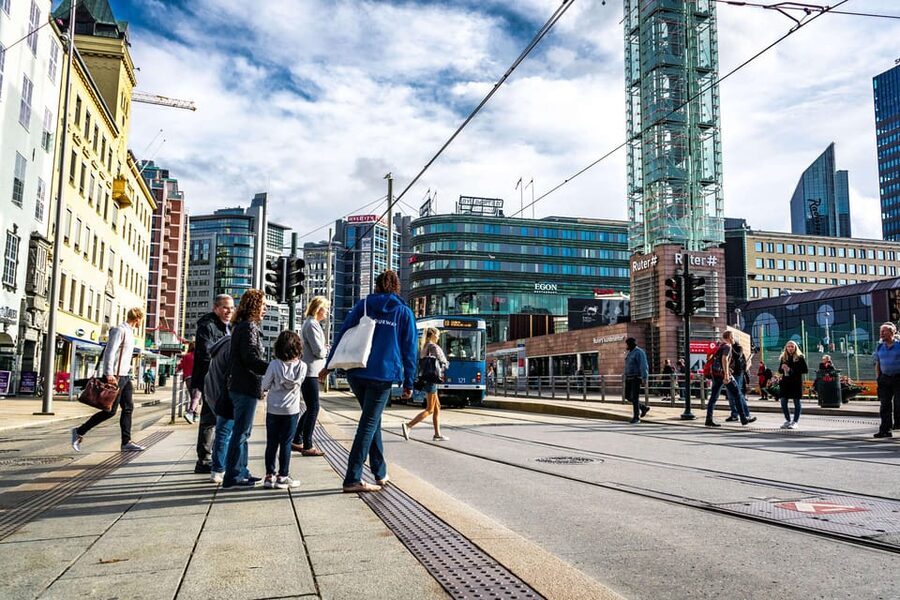
The tour begins outside the Nobel Peace Center, an apt starting point for a city walk focused on Norway’s government, culture, and public life. You’ll hear the story of Alfred Nobel and the Peace Prize before moving through the nearby central streets.
The Nobel Peace Center itself is listed as a sightseeing stop rather than a full museum visit, so you should not expect extended indoor exhibition time. Its value here is as a doorway into Norway’s international role and a useful way to begin the city’s story.
From there, the route takes you toward Oslo City Hall. The building was constructed between 1931 and 1950 and is one of the city’s most recognizable public structures. Your guide can explain how City Hall fits into Oslo’s civic life, while you take in its broad exterior and position near the harbor.
I like this opening because it gives you context before the sightseeing becomes a checklist. You are not simply moving from one photo stop to another. The route connects peace work, local government, national theater, monarchy, Parliament, and military history within a compact area.
More Walking Tours in Oslo
- Oslo: Best of Oslo Walking Tour
★ 4.5 · 458 reviews - Oslo: Guided Walking Tour of Central Oslo
★ 4.7 · 438 reviews - Oslo: Historic Myths & Legends Evening Walking Tour
★ 4.8 · 408 reviews
Oslo City Hall and the National Theatre
The National Theatre brings a cultural note to the walk. It is associated with some of Norway’s greatest playwrights, giving your guide a chance to explain the country’s literary and theatrical traditions.
You will not spend an hour inside the theater on this tour. Think of the stop as an exterior visit and a short lesson about Norwegian culture. If theater is your main interest, you may want a separate visit later, but the stop works well in a broad city overview.
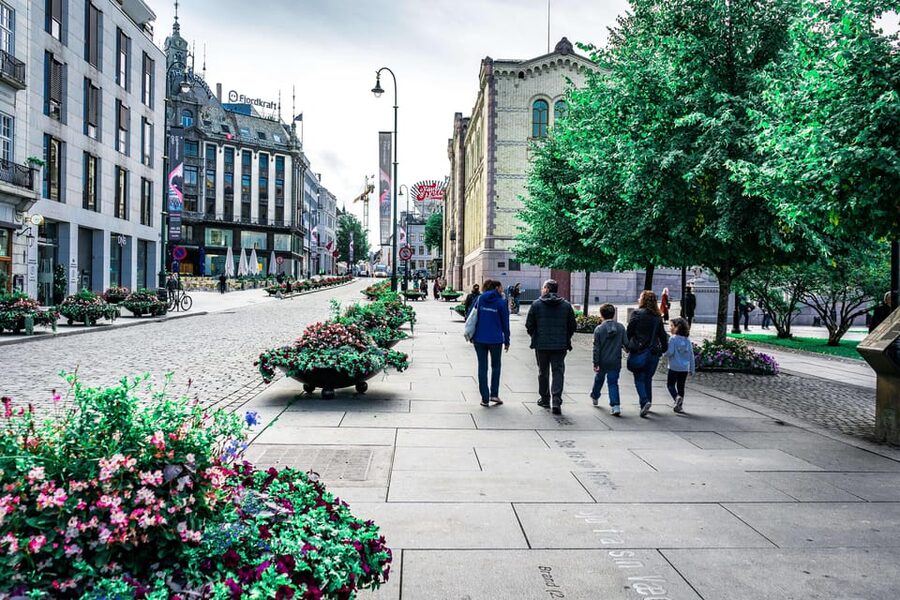
The walk then continues along Karl Johans gate, Oslo’s main pedestrian shopping street. This is the city’s central spine, linking several important institutions. It is also a practical place to get your bearings. After this tour, you should have a clearer sense of how the central streets relate to the harbor, palace, and government buildings.
The Royal Palace and Parliament
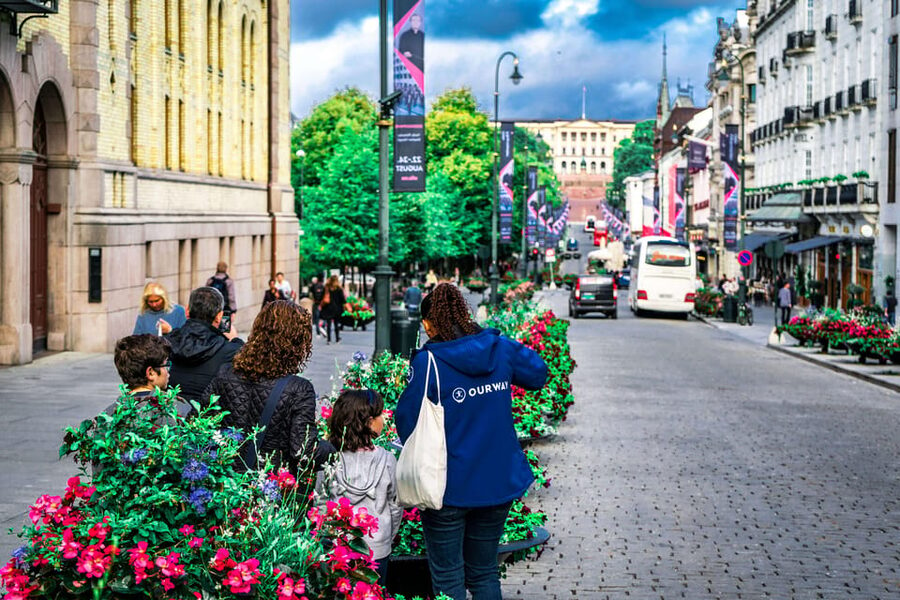
The Royal Palace sits uphill at the end of Karl Johans gate, overlooking the central street. The setting helps explain its symbolic importance. You see the palace not as an isolated building, but as the visual endpoint of Oslo’s main ceremonial avenue.
The Parliament building provides the political counterpoint. From here, the guide explains where Norway is governed and how the country’s public institutions fit into the center of the capital.
I like this pairing because it gives you two sides of national power in a short walk: the monarchy and the elected government. The tour does not promise an interior visit to either building, so plan on outdoor sightseeing and explanation rather than rooms, displays, or formal entry.
The hill and city-center walking also mean you should wear shoes with good support. The route is not described as difficult, but three hours of walking, including later paths in Frogner Park, can be tiring if you arrive in stiff footwear.
Akershus Fortress above the harbor

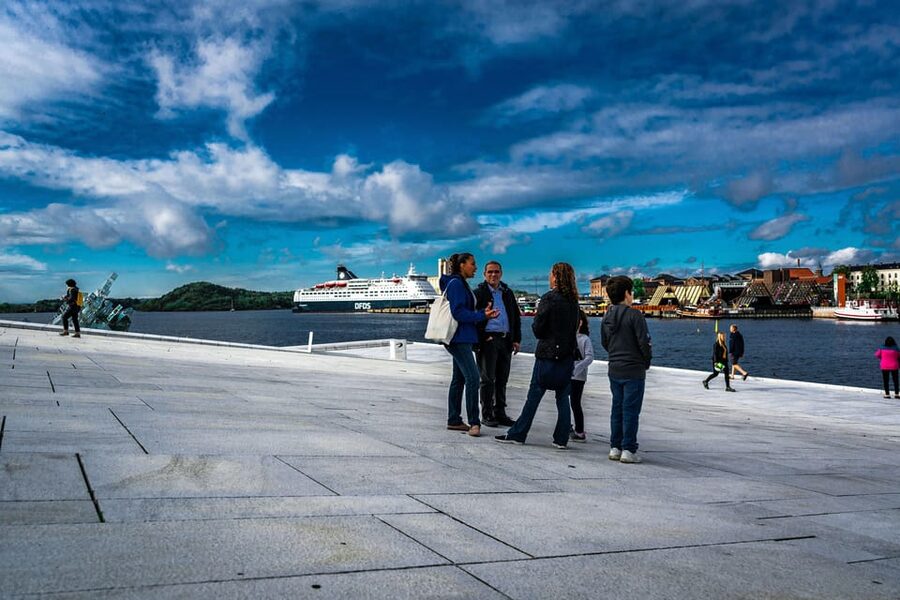
Akershus Fortress is one of the most rewarding stops on the central route. It overlooks Oslo’s harbor, giving you a change of scale after the streets and public buildings. You can connect the city’s modern waterfront with its defensive past from this elevated setting.
The fortress is included as a sightseeing stop, not as a detailed interior tour. That distinction matters. You will have time to admire the setting and hear about its place in Oslo’s story, but this experience is not designed for a room-by-room visit or a long archaeological discussion.
The route also passes Bank Square and Christiania Torv. These stops add older layers to the city’s development. Christiania Torv is especially useful in a walk about Oslo’s changing identity, since the tour connects the capital’s past with its modern name and urban form.
Your guide’s role matters most here. A map can point out the fortress, but a live guide can explain why the harbor location mattered and answer the questions that come up as you walk. The strongest praise attached to this experience focuses on the guide’s command of many subjects, clear English, and personable manner. One June 2024 booking specifically praised the guide’s ability to answer questions. That is a good sign for anyone who wants conversation rather than a memorized speech.
A different way to spend a day from here:
- Oslo: Scenic Fjord Cruise with Audio Guide Commentary
★ 4.5 · 5,375 reviews - Oslo Nature Walks: Island Hopping Tour
★ 4.8 · 2,713 reviews - Oslo: 100% Electric Oslofjord Sightseeing Cruise
★ 4.4 · 2,041 reviews - Oslo: Fjord Evening Cruise with Shrimp Buffet
★ 4.5 · 1,956 reviews
The tram ride to Frogner Park
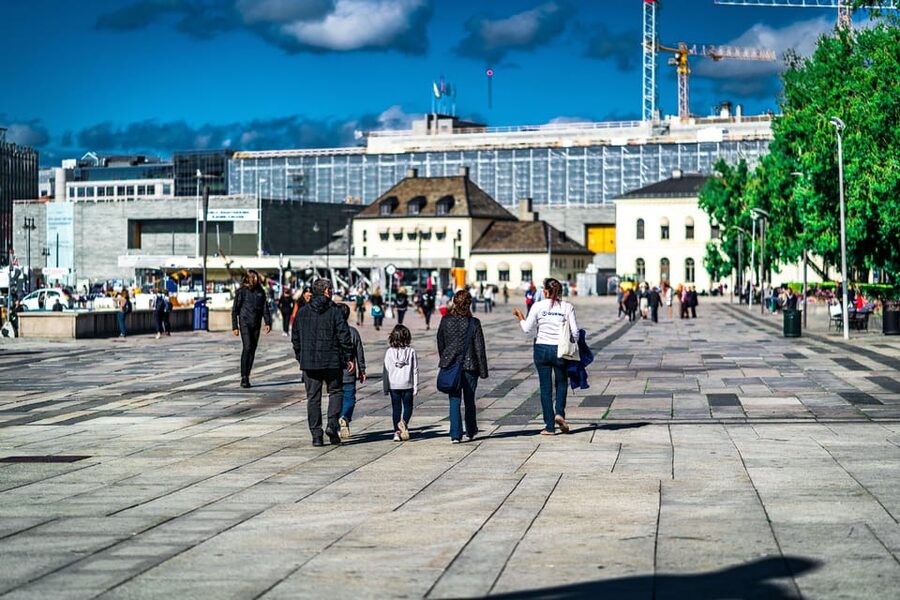
After about 90 minutes in the center, you board public transport for the journey to Frogner Park. The listed transit portion lasts about 30 minutes, so this is not a rushed hop between nearby streets. It gives your feet a break and lets you see a little more of Oslo as you move away from the center.
A return public transport ticket is included and provided by the guide. The tour itself ends at Frognerparken, so you can continue exploring after the guided hour and then make your own way back by walking or public transport.
This arrangement is practical, but you should pay attention at the end. You are not escorted back to the Nobel Peace Center. Your guide provides the ticket, yet the return journey is your responsibility. If you have a train, dinner reservation, or cruise departure soon after the tour, allow extra time.
The transport segment also makes this experience more useful than a center-only walk. Frogner Park is too far from the central sights for most visitors to add casually during a short city stop. Combining both areas in one route gives you a broad first look at Oslo.
Gustav Vigeland’s sculpture world
Frogner Park is the artistic centerpiece. It contains the world’s largest sculpture park devoted to a single artist, Gustav Vigeland, and most of the works on this route are made from local Iddefjord granite.
The guide tells the story of how one man created this huge collection. That story gives the sculptures a human frame. You are not simply looking at scattered statues across a park. You are following a planned sequence of figures and groups linked by recurring ideas about the human life cycle.
The tour includes about one hour of guided time in Vigeland Park. The centerpiece is the Monolith Plateau, where 36 figures symbolize the circle of life. Above them rises the Monolith, a tall totem carved from a single block of stone.
The scale is hard to understand from a photograph. You need to walk toward the monument, look up, and notice how the human bodies are arranged into one dense vertical form. The park’s open setting gives you room to step back and take in the whole design.
The sculptures are not delicate little ornaments. They are large, physical, and often emotionally direct. Some figures may feel playful, others tense or solemn. A good guide helps you see patterns in the work without telling you what every face must mean.
I would reserve your attention for the Monolith Plateau and the main sculpture groupings rather than trying to inspect everything. The park is large, and one hour passes quickly. Since you may stay afterward, you can return to pieces that caught your eye once the formal guiding ends.
What the private format changes
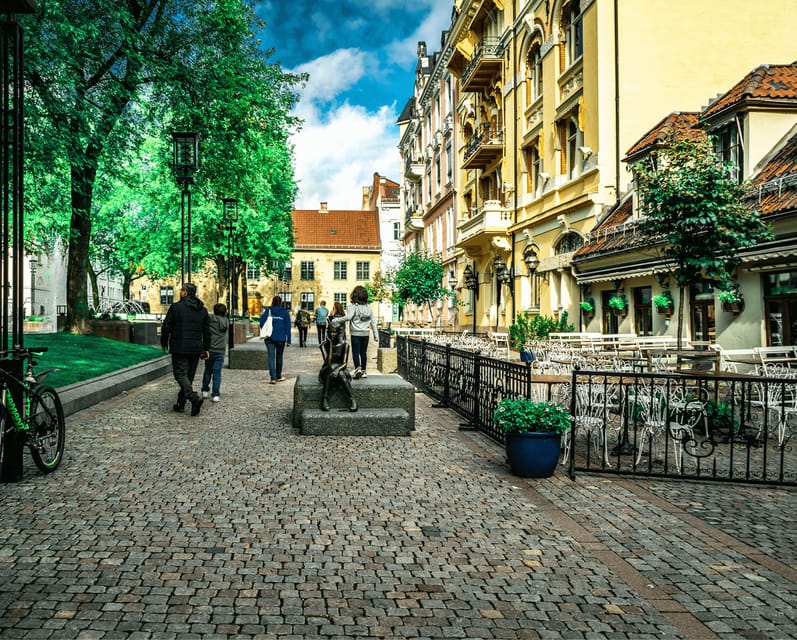
The private setup is the tour’s main practical advantage. You are not tied to the pace of a large group, and the guide can spend more time on questions that interest you. The earlier booking with two participants shows how the experience can adapt when the group is small.
That flexibility is especially useful in Oslo, where the route shifts between civic buildings, royal sites, military history, public transport, and sculpture. You might want more detail about Alfred Nobel, Norwegian playwrights, the royal family, or Vigeland’s artistic choices. A private guide can adjust the balance.
The listed languages are English, Spanish, French, Italian, Norwegian, and German. A June 2024 booking praised the guide’s English and personable approach. No guide name is provided, so you cannot request a particular named guide from the information available.
The tradeoff is cost. The listed price is $518 per group of up to one person. For a solo visitor, that is a substantial charge for three hours, even with a private guide and transport included. If you are comparing it with a shared walking tour, this will not look like the budget choice.
The value improves if you place a high price on privacy, question time, and a fixed route that links central Oslo with Frogner Park. It is also more appealing when your time is short and you want to cover several major sights without planning the transport yourself.
Timing, clothing, and the final stop
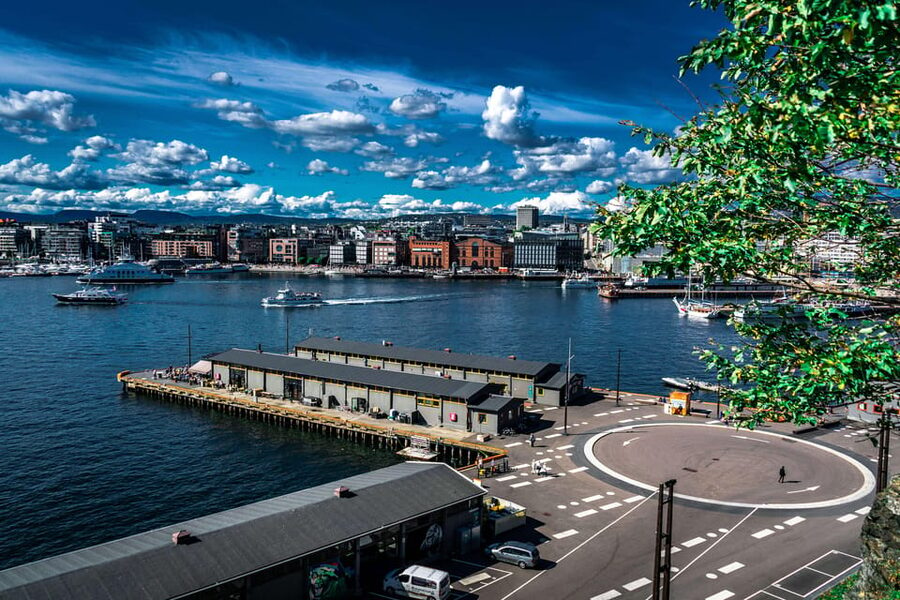
The full experience lasts three hours. The first guided city section takes about 90 minutes, public transport takes about 30 minutes, and Vigeland Park receives about one hour of guided attention.
The tour begins at the Nobel Peace Center, outside the entrance at Brynjulf Bulls plass 1. The guide arrives about 10 minutes before departure and carries a sign with the local partner’s name. Arrive early enough to identify the guide without turning the meeting point into a last-minute search.
Wear comfortable shoes. Part of the route uses gravel or unpaved walkways, particularly in the park area. Oslo weather can change, so bring clothing suited to the conditions rather than relying on a polished city outfit alone.
The final stop is Frognerparken. This is a useful ending because you are not pushed straight back into the center after seeing Vigeland’s work. You can stay in the park, look again at the sculptures, or leave using the provided public transport ticket.
The ending also means this tour fits best earlier in your day. You gain more from the final park visit if you have time afterward instead of needing to hurry away immediately.
Who will get the most from this tour?
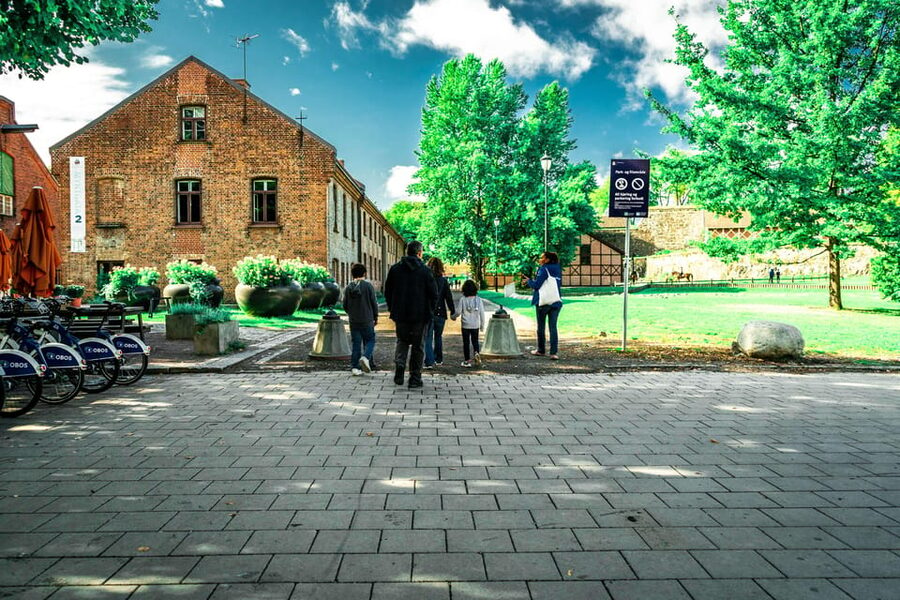
I would choose this experience if you have only a short stay in Oslo and want a guided orientation that covers both central landmarks and Frogner Park. It is also a good match if you prefer asking questions as you go rather than listening quietly in a large group.
Art lovers will appreciate the dedicated time at Vigeland’s sculptures, though anyone wanting a full art-focused visit may need more time in the park afterward. History-minded visitors get a useful sweep from Alfred Nobel and modern public institutions to Akershus Fortress and older city locations.
The tour may be less suitable if you want extensive indoor access. The supplied details describe sightseeing at City Hall, the National Theatre, the Royal Palace, Parliament, and Akershus Fortress, not admission to their interiors.
It may also be poor value for a solo visitor on a tight budget. At $518 for up to one person, you should compare the private convenience with less expensive shared walks and self-guided options before booking.
Free cancellation up to 24 hours before departure and reserve-now, pay-later booking make the decision easier to hold while you settle your Oslo schedule. Still, the price deserves careful thought.
Should you book the Oslo highlights and Vigeland Park tour?
Book it if you want a private, tightly planned introduction to Oslo and value a guide who can handle questions across art, government, culture, and history. The combination of Akershus Fortress, the Royal Palace, central institutions, and Vigeland Park gives you a strong first picture of the capital.
Skip it if you mainly want museum interiors, a long fortress visit, or the lowest possible price. For everyone else, the best reason to choose it is the route: you see the city center on foot, rest during the public transport ride, then finish with one of Oslo’s most memorable artistic settings.
FAQ
Where does the tour begin?
It begins outside the entrance to the Nobel Peace Center at Brynjulf Bulls plass 1 in Oslo.
Where does the tour finish?
The guided tour finishes at Frognerparken, where Vigeland Sculpture Park is located.
How long is the experience?
The tour lasts three hours. The city walk takes about 90 minutes, public transport takes about 30 minutes, and the guided visit to Vigeland Park takes about one hour.
Is public transportation included?
Yes. A return public transport ticket is included and provided by the guide. After the tour ends in Frogner Park, you make your own way back by walking or public transport.
What languages are available?
The tour is offered in English, Spanish, French, Italian, Norwegian, and German.
Is this a private tour?
Yes. It is offered for a private group, with the listed price covering a group of up to one person.
What should I bring?
Bring comfortable shoes and clothing suited to the weather. Some parts of the tour use gravel or unpaved walkways.
More 3-Hour Experiences in Oslo
- Oslo: 3-Hour Highlights Bike Tour
★ 4.8 · 1,609 reviews - Oslo: 3-hour Kayaking Trip on the Oslofjord
★ 4.9 · 43 reviews - Private Bike Tour (3 hours)
★ 5.0 · 33 reviews - 3 Hours Walking Tour for Great Food in Oslo
★ 5.0 · 32 reviews
Recently added around Oslo
- The Vigeland Park in Oslo: Insta-Perfect Walk with a Local★ 5.0 · 3 reviews
- Oslo: Best of Oslo Walking Tour and Hop-on Hop-off Bus Tour★ 3.7 · 3 reviews
- Best of Oslo: Walking Tour with a local guide★ 4.6 · 3 reviews
- Afternoon Tea and Classic Concert on the Fjord★ 4.5 · 3 reviews
- Maral Kunst : Jewelry Bar Experience (Jewelry Making)★ 5.0 · 3 reviews
- Lake walk and campfire★ 4.7 · 3 reviews
- Oslo: Yoga & Hiking with a dog★ 5.0 · 3 reviews
- Oslo: Skjennungstoppen Wildlife Forest Hiking Tour★ 5.0 · 3 reviews
Oslo Tours, compared.

Scenic Fjord Cruise with Audio Guide Commentary
Read our review →

Guided Sightseeing Fjord Cruise on Premium Silent Boat
Read our review →
Browse the lists this tour appears in