
Reviewed · OSLO TOURS
Hipstoric Grünerløkka Private Walking Tour
Oslo’s most revealing sights are not all lined up around the Royal Palace or the harbor. This private walk follows the city’s changing face from political meeting place to working-class quarter, then into Grünerløkka’s art and food scene. Along the way, you’ll see old wooden homes, a medieval church, street art, former industrial buildings, and places tied to Edvard Munch.
I like the route for two clear reasons: it shows how ordinary neighborhoods shape Oslo, and it gives you a private guide for questions and local context. Guides Inger and Björn are singled out for their strong command of Oslo’s story and culture. The main consideration is the price, $237.12 per person, which makes the tour best value for a small private group rather than a solo visitor on a tight budget.
Key Points Before You Book
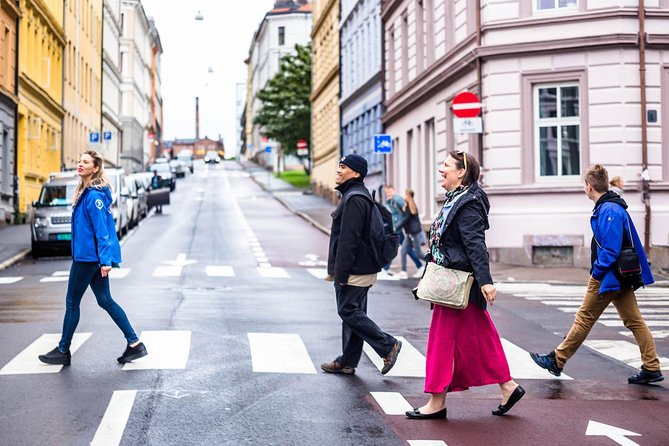
- A private route from Youngstorget to Vulkan: You walk with only your own group, ending near Mathallen in Grünerløkka.
- Thirteen compact stops in about three hours: The pace is steady, with most stops taking 10 minutes and the cemetery visit taking 15.
- A useful mix of old and new Oslo: Political squares, a medieval church, Munch connections, industrial buildings, street art, and a modern food hall all fit into one outing.
- A strong choice for repeat visitors: The walk reaches areas many first-time visitors may miss while staying close to central Oslo.
- Street art is part of the route, not an optional extra: Blå and Brenneriveien provide some of the walk’s most visual moments.
- Plan for weather and walking: The tour runs in all weather, and you need moderate physical fitness and suitable clothing.
From Youngstorget’s Politics to Torggata’s City Pulse

The tour starts at Youngstorget, a square with a direct link to Norway’s political life. Its location near the Government quarter helps explain why political organizations have offices nearby, and the square is used for speeches and public rallies, including the women’s march on March 8 and gay pride events.
That gives your walk a useful opening. Instead of treating Oslo as a collection of pretty buildings, your guide can show how public space works in the city. The stop lasts about 10 minutes, so expect a concise introduction rather than a long lecture.
From here, you continue to Torggata, whose name translates as Square Street. It is also represented in the Norwegian edition of Monopoly, a small detail that helps connect this ordinary-looking street with Oslo’s popular image of itself. The attraction here is less about one grand monument and more about seeing a familiar urban corridor through local eyes.
These first two stops are brief and central. If you have just arrived in Oslo, they help you get your bearings quickly. If you already know the center, they provide political and cultural context before the route moves toward the neighborhoods.
More Walking Tours in Oslo
- Oslo: Best of Oslo Walking Tour
★ 4.5 · 458 reviews - Oslo: Guided Walking Tour of Central Oslo
★ 4.7 · 438 reviews - Oslo: Historic Myths & Legends Evening Walking Tour
★ 4.8 · 408 reviews
Kulturkirken Jakob and the Green Route Along Akerselva
Kulturkirken Jakob is one of the more unusual stops. This church is rented long-term by Kirkelig Kulturverksted and functions as a cultural venue, with theater, concerts, dance, and other artistic events. You may not be attending a performance during the walk, but the building shows how an older religious space can take on a new public role.
The stop is scheduled for around 10 minutes, so think of it as a quick look at Oslo’s arts infrastructure. It also prepares you for the creative side of the walk, which becomes more visible after you reach the river.
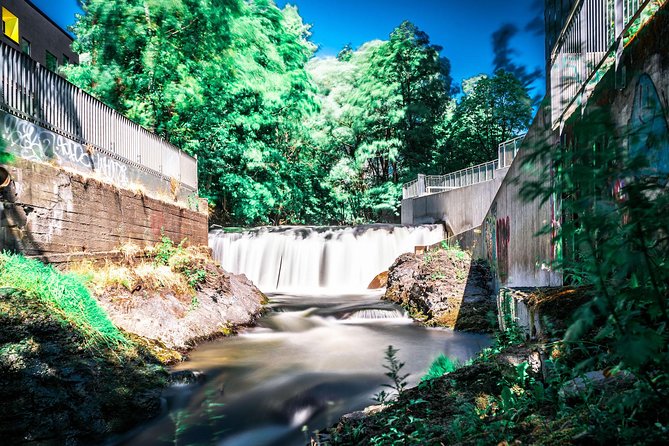
Akerselva is known as Oslo’s green lung, with parks and nature paths along its banks. The route uses the river as a transition between central Oslo and Grünerløkka. This is one of the places where comfortable shoes matter. The tour is a city walk, but the riverside section gives it a change of pace and setting.
Crossing the river by the Fairytale Bridge marks your official arrival in Grünerløkka. The bridge is a handy visual dividing line: behind you is the central city, while ahead is a former working-class district that later went through gentrification. That change is one of the main themes of the tour.
Grünerløkka, Olaf Ryes Plass, and Edvard Munch
Grünerløkka began as a working-class neighborhood. During the late 1900s, the area changed as new businesses, residents, and cultural venues moved in. Your guide’s commentary is especially useful here because the buildings alone cannot tell you how the district developed.
Olaf Ryes plass gives you a good look at the neighborhood’s older residential character. The park is framed by three- and four-story buildings, many built in the late 1800s. The setting is pleasant, but the Munch connection adds extra weight: Edvard Munch lived in one of the surrounding buildings as a young man.
Alongside the park is Parkteatret, now one of Oslo’s best-known concert venues. The combination of old housing and a current cultural venue sums up Grünerløkka well. It is not simply an old district preserved in place. It is a neighborhood where older structures now support modern music and arts.
The stop is only about 10 minutes, so you will not have time to explore Parkteatret inside. Still, the guide can point out why this small area matters, and you can return later if the venue interests you.
Blå and Brenneriveien: Oslo’s Outdoor Art Gallery
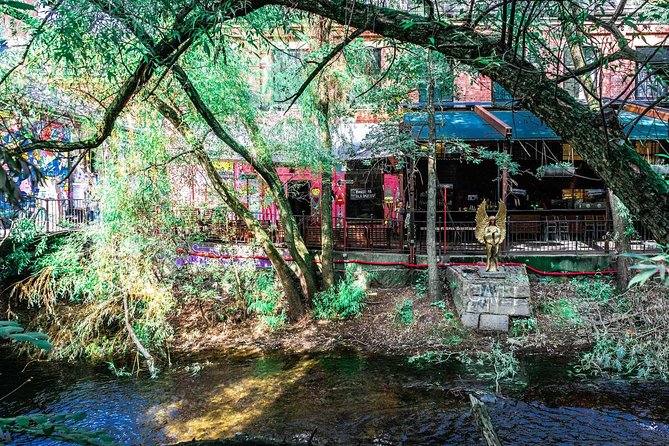
The area around Blå is one of the route’s key stops for street art. Blå is an alternative music venue, and the surrounding streets add a visual layer with murals and other forms of public art. Bring your camera, but keep your attention on the guide too. The value here comes from learning how the venue and nearby streets fit into Grünerløkka’s arts scene.
Brenneriveien continues that theme. Old, unused industrial buildings have been transformed into a street art area by local art students. This is a good example of the tour’s wider idea: places that once served industry now support creative work.
You should expect an outdoor art walk rather than a formal gallery visit. The condition and appearance of street art can change, and the tour does not promise a fixed exhibition. That is part of the appeal, but it also means you should not book this expecting a polished museum experience.
These stops are particularly useful if you want a side of Oslo beyond historic landmarks. The guide can help you read the district as a place shaped by music, student art, old factories, and changing residents. That context makes the art more meaningful than a quick photo stop.
A different way to spend a day from here:
- Oslo: Scenic Fjord Cruise with Audio Guide Commentary
★ 4.5 · 5,375 reviews - Oslo Nature Walks: Island Hopping Tour
★ 4.8 · 2,713 reviews - Oslo: 100% Electric Oslofjord Sightseeing Cruise
★ 4.4 · 2,041 reviews - Oslo: Fjord Evening Cruise with Shrimp Buffet
★ 4.5 · 1,956 reviews
Damstredet and the Wooden Hillside Above the City
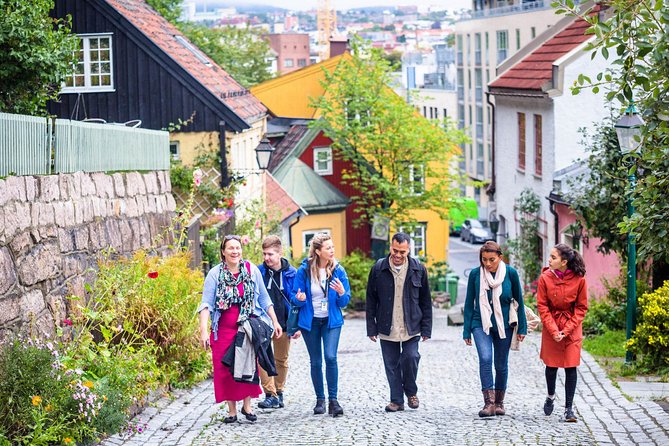
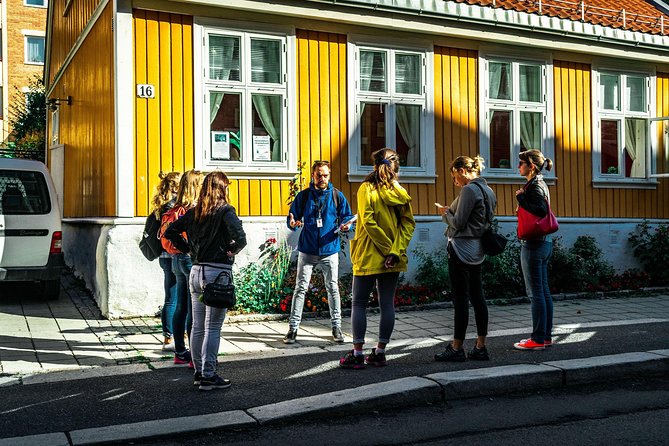
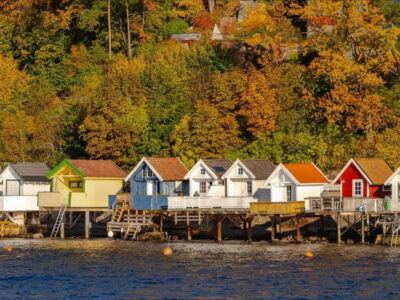
Damstredet offers a sharp contrast to the urban art around Blå and Brenneriveien. Its wooden hillside houses are well preserved and still inhabited. The narrow street makes a natural photo stop, but remember that it is also a residential area.
The charm here is not based on a single major monument. It comes from the contrast between the colorful wooden homes and the dense city districts below. The route gives you a look at a quieter part of Oslo without requiring a separate trip far from the center.
A guide is helpful at this point because the neighborhood’s importance is easy to miss if you only glance at it on a map. You can ask about the buildings, local life, and how this older housing fits into the wider story of the city.
Munch, Ibsen, and Oslo’s Oldest Surviving Building
The Our Saviour’s Memorial Cemetery is the longest stop on the route at about 15 minutes. It is the resting place of important Norwegian figures, including playwright Henrik Ibsen and painter Edvard Munch. For anyone interested in Norwegian literature or art, this gives the walk a more personal connection to the country’s cultural past.
The cemetery is not presented as a separate museum visit. It is a calm outdoor stop where names, places, and creative work connect. The guide’s commentary matters here, especially if you want more than a quick look at gravestones.
Old Aker Church follows. Gamle Aker Kirke is Oslo’s oldest remaining building and the city’s only remaining church from the Middle Ages. That makes it one of the strongest historical stops on the walk, particularly because the tour has already shown you modern art and urban change.
The contrast is striking. Within the same general outing, you move from political demonstrations and alternative music to a medieval church. The short 10-minute stop cannot cover every detail, but it gives you a reason to return if the church is open for further viewing.
Telthusbakken brings the Munch thread back into view. Its colorful wooden houses appear in one of Munch’s paintings, and the street still has allotment gardens on one side. Around 50 people live on the other side.
This is a compact scene with a lot packed into it: residential life, gardens, wooden architecture, and a link to one of Norway’s best-known artists. The allotments also show that city life in Oslo includes small pockets of gardening and open space, not just apartments and commercial streets.
Vulkan and Mathallen: A Practical Finish With Food Nearby
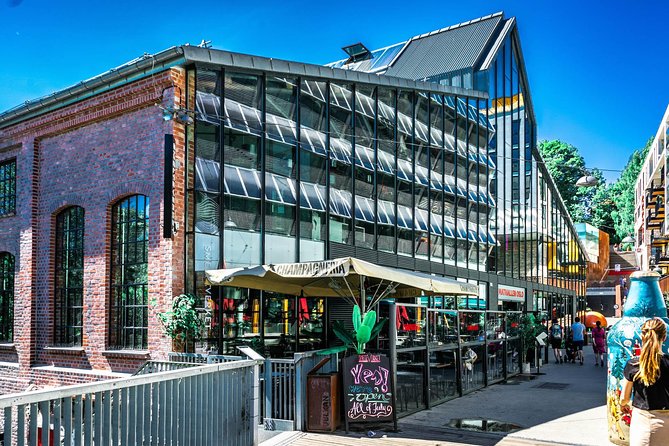
The tour ends at Vulkan, beside Akerselva. This area was once heavily industrial, but it has been redeveloped into a newer city district. Mathallen, one of Oslo’s food halls, is the final destination and offers food choices for different tastes.
Ending here is smart. You do not finish in a random street and need to figure out what to do next. You can continue exploring Grünerløkka, eat at Mathallen, or make your way back toward the starting point.
Mathallen is closed on Mondays, so that matters when you plan the day. The tour itself still operates in all weather, but Monday visitors should not count on the food hall as an open post-tour stop.
From Vulkan, you can walk back to Youngstorget in about 15 minutes, a distance of roughly 1 kilometer. Public transport is another option, but you must pay for that ticket yourself. Since the tour ends in Grünerløkka, you can also use the finish as a reason to stay in the district rather than return at once.
Is $237.12 Per Person Good Value?
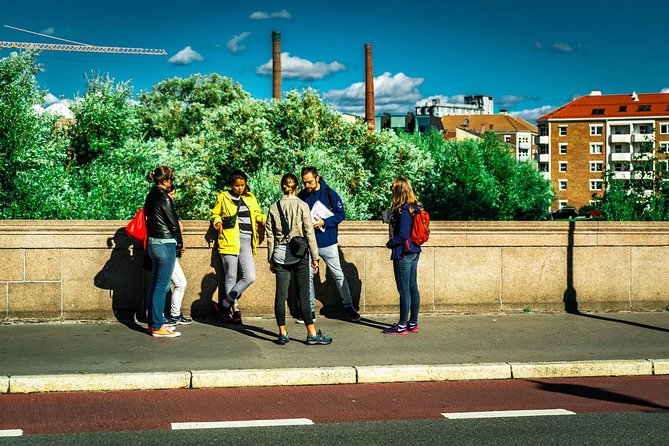
At $237.12 per person, this is not a budget walking tour. The price makes more sense if you are sharing it with a private group and want a guide who can adjust the conversation to your interests.
You are paying for a three-hour private experience, not admission to a series of attractions. The stops themselves are free, and the tour includes a professional guide. The value lies in the route, the interpretation, and the chance to ask questions without being part of a large mixed group.
I would consider it strongest value for:
- A small group that wants a private outing
- Visitors who have already seen Oslo’s main center
- People interested in street art, Munch, architecture, and local culture
- Anyone who prefers a guided walk to planning several separate neighborhood visits
- Visitors who want to finish near food and continue exploring
It is less attractive if you are traveling alone on a limited budget or mainly want entry to museums and historic interiors. In that case, you may get more from independent walking and paid museum visits.
Timing, Fitness, and What to Wear
The experience lasts about three hours and includes many short stops. Eleven of the stops take about 10 minutes, while the cemetery receives 15 minutes. The schedule gives you broad coverage, but it also means the walk keeps moving.
You should have a moderate level of physical fitness. The route includes city streets, the river area, and hillside streets such as Damstredet and Telthusbakken. The operator says it runs in all weather, so dress for Oslo’s conditions and wear comfortable shoes.
The ticket is mobile, and confirmation arrives when you book. The tour is offered in English, service animals are allowed, and the route is near public transportation. Since this is a private activity, only your group takes part, which is useful if you want to ask frequent questions or keep the pace focused.
Free cancellation is available up to 24 hours before the start time. If you cancel later or request changes within that period, you will not receive a refund.
Who Should Book This Grünerløkka Walk?
I would book this tour if you want to understand how Oslo’s neighborhoods change over time. The route covers politics, working-class housing, gentrification, music, street art, medieval religion, famous cultural figures, and food development without depending on major admission-ticket sights.
The strongest reason to choose it is the guide. Inger is praised for answering questions and explaining Oslo’s history, culture, and district life. Björn is also noted for clear, useful commentary. Since guide quality can shape a private walk, those names are worth requesting if the operator allows it, though availability is not guaranteed.
The walk is also a good fit for a second day in Oslo. You can use your first day for the central sights, then spend three hours seeing how the city works beyond the postcard views.
Should You Book It?
Book it if you want a private, English-language walk through Oslo’s less obvious neighborhoods, with a strong mix of street art, Munch connections, old wooden houses, and city history. The finish at Mathallen adds practical value, especially if you want lunch or more time in Grünerløkka.
Think twice if $237.12 per person feels high for a route made up mostly of free outdoor stops. The experience earns its price through the guide and the carefully linked story, not through admission fees. For a small group that values local explanation and a flexible private setting, it is a worthwhile way to see a different side of Oslo.
FAQ
Where does the Hipstoric Grünerløkka tour start?
The tour starts at Youngstorget in Oslo, Norway.
Where does the tour end?
It ends at Mathallen Oslo, Vulkan 5, in the Grünerløkka district.
How long does the tour last?
The walking tour lasts approximately three hours.
Is this a private tour?
Yes. Only your group participates in the activity.
What language is the tour offered in?
The tour is offered in English.
Is Mathallen open every day?
Mathallen is closed on Mondays. The tour operates in all weather conditions, but the food hall will not be available on a Monday.
How do I return to the starting point?
You can walk from Vulkan back to Youngstorget in about 15 minutes, or use public transportation. A public transportation ticket is not included.
Can I cancel for a full refund?
Yes. You can cancel up to 24 hours before the experience’s start time for a full refund. Cancellations or changes made less than 24 hours before the start time are not accepted for a refund.
Recently added around Oslo
- The Vigeland Park in Oslo: Insta-Perfect Walk with a Local★ 5.0 · 3 reviews
- Oslo: Best of Oslo Walking Tour and Hop-on Hop-off Bus Tour★ 3.7 · 3 reviews
- Best of Oslo: Walking Tour with a local guide★ 4.6 · 3 reviews
- Afternoon Tea and Classic Concert on the Fjord★ 4.5 · 3 reviews
- Maral Kunst : Jewelry Bar Experience (Jewelry Making)★ 5.0 · 3 reviews
- Lake walk and campfire★ 4.7 · 3 reviews
- Oslo: Yoga & Hiking with a dog★ 5.0 · 3 reviews
- Oslo: Skjennungstoppen Wildlife Forest Hiking Tour★ 5.0 · 3 reviews
Oslo Tours, compared.

Scenic Fjord Cruise with Audio Guide Commentary
Read our review →


Guided Sightseeing Fjord Cruise on Premium Silent Boat
Read our review →
Browse the lists this tour appears in