
Reviewed · OSLO TOURS
Oslo Walking Tour with Passionate Founder, Shared or Private
Oslo comes into focus on this walk, from the sharp lines of the Opera House and Munch Museum to the old streets of Kvadraturen and the views from Akershus Fortress. I like the way the route links modern waterfront architecture with Oslo’s past, rather than treating the city as a string of unrelated photo stops.
I also like the independent format. Guides such as Romy and Tony bring their own stories, local tips, and explanations of how Oslo works today. The main drawback is that this is a long city walk with hills, uneven ground, and little time to linger at every sight. The Vigeland add-on also needs good footwear in wet or icy weather.
Key points to know
- Starts beside the Opera House: Meet at the Creature from Iddefjord sculpture outside Deichman Bjørvika Library.
- Covers central Oslo efficiently: The route runs from Bjørvika through Kvadraturen, Karl Johan, City Hall, and Aker Brygge.
- Akershus Fortress supplies the big view: You reach the highest point of the fortress grounds for a look across the Oslofjord.
- The guide adds practical local advice: Expect tips on museums, restaurants, shopping, and fjord trips.
- Vigeland Park is an optional extension: Add the tram ride and a 50-minute guided visit for a total outing of up to 3.5 hours.
- Best for first-time visitors: You get a useful city orientation, but the pace and walking distance may not suit anyone with limited mobility.
Starting beside Oslo’s Opera House

The meeting point is the Creature from Iddefjord sculpture outside the main entrance to Deichman Bjørvika Library. This is a quieter spot than the Opera House entrance, which helps your guide find you without confusion. If you arrive by taxi, ask for Deichman Bjørvika Library or the main entrance to the Opera House, since drivers may not recognize the sculpture’s name.
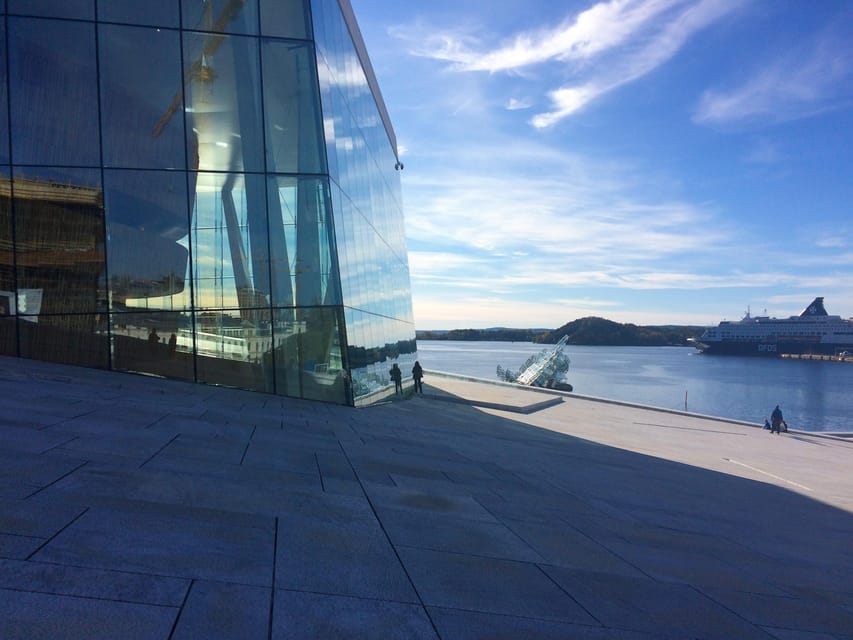
The Opera House is the natural opening. Its broad, sloping roof reaches toward the water, and you can walk across parts of it for changing views over Bjørvika. The tour includes about 15 minutes here, enough to discuss the building and its place in Oslo’s modern redevelopment without turning the visit into a long architectural lecture.
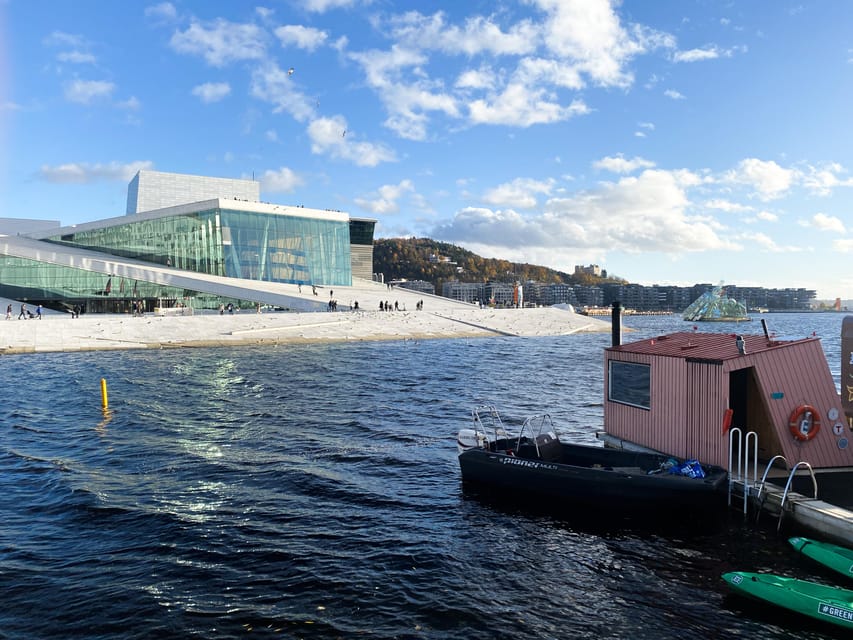
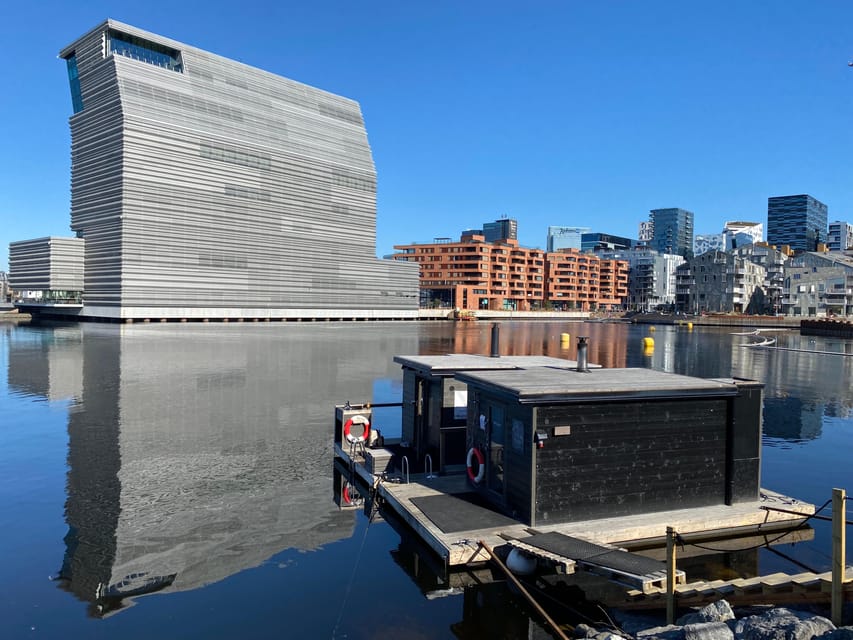
You then move through Langkaia and along the waterfront. This is one of the most useful parts of the walk because Bjørvika is still changing. The guide explains how the former port area has been reshaped with cultural buildings, public spaces, floating saunas, and new housing.
You will see the Munch Museum and the Opera House as part of this larger plan. The point is not simply to photograph striking buildings. You learn how Oslo has turned its waterfront into a central part of city life.
More Walking Tours in Oslo
- Oslo: Best of Oslo Walking Tour
★ 4.5 · 458 reviews - Oslo: Guided Walking Tour of Central Oslo
★ 4.7 · 438 reviews - Oslo: Historic Myths & Legends Evening Walking Tour
★ 4.8 · 408 reviews
Bjørvika’s new city beside the fjord
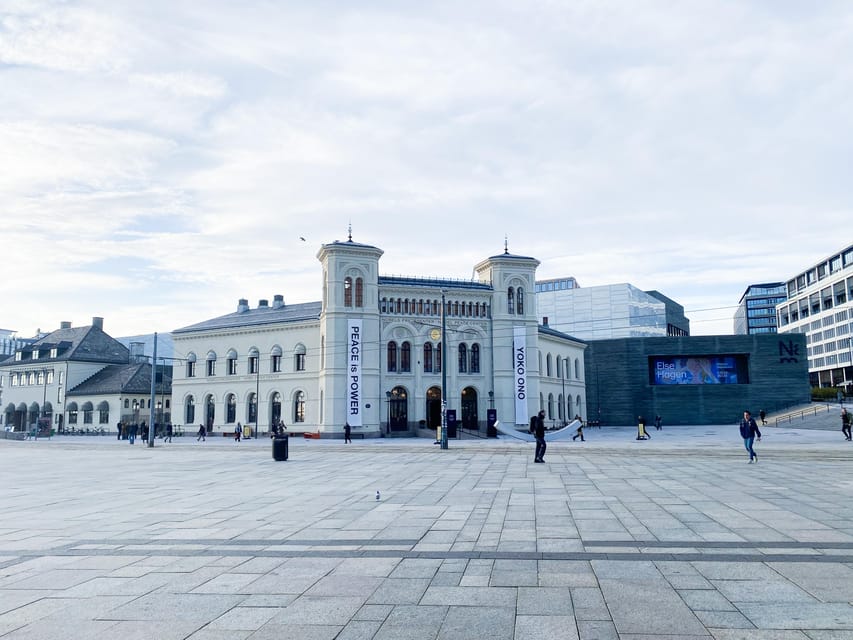
Bjørvika gives you a quick lesson in present-day Oslo. The area combines cultural attractions, water access, modern design, and ongoing construction. That makes it visually exciting, though it can also feel less settled than the older parts of the city.
The tour is well suited to people who like buildings and urban design. You hear about details that are easy to miss when walking alone, including curious features and the way separate projects fit into the wider redevelopment.
The floating sauna trend is another memorable detail. You will not spend the tour inside a sauna, but you get a look at the growing collection of saunas on and near the water. The guide can also help you decide if the Munch Museum or National Museum deserves a later visit, which is useful if your time in Oslo is short.
I would not book this walk expecting entry into every major attraction. The value comes from seeing the city from outside, understanding how the districts connect, and getting advice on where to return.
Kvadraturen and Oslo’s earlier identity
From the newer waterfront, the route turns toward Kvadraturen. This district brings the city’s older story into view, including the period when Oslo was known as Christiania for more than 300 years.
The contrast with Bjørvika is the appeal. Within a short walk, you move from new cultural buildings and waterfront development to streets shaped by earlier city planning. The guide places Oslo’s buildings and public spaces in their political and historical setting, giving you more than a list of dates.
This part is especially useful on your first day. You begin to understand why central Oslo is arranged as it is, and you can use that knowledge when you explore alone later.
The route does not treat history as a museum display. You keep walking through the city while learning how Oslo developed. That keeps the tour moving, but it also means anyone wanting a very detailed historical lecture may find the explanations necessarily selective.
Akershus Fortress for the best city view
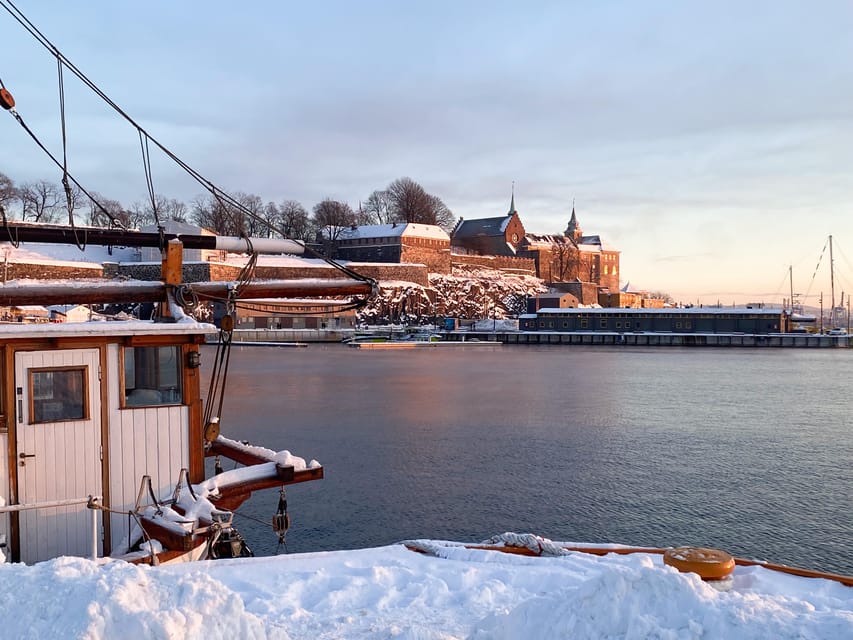
Akershus Fortress is one of the route’s strongest stops. You climb to the highest point of the fortress grounds, where the view opens over the Oslofjord and the city’s waterfront.
On a clear day, you may even see the Holmenkollen Ski Jump. Weather matters here. Oslo’s skies can change quickly, and mist or rain may reduce the long view, but the fortress remains a worthwhile stop for its position and military history.
The climb is important to consider. This is not a completely flat stroll, and the route involves walking over historic ground. Comfortable shoes are essential, especially if you plan to continue all the way to Aker Brygge.
The fortress also gives the tour a welcome pause from city streets. You can look back toward Bjørvika, see how the waterfront fits into the city, and understand Oslo’s relationship with the fjord. I like this stop because it ties together the new and old parts of the route.
A different way to spend a day from here:
- Oslo: Scenic Fjord Cruise with Audio Guide Commentary
★ 4.5 · 5,375 reviews - Oslo Nature Walks: Island Hopping Tour
★ 4.8 · 2,713 reviews - Oslo: 100% Electric Oslofjord Sightseeing Cruise
★ 4.4 · 2,041 reviews - Oslo: Fjord Evening Cruise with Shrimp Buffet
★ 4.5 · 1,956 reviews
Karl Johan, Parliament, and the Royal Palace
After the fortress, you head toward Karl Johan street, Oslo’s central ceremonial and shopping route. The walk here shifts from old defenses to national institutions, public life, and the places where Norway’s government and culture are represented.
You pass the Norwegian Parliament, then continue toward the National Theatre and Royal Palace. The guide explains how the country is governed, educated, and entertained, bringing together politics, culture, and daily city life.
The Royal Palace is passed rather than entered. The same is true of several other major sights, so plan your expectations carefully. You will get context and exterior views, not a palace tour or a theatre performance.
Karl Johan is also practical. If you want shops, cafés, or another look at the central city later, this is an easy area to return to. The guide’s advice can help you decide which places deserve more of your time after the walk.
For first-time visitors, this section works as a city map in motion. You learn where the main institutions are, how the central streets connect, and which areas you may want to explore on your own.
City Hall and Aker Brygge
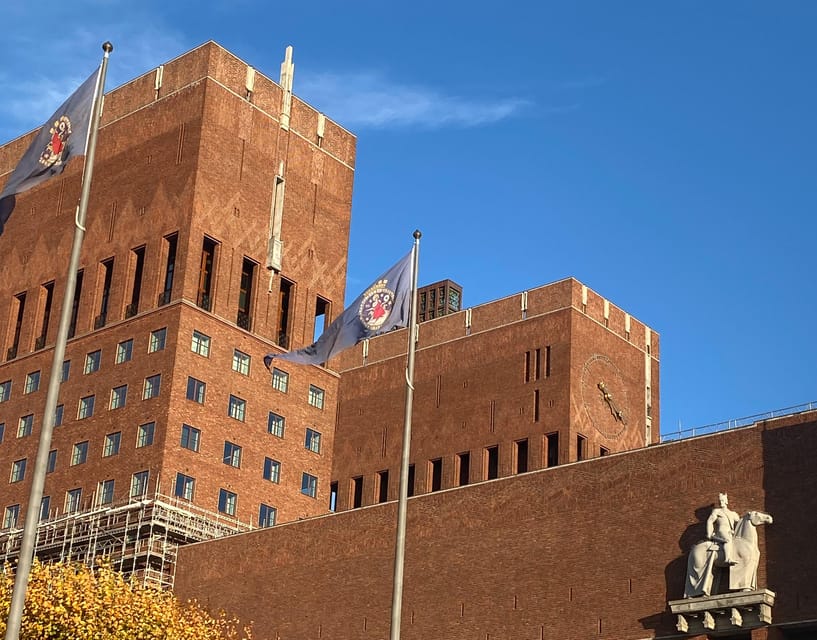
The final part of the standard route takes you toward Oslo City Hall and Aker Brygge. City Hall is an important stop for anyone interested in Norwegian public life, art, or the Nobel Peace Prize. The tour passes the building, and the guide can point you toward the interior artwork if you want to return for a closer look.
At Aker Brygge, the city once again meets the water. This district is useful for meals, waterfront walks, and planning a trip on the Oslofjord. The guide gives suggestions for restaurants, the National Museum, the Nobel Peace Centre, and fjord tours.
This advice may be the most valuable part of the ending. A guide can explain what to do next based on your interests, while you are still standing in a central area with several choices nearby. If your tour is early in your stay, keep a note on your phone for museum and dining suggestions.
The standard experience lasts about 135 minutes, though the exact timing can vary. That gives you a brisk but manageable introduction to central Oslo. You will see a lot, but you should not expect long visits inside museums or attractions.
The Vigeland Park extension
The optional Vigeland Park visit changes the shape of the experience. From Aker Brygge, you board a tram, with tickets included in the add-on. The ride takes about 15 minutes, followed by a guided visit of around 50 minutes.
Vigeland Sculpture Park is known for its large collection of works created as part of one artist’s vision. The park gives you a different side of Oslo, one centered on sculpture, human figures, and open public space rather than government buildings and urban design.
This extension received especially warm praise in the supplied feedback, and I can see why. It adds a major cultural sight that is not part of the central walking loop, while the guide helps you look at the sculptures in context instead of simply passing through and taking pictures.
The full outing can last up to 3.5 hours. That is a good use of time if you want one substantial introduction to Oslo, but it may be tiring after several hours on foot. The park can be muddy after rain and sometimes too icy for easy walking in winter. Ask ahead about conditions, and bring suitable shoes. The guide may be able to provide traction spikes in uncertain winter conditions.
The extension finishes at the main entrance to Vigeland Park, rather than bringing you back to the original meeting point. That is convenient if you plan to continue in the area, but check the end point before booking so it fits your plans.
A personal guide instead of a standard group script
Oslo By Heart is built around an independent guide who writes and leads the tours personally. The stated group limit is 10 people, with the usual group often smaller. Private tours and small-group bookings are available.
That size matters. A small group makes it easier to ask about Norwegian culture, local food, architecture, or the best use of your remaining time. It also reduces the stop-and-start feel that can affect large city tours.
Romy, also referred to as Romi in some feedback, is praised for clear explanations, warmth, patience, and strong storytelling. Several people found her helpful for getting oriented on a first visit. Tony is also named as a guide, and the activity is offered in English or German.
The strongest pattern is not one specific monument. It is the guide’s ability to connect history, art, governance, industry, and current development in one walk. Romy’s experience living in other countries also gives her a comparative view of Norwegian culture, which can make the conversation more useful than a memorized list of facts.
That personal approach is a major reason to choose this tour over a large commercial outing. The trade-off is that your experience can vary slightly by guide, group size, weather, and the questions you bring. The tour’s appeal depends heavily on enjoying conversation and explanation.
Is $60 a fair price?
At $60 per person, the standard tour is not the cheapest way to see Oslo’s streets. Still, the price is reasonable if you value a live guide, a small group, and practical advice that helps shape the rest of your stay.
You are paying for roughly two hours and 15 minutes of guiding, not for museum admissions, meals, or hotel transfers. Most major stops are viewed from outside, so compare this with a sightseeing bus or a self-guided walk before booking.
The value improves if you are new to Oslo and want to save time. In one route, you see Bjørvika, Kvadraturen, Akershus Fortress, Karl Johan, the Parliament, the Royal Palace, City Hall, and Aker Brygge. You can then return to the museum or neighborhood that interests you most.
The Vigeland extension adds tram tickets and a guided park visit. If Vigeland is already high on your list, the longer option is more efficient than arranging a separate visit. If you prefer a slow morning with time for interiors and photos, book the standard route and explore one attraction afterward.
Who will enjoy this walk most?
I would choose this tour for a solo visitor, couple, or small group of friends who wants a quick but thoughtful introduction to Oslo. It also suits people who enjoy photography, architecture, public art, and city history.
The route is particularly useful on your first day. You get a mental map of the center, learn where the major museums and institutions are, and receive suggestions for food and fjord trips while your plans are still flexible.
It is less suitable if you have limited mobility or use a wheelchair. The activity is not suitable for people with mobility impairments or wheelchair users, and the fortress climb, extended walking, and possible park conditions make that limitation important.
Families and pet owners should check ahead. The supplied information specifically asks people to confirm in advance if they want to bring a pet, so do not assume an animal can join.
Bring comfortable shoes and clothing suited to the weather. Oslo’s waterfront can feel exposed, and the Vigeland extension adds outdoor time. In winter or after rain, footwear becomes even more important.
Practical timing and booking notes
The main walk lasts 135 minutes, while the longer version runs from about 3.5 hours depending on the selected option. Starting times vary, so check availability for your preferred day.
The meeting point is outside Deichman Bjørvika Library at the Creature from Iddefjord sculpture. It is deliberately away from other tour meeting points, but give yourself enough time to locate the library and sculpture.
There is no hotel pickup or drop-off. Food and drinks are also not included, so eat beforehand or plan to stop afterward in the Aker Brygge area.
You can cancel up to 24 hours before the activity for a full refund, and the reserve-now, pay-later option keeps your plans flexible. Those terms are useful if your Oslo schedule depends on weather or cruise timing.
Should you book Oslo By Heart?
Book it if you want a personal city orientation rather than a checklist of sights. The route covers a lot, the independent guide brings useful local perspective, and the Akershus Fortress view gives the walk a memorable high point.
Choose the Vigeland extension if sculpture and public art matter to you, or if you want to combine central Oslo with one of its major cultural sights in a single outing. Skip the extension if you prefer a shorter walk or want more time inside the museums along the route.
I would be most likely to recommend this for a first visit, especially for solo visitors and couples who appreciate a conversational guide. Just plan for steady walking, dress for the weather, and remember that the main attractions are explained from the outside rather than entered.
FAQ
Where does the Oslo walking tour start?
The tour starts at the Creature from Iddefjord sculpture outside the main entrance to Deichman Bjørvika Library.
How long does the standard tour last?
The standard walking tour lasts about 135 minutes.
How long is the tour with the Vigeland Park add-on?
The extended option lasts up to 3.5 hours, including the tram ride and the guided visit to Vigeland Sculpture Park.
What languages are available?
The live tour is available in English and German.
Is this a private tour?
Private and small-group options are available. The stated maximum group size is 10 people, and the usual group may be smaller.
Does the tour include museum admission?
No. The route passes or discusses places such as the National Museum, Nobel Peace Centre, and other attractions, but admission is not included.
Are tram tickets included?
Tram tickets are included if you book the Vigeland Park option.
Is the tour suitable for wheelchair users?
No. The activity is not suitable for wheelchair users or people with mobility impairments.
What should I bring?
Bring comfortable shoes and clothing suited to the weather. If you add Vigeland Park, bring footwear that can handle mud after rain or icy conditions in winter.
Recently added around Oslo
- The Vigeland Park in Oslo: Insta-Perfect Walk with a Local★ 5.0 · 3 reviews
- Oslo: Best of Oslo Walking Tour and Hop-on Hop-off Bus Tour★ 3.7 · 3 reviews
- Best of Oslo: Walking Tour with a local guide★ 4.6 · 3 reviews
- Afternoon Tea and Classic Concert on the Fjord★ 4.5 · 3 reviews
- Lake walk and campfire★ 4.7 · 3 reviews
- Maral Kunst : Jewelry Bar Experience (Jewelry Making)★ 5.0 · 3 reviews
- Oslo: Yoga & Hiking with a dog★ 5.0 · 3 reviews
- Oslo: Skjennungstoppen Wildlife Forest Hiking Tour★ 5.0 · 3 reviews
Oslo Tours, compared.

Scenic Fjord Cruise with Audio Guide Commentary
Read our review →



Guided Sightseeing Fjord Cruise on Premium Silent Boat
Read our review →
Browse the lists this tour appears in