
Reviewed · OSLO TOURS
Oslo: Best of Oslo Walking Tour & Fjords Sightseeing Cruise
Oslo reveals its best contrast on this four-hour combination tour: first, the city’s grand streets and public buildings, then the quiet islands and narrow channels of the Oslo Fjord. You get a useful first look at the capital without spending the whole day on one subject.
I like the small group of up to 10 people, which gives the guide room to answer questions, and I like the clean split between a two-hour walking tour and a two-hour boat ride. The main consideration is pace: you will cover a lot of ground, and the cruise is sightseeing rather than a full fjord excursion into Norway’s grandest mountain country.
Key points to know before booking
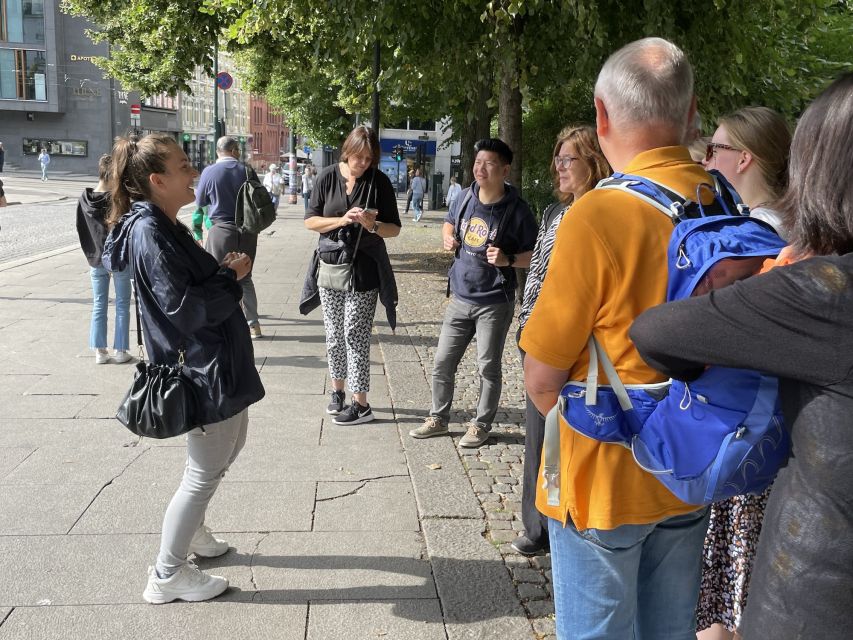
- Start at University Aula: Meet by the statue of P.A. Munch near the entrance at Karl Johan Street 47.
- See Oslo’s city center on foot: Parliament, Grand Hotel, Karl Johan Street, Christiania, City Hall, and the Opera House all feature in the walk.
- Cruise through Oslo’s inner fjord: Expect islands, narrow straits, small bays, summer homes, and views of Bygdøy.
- A guide leads the walk in English: An English audio guide is also included, with Spanish, French, Italian, and German available.
- Small groups keep the tour personal: The group is limited to 10 participants.
- Plan for outdoor weather: Wear comfortable shoes, bring a charged smartphone, and pack an umbrella.
Starting at University Aula on Karl Johan Street
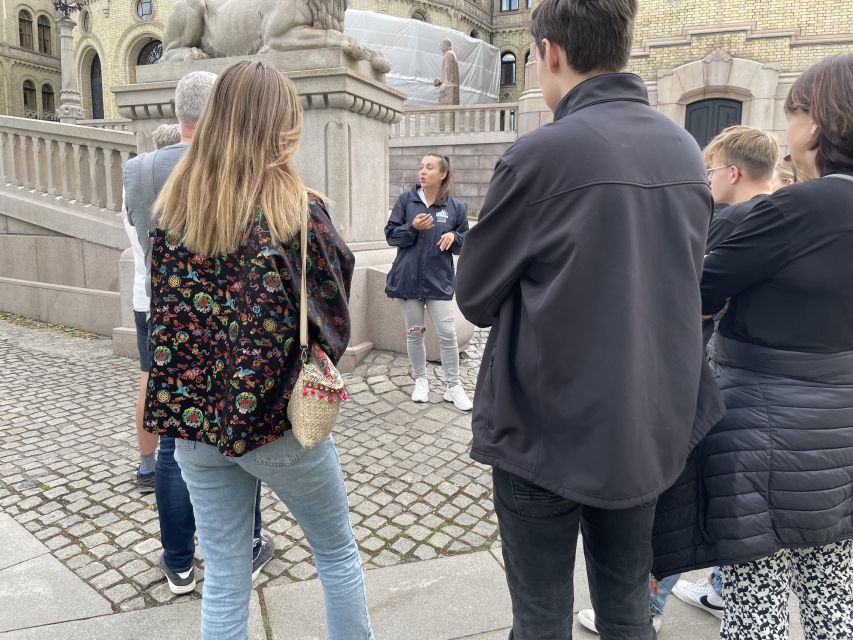
Your day begins at University Aula, Karl Johan Street 47, near the statue of P.A. Munch by the entrance. Tours depart at 10:00 AM, though you should check the current availability when booking because starting times can vary.
This is a sensible meeting point for a first look at central Oslo. You are not being collected from a hotel, so allow time to find the exact entrance and arrive ready to walk. A charged phone matters for the complimentary sightseeing app, and comfortable shoes are more useful than stylish footwear here.
The walking portion lasts two hours. That is long enough to give you a framework for Oslo, but short enough to leave room for your own plans afterward. I see this as a good opening activity, especially if you want to understand the city center before visiting museums or setting out on your own.
The group limit of 10 is one of the strongest practical features. Large city walks can turn into a parade where you hear only fragments of the guide’s talk. A smaller group gives you a better chance of staying close, asking questions, and hearing the stories tied to each place.
More Boat Trips in Oslo
- Oslo: Scenic Fjord Cruise with Audio Guide Commentary
★ 4.5 · 5,375 reviews - Oslo: 100% Electric Oslofjord Sightseeing Cruise
★ 4.4 · 2,041 reviews - Oslo: Fjord Evening Cruise with Shrimp Buffet
★ 4.5 · 1,956 reviews
Parliament, the Grand Hotel, and Karl Johan Street
The opening part of the walk focuses on Oslo’s 19th-century architecture and the public life of the capital. You pass the Norwegian Parliament, the Grand Hotel, and the long Karl Johan Street.
The Parliament building gives the walk a clear civic anchor. It is not just another grand facade. Your guide explains its place in Norwegian democracy, helping you read the buildings around you as part of the country’s public story rather than as decoration.
The Grand Hotel adds another layer. Along with Karl Johan Street, it gives you a sense of Oslo as a formal capital with a compact center. The route appears designed to connect major sights without requiring public transport, which makes it useful for getting your bearings quickly.
You will also hear about Oslo’s nickname, the Tiger City. This is the sort of small local detail that makes a walking tour more memorable. It gives you a talking point to carry into the rest of your visit, and it helps the city feel less like a collection of famous buildings.
The streets can be active during the day, and the walk is not a quiet country stroll. Bring an umbrella because Oslo weather can change, and remember that the tour continues outdoors even when the skies are gray.
Christiania and the changing name of Oslo
The route continues into Christiania, the old core of the city. This section is useful because it deals with change: how Oslo developed, how its name shifted, and how the capital evolved over time.
A guide adds value here by joining the facts together. On your own, you might walk past a street or building without knowing why the old name still appears in Oslo’s story. On the tour, Christiania becomes part of a larger explanation of the city’s identity.
Do not expect a full museum treatment of every period. Two hours cannot cover Oslo’s entire past, and the tour is built around a selection of landmarks. Still, this stop gives you a historical layer before the activity changes direction toward modern architecture and the waterfront.
That change is important. Oslo is not presented as an old city preserved under glass. The walk shows a capital with older civic buildings beside bold new cultural spaces. The result is a balanced introduction, with both historical context and present-day city life.
The Norwegian Opera House and Oslo’s modern face
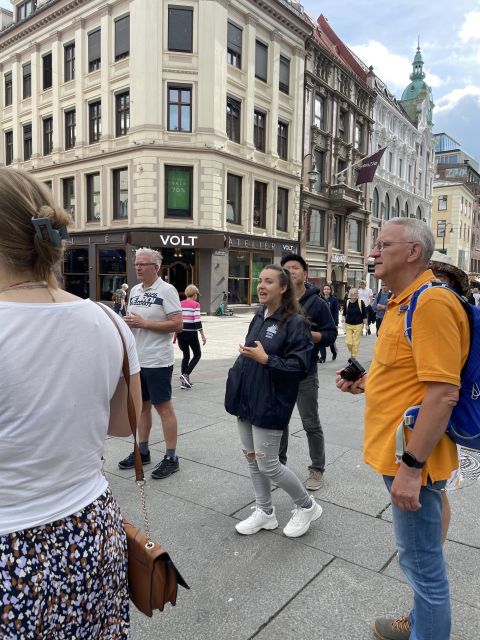
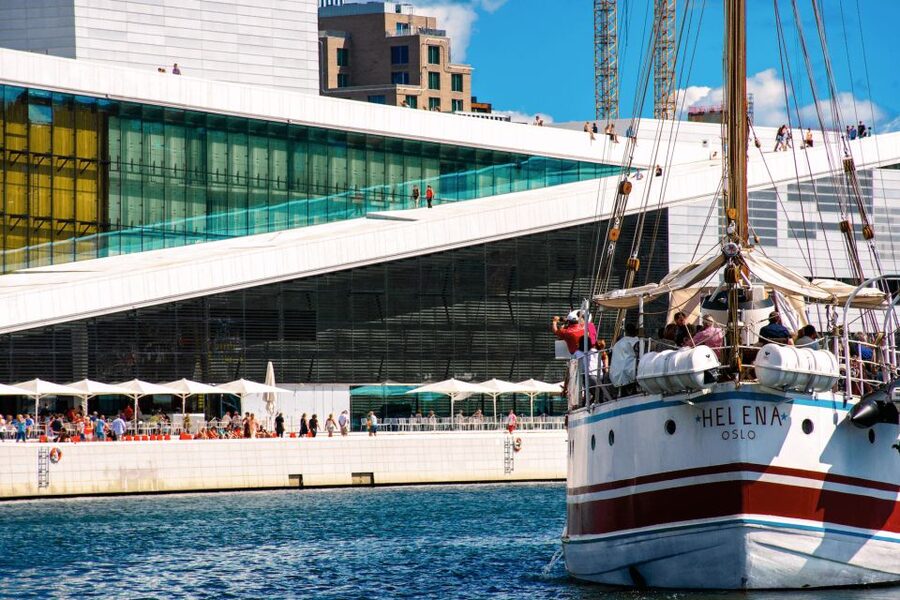
The Norwegian Opera House is one of the walk’s key visual moments. Its design is meant to be seen from the outside, and the building represents Oslo’s modern cultural confidence.
You may find that this is one of the easiest places to appreciate why the city has become known for contemporary architecture. The Opera House is home to The Norwegian National Opera & Ballet, and its bright, angular form gives the waterfront a very different character from Parliament or the Grand Hotel.
The guide’s explanation helps you connect the building to Oslo’s wider cultural life. You are not simply stopping for a photo. You are seeing how a working arts venue has become part of the city’s public space.
The walk also includes shoreline views of the Opera House, the Munch Museum, and City Hall. These views matter because Oslo changes shape from the water’s edge. The same buildings you see from the street later become part of a broad waterfront scene on the boat.
More Walking Tours in Oslo
- Oslo: Best of Oslo Walking Tour
★ 4.5 · 458 reviews - Oslo: Guided Walking Tour of Central Oslo
★ 4.7 · 438 reviews - Oslo: Historic Myths & Legends Evening Walking Tour
★ 4.8 · 408 reviews - Taste of Oslo Walking Tour
★ 4.5 · 282 reviews
City Hall and the Nobel Peace Prize connection

The walking tour ends at City Hall, where the Nobel Peace Prize ceremony takes place. This gives the route a strong final stop and a clear link between Oslo and international public life.
City Hall is more than a finish line. It represents peace and progress, and the guide places the building within that wider meaning. After seeing government, hotels, historic streets, and cultural buildings, you arrive at a place associated with one of the world’s best-known peace awards.
The activity ends back at the meeting point, according to the provided details, though the walking route brings you to City Hall before the cruise portion is described. Confirm the exact transition with the tour operator on the day, particularly if you need to coordinate with another booking.
Boarding the two-hour Oslo Fjord cruise
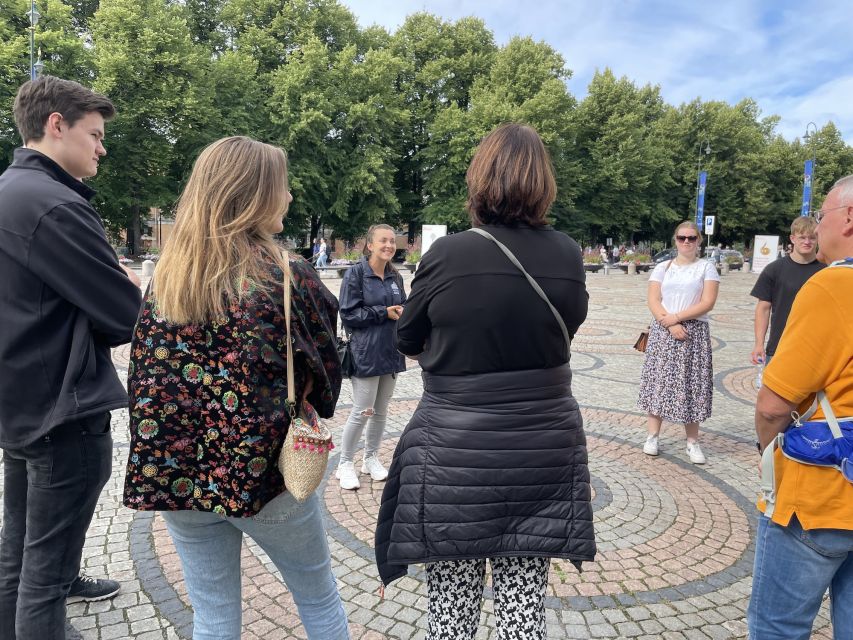
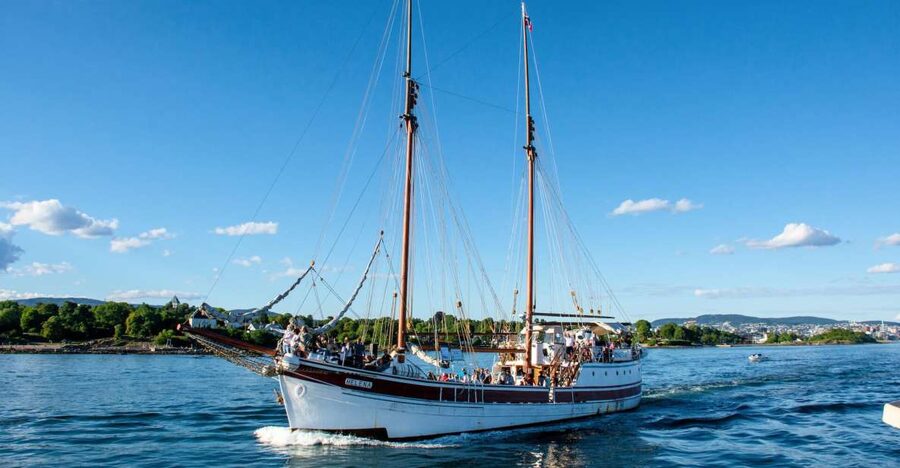
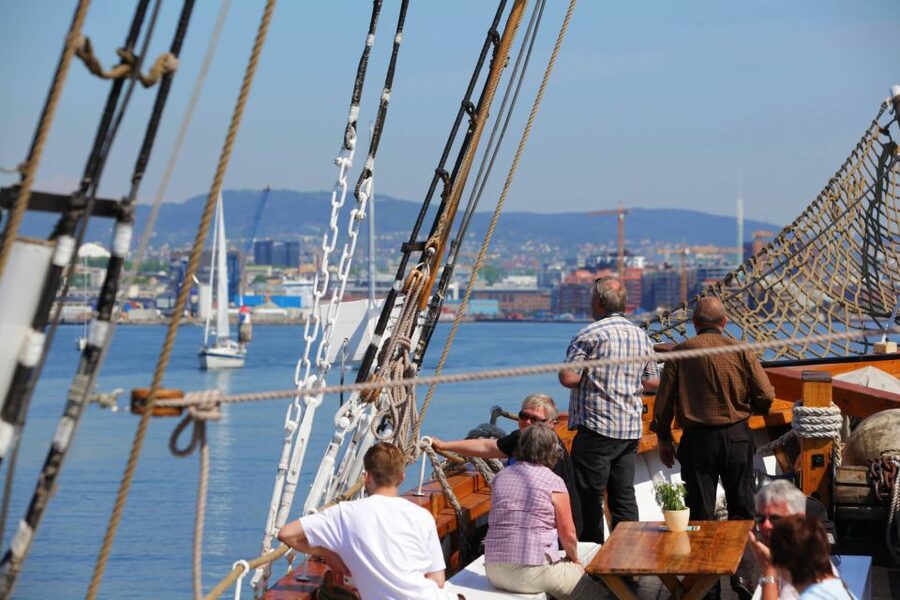
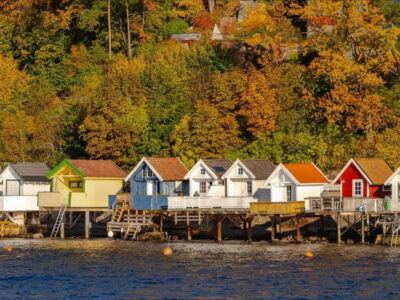
The second half lasts two hours and takes place on a historic sightseeing vessel. The boat travels through slender straits, small bays, and groups of islands rather than heading toward the dramatic, steep-sided fjords found far west in Norway.
That distinction matters. This is an Oslo harbor and inner-fjord cruise, not a full-day trip to the country’s large mountain fjords. The scenery is gentler, with summer homes, wooded islands, quiet coves, and city buildings appearing from the water.
An open-top vessel gives you better sight lines and photo chances, but it also leaves you exposed to wind and rain. Pack an umbrella and dress for the forecast. The boat ride is built around views, so sitting where you can look out easily will make a difference.
The pace is restful after two hours on foot. You can stop thinking about directions and let the city slide past from a different angle. That change from walking to sailing is one of the best reasons to book the combination rather than taking only a city walk.
Hovedøya, Dyna Lighthouse, and the quiet islands
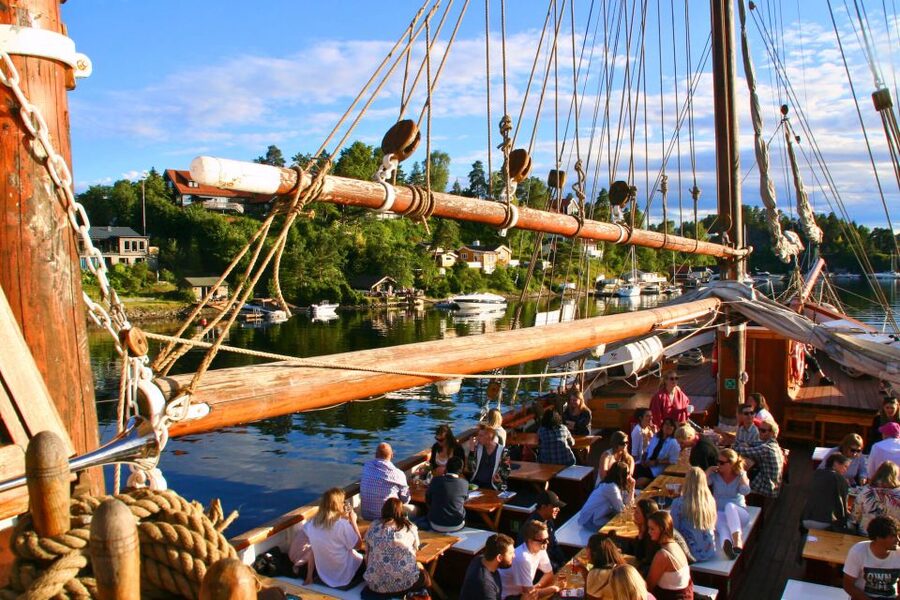
The cruise passes islands such as Hovedøya and the Dyna Lighthouse. These sights show how quickly Oslo’s setting shifts from capital city to open water.
Hovedøya gives you one of the clearest examples of the inner fjord’s island character. The boat’s route through narrow channels lets you see the shoreline from several angles, while small bays and summer homes add a distinctly local feel.
Dyna Lighthouse provides a memorable marker on the water. It is the kind of sight that works best from a boat because its position, rather than its size, makes it useful and photogenic.
You should keep your camera ready, but do not spend the whole cruise looking through your phone. The scenery changes as the boat turns through the channels, and the value here lies in the broad view: water, islands, buildings, and open sky in one frame.
Bygdøy, museums, and Huk Beach
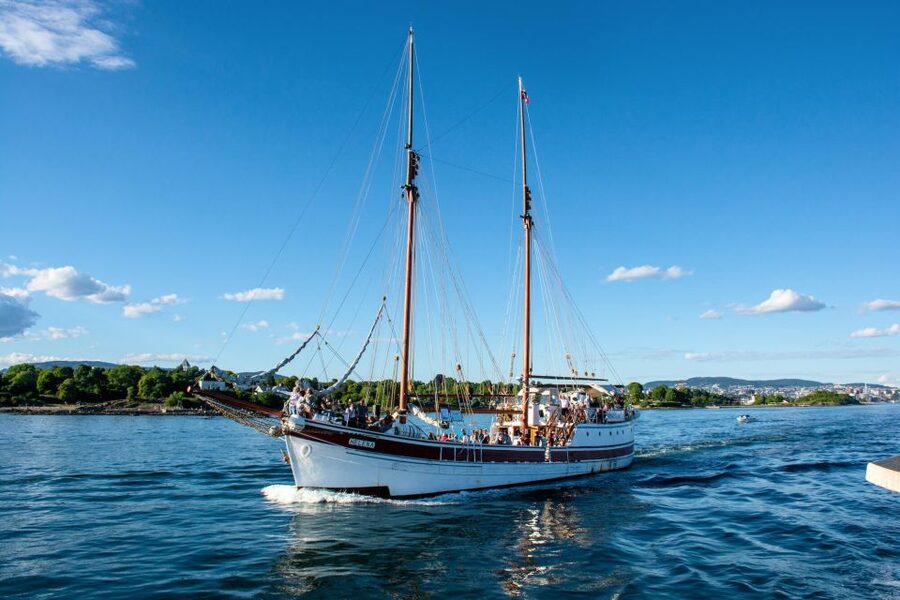
As the boat approaches the Bygdøy peninsula, you see a different side of Oslo’s cultural life. The peninsula is associated with museums and beaches, including Huk Beach.
The cruise offers views of the Maritime Museum, where vintage sailing ships are anchored, and the Fram Museum, which presents the famous polar exploration vessel Fram. The boat does not replace a museum visit, but it can help you decide which places deserve more of your time later.
This is an especially useful feature for a short stay. You receive a visual preview of Bygdøy without spending several hours indoors. If the museums interest you, note their locations and return independently when you have time.
Huk Beach adds a more relaxed note. Seeing a beach near the capital reinforces the point that Oslo’s setting is not only urban. The city’s relationship with the water shapes daily life, recreation, transport, and tourism.
What the four-hour format gives you for $82
The listed price is $82 per person. That is not a bargain basement city walk, but you are paying for two separate activities: a guided two-hour tour on foot and a two-hour sightseeing cruise, plus the mobile app.
The value depends on your plans. If you would book a central walking tour and a boat ride separately, combining them saves the trouble of arranging two reservations and gives your day a simple structure. You also receive history from a live guide rather than relying only on signs or a self-guided route.
The price is less appealing if you want a long, remote fjord voyage or a deep visit inside Oslo’s museums. This cruise stays close to Oslo, and the walking tour covers major highlights rather than every neighborhood.
I think the package works best for a first day in town, a short stop, or anyone who wants a broad introduction before choosing what to explore in detail. The 4.2 rating from 24 reviews suggests a generally positive experience, while the single detailed comment gives useful balance: the walking tour was praised for its guide, Csilla, and the boat ride was valued for its variety and number of sights.
That specific praise points to the experience’s main strength. The guide can make the walking portion far better than a route map, while the boat provides plenty to see without asking you to plan each stop yourself.
Who will enjoy this Oslo combination tour?
You should consider booking it if you want:
- A first orientation to Oslo’s central sights
- A guided walk without committing to a full-day program
- City architecture followed by outdoor scenery
- A small group rather than a large crowd
- A simple way to preview Bygdøy and its museums
- A boat ride with photo opportunities close to the city
It may not suit you if you want a slow walking pace with long stops at each building. It is also not the right choice for a remote mountain-fjord excursion, since the cruise focuses on Oslo’s inner waterways.
Families and mixed-age groups may appreciate the change of activity. The boat gives your feet a break, while the walk keeps the day active. Anyone with limited mobility should note that the activity is listed as wheelchair accessible, though you should still confirm the exact boarding arrangements before booking.
The tour is offered with a live English-speaking guide. The audio guide is available in English, Spanish, French, Italian, and German, which can help you revisit the sights after the live walk. The additional languages listed for the audio guide do not mean the live tour is conducted in those languages.
Booking details that affect your day
You can cancel up to 24 hours before the activity for a full refund, and the reserve-now, pay-later option keeps your plans flexible. Those terms are useful in Oslo, where weather can influence how much you want to spend outside.
Bring comfortable shoes, a charged smartphone, and an umbrella. The phone supports the sightseeing app, the shoes handle the walking route, and the umbrella covers the most obvious weather risk.
The tour is listed as four hours, with a two-hour walk and a two-hour cruise. Check the available starting time when you book, and allow a little extra time around the meeting point so you are not searching for University Aula at the last moment.
Should you book it?
Book this tour if you want Oslo in two clear chapters: civic streets and cultural buildings first, inner-fjord scenery second. The small group, the guide-led stories, and the range of sights make $82 reasonable for a first look at the city.
Skip it if your main goal is a long trip into Norway’s dramatic western fjords or an in-depth museum visit. For most first-time visitors with only a day or two, though, this is a practical introduction that shows why Oslo works both as a capital and as a waterfront city.
FAQ
Where does the Oslo walking tour begin?
Meet your guide at University Aula, Karl Johan Street 47, near the statue of P.A. Munch by the entrance.
What time does the tour depart?
Tours depart at 10:00 AM, but you should check availability for the current starting times when booking.
How long does the complete activity last?
The activity lasts four hours. It includes a two-hour Best of Oslo walking tour and a two-hour fjords sightseeing cruise.
What language is the live tour in?
The live tour guide speaks English.
Which languages are available through the audio guide?
The audio guide is available in English, Spanish, French, Italian, and German.
Is the experience wheelchair accessible?
Yes, the activity is listed as wheelchair accessible. Confirm the precise boat boarding details before booking if you need specific assistance.
Can I cancel the booking?
Yes. You can cancel up to 24 hours in advance for a full refund. You can also reserve now and pay later.
Recently added around Oslo
- The Vigeland Park in Oslo: Insta-Perfect Walk with a Local★ 5.0 · 3 reviews
- Oslo: Best of Oslo Walking Tour and Hop-on Hop-off Bus Tour★ 3.7 · 3 reviews
- Best of Oslo: Walking Tour with a local guide★ 4.6 · 3 reviews
- Afternoon Tea and Classic Concert on the Fjord★ 4.5 · 3 reviews
- Maral Kunst : Jewelry Bar Experience (Jewelry Making)★ 5.0 · 3 reviews
- Lake walk and campfire★ 4.7 · 3 reviews
- Oslo: Yoga & Hiking with a dog★ 5.0 · 3 reviews
- Oslo: Skjennungstoppen Wildlife Forest Hiking Tour★ 5.0 · 3 reviews
Oslo Tours, compared.
Scenic Fjord Cruise with Audio Guide Commentary
Read our review →


Guided Sightseeing Fjord Cruise on Premium Silent Boat
Read our review →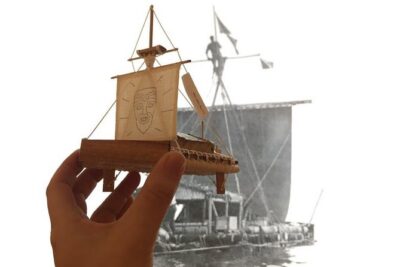
Browse the lists this tour appears in