
Reviewed · OSLO TOURS
Exclusive Private Cruises on the Oslo Fjord
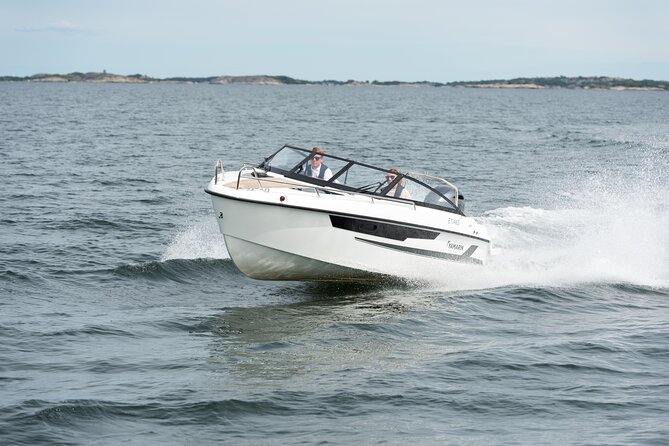
Oslo’s best views often come from the water, and this private powerboat cruise gets you beyond the usual harbor circuit. You’ll pass the Opera House, Akershus Fortress, the Barcode skyline, Hovedøya, and Dyna Lighthouse, then slip through narrow inlets and sheltered bays where summer life unfolds.
I like the small private group, limited to seven people, and the freedom to shape the route around your interests. I also like the chance to see local waterfront life at Middagsbukta, where boats gather to swim, picnic, play music, and spend a sunny afternoon.
The main consideration is price: at $1,600.20 per group, this makes the most sense when divided among a full group. The boat also depends on good weather, so keep some flexibility in your Oslo schedule.
Key points at a glance
- Private boat for up to seven: You get the powerboat and captain to yourselves, rather than joining a large sightseeing vessel.
- Three to six hours on the fjord: The standard route takes about three hours, while longer trips can allow more time for islands, coves, and custom requests.
- Oslo from fresh angles: The Opera House, Akershus Fortress, and Barcode buildings look notably different from the water.
- A local summer stop: Middagsbukta is a popular swimming and anchoring area where you can see how people use the fjord in warm weather.
- Historic islands and Dyna Lighthouse: The cruise combines scenery with stories about Oslo’s coastal past.
- Route flexibility: The captain can tailor the cruise to your wishes, including a possible stop at a boat-access restaurant.
Why Oslo’s fjord is best seen by powerboat
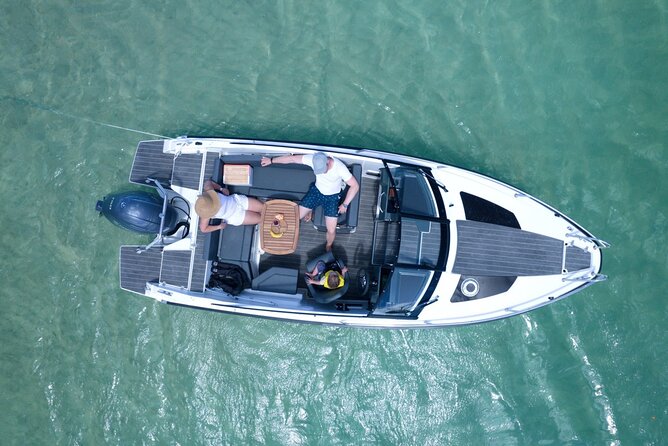
Oslo sits at the head of a long fjord, but the city can feel surprisingly close to the water. A private powerboat gives you a moving viewpoint instead of one fixed panorama. You see the city center, islands, bridges, coves, bird sanctuaries, and seaside homes as parts of one connected setting.
The powerboat matters here. A large sightseeing ship is useful for a broad introduction, but it usually follows a set route and stays in open water. This cruise is designed to reach narrower passages and sheltered bays. You can get closer to places such as Dyna Lighthouse and travel under Ormsund Bridge, adding variety to the outing.
You should expect a sightseeing cruise rather than a full island excursion. The emphasis is on seeing more of the fjord from the boat, hearing about its history and geography, and stopping or slowing where the surroundings are worth a closer look.
The captain also explains the Norwegian relationship with the fjord. In summer, the water is not simply a scenic backdrop. It is a place for swimming, picnics, music, boating, and short escapes from the city. That context helps make the cruise feel like an introduction to daily life around Oslo, not just a tour of famous buildings.
More Oslofjord cruises:
- Oslo: 100% Electric Oslofjord Sightseeing Cruise
★ 4.4 · 2,041 reviews - Guided Sightseeing Cruise on Oslofjord by Premium Silent Boat
★ 5.0 · 730 reviews - 2-Hour Oslo Fjord Sightseeing Cruise by Sailing Ship
★ 4.0 · 694 reviews
Oslo Opera House, Akershus Fortress, and the Barcode skyline
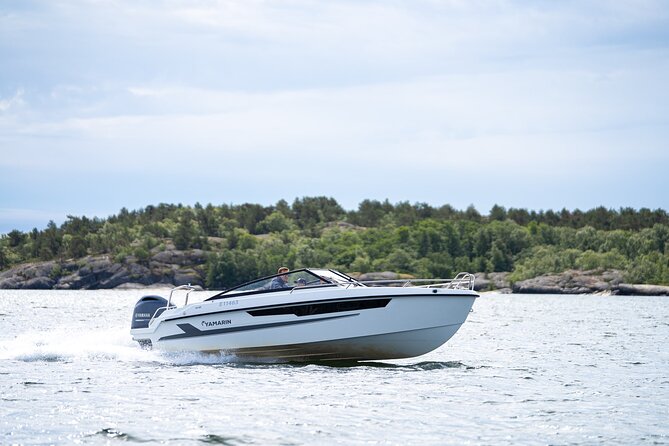
The cruise begins with some of Oslo’s most recognizable sights, seen from an angle that land-based sightseeing cannot match. The Opera House is especially striking from the fjord, with its pale, angular form reaching toward the water.
Akershus Fortress brings a different mood. From the boat, you can take in its position above the harbor and understand why this site mattered to Oslo’s defense. The view also places the fortress beside the modern city, creating one of the clearest contrasts on the cruise.
Then comes the Barcode skyline, a row of tall, narrow buildings that has changed Oslo’s waterfront. From the water, the buildings read as a single modern wall behind the harbor. You can photograph the city center without having to weave through streets or search for a clear viewing spot.
I would keep your camera ready, but do not treat the first part as a quick checklist. The value comes from seeing these places together. The cruise shows how old fortifications, contemporary architecture, and working waterfront space share the same edge of the city.
Hovedøya, Dyna Lighthouse, and the first island views
As the boat moves beyond the central harbor, the city begins to break into islands and open water. Hovedøya is among the islands you’ll pass, and the change is immediate: the urban skyline gives way to rocky shores, small beaches, trees, and quieter inlets.
The exact balance between sightseeing and open cruising can be adjusted, which is useful if your group has a clear interest. You can ask for more time around islands, more attention to historic sites, or a route focused on swimming areas and seaside scenery.
Dyna Lighthouse is one of the most appealing points on the route. The cruise can bring you closer to this small landmark than a larger vessel generally can. Its position in the fjord makes it a natural photo stop, and the captain can provide background on the historic islands and coastal sites around the entrance to the fjord.
There is also a practical treat here. If you are hungry, the cruise can stop at one of the nearby restaurants accessible only by boat. The information provided does not promise a meal or identify a particular restaurant, so regard this as a possible custom option rather than a built-in part of every trip.
Ormøya, Ormsund Bridge, and Oslo’s seaside homes
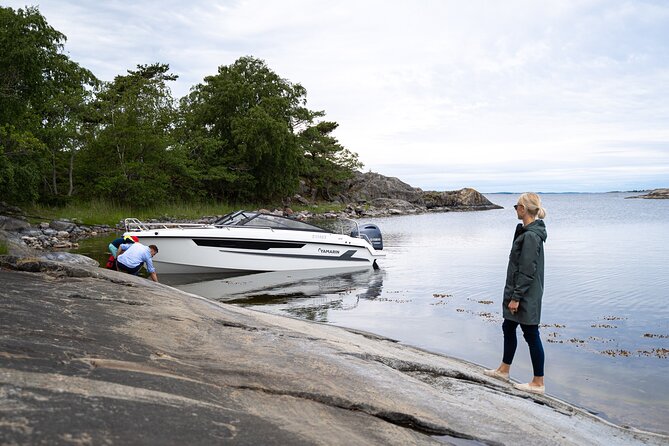
The route continues around Ormøya, under Ormsund Bridge, and into Paddehavet. This section gives you a look at Nordstrand, Ulvøya, and some of Oslo’s most desirable waterfront property from the sea.
That change of viewpoint is useful. From land, much of this shoreline is difficult to see as a whole. From the boat, you can follow the edge of the water and notice how homes, small docks, rocky shores, and narrow passages fit together.
Ormsund Bridge adds a clear visual marker to this part of the cruise. Passing beneath it also helps you understand the shape of the waterways around the southern side of Oslo. The route is not only about the central monuments. It shows the residential side of the fjord, where the water remains part of everyday life.
This is one reason the private format works well. A group interested in architecture, property, photography, or local geography can ask the captain to spend more time in this area. A group focused on the central sights can give it less attention and continue toward the islands and open fjord.
A few more Oslo half-days to weigh up
- Oslo: Scenic Fjord Cruise with Audio Guide Commentary
★ 4.5 · 5,375 reviews - Oslo Nature Walks: Island Hopping Tour
★ 4.8 · 2,713 reviews - Oslo: Fjord Evening Cruise with Shrimp Buffet
★ 4.5 · 1,956 reviews - Oslo: 3-Hour Highlights Bike Tour
★ 4.8 · 1,609 reviews
Bird sanctuaries at the entrance to Bunnefjorden
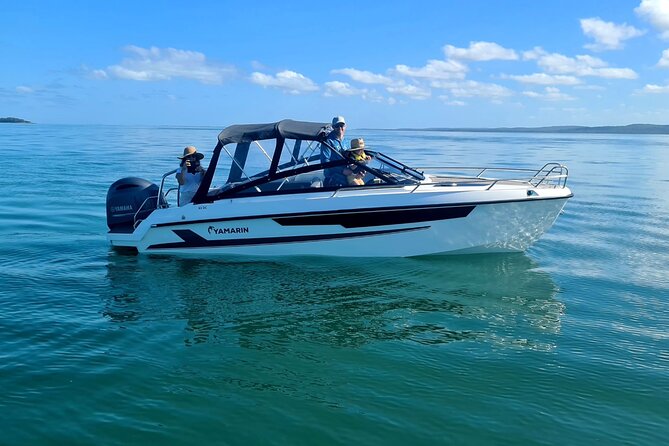
Near the entrance to Bunnefjorden, the boat passes the bird sanctuaries of Skjælsholmene. This section offers a quieter pause after the city views and residential shoreline.
You may be able to watch bird life on the islands, but the experience depends on conditions, distance, and the season. It is best to think of this as a chance to observe a protected natural area from the water, not as a dedicated wildlife excursion.
After this stop, the boat increases speed as it heads back out into the Oslo Fjord. That shift gives the trip a pleasant change of pace. You move from careful observation around narrow passages to a faster ride across more open water.
The return to open fjord also makes the route feel longer and more varied than a simple harbor loop. In a three-hour version, this balance of city, islands, homes, nature, and open water is likely to be the main appeal. Longer options allow more room for stops and personal requests.
Middagsbukta: Oslo’s summer life on the water
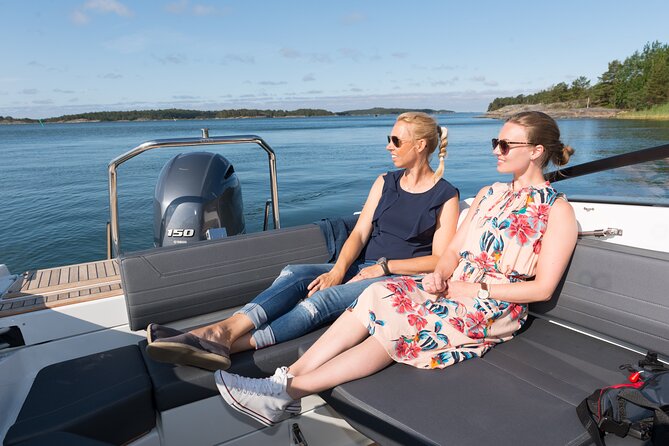
Middagsbukta is listed as a 40-minute stop, and it is one of the most distinctive parts of the cruise. This is a popular anchoring and swimming area where people arrive by all kinds of boats to play music, dance, picnic, swim, and spend time together.
You get a look at Oslo’s warm-weather culture in action. The scene is social and informal, quite different from the formal architecture around the central harbor. If you want a sense of how local people use the fjord in summer, this is the place to pay attention.
The stop is especially useful for groups that want more than photographs. You may be able to relax on the water and watch the activity around you, though the supplied details do not confirm that swimming is included or required. Ask about the exact plan if a swim is important to you.
Middagsbukta can also be a drawback for anyone seeking a silent nature cruise. It is popular precisely because it is lively in summer. You may find boats, music, and plenty of activity rather than solitude.
Historic islands at the Oslo Fjord entrance
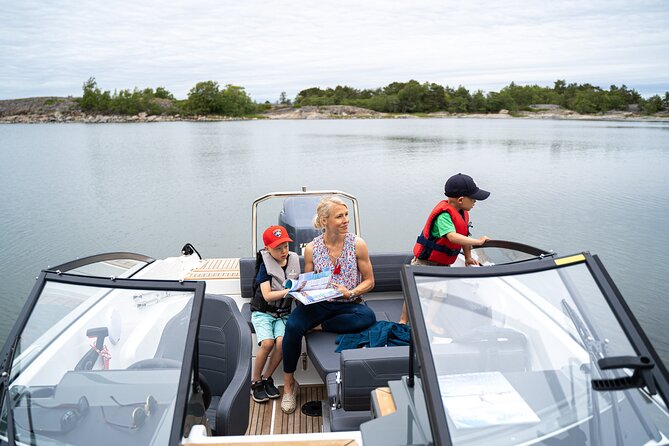
The islands at the entrance to the Oslo Fjord carry a long maritime and defensive story. Your guide explains that history as you cruise around them, giving the scenery more meaning than it would have if you simply passed by.
The information does not specify the names of every historic island on this section, so the exact commentary may vary with the captain and route. Still, the setting is valuable because you can see how islands helped shape movement into and out of the fjord.
This portion pairs well with the view of Akershus Fortress earlier in the cruise. One shows the city’s defensive position at the harbor, while the islands show the wider coastal setting beyond it. Together, they help you understand Oslo as a maritime capital.
For history-minded visitors, I would request that the captain give this section plenty of attention. Since the trip can be tailored, it is worth stating your interests before departure rather than assuming every group receives the same amount of commentary.
What the private format really adds
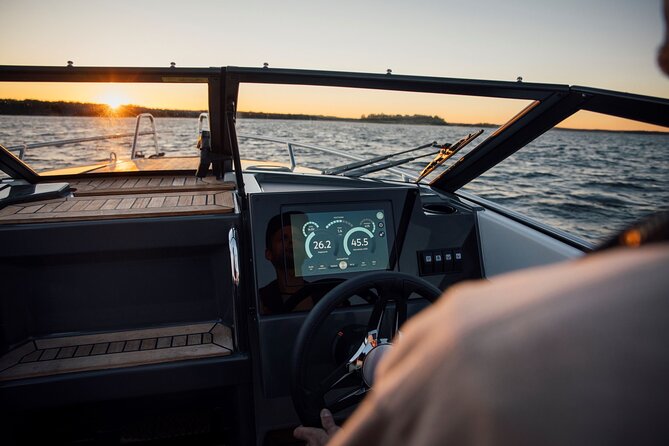
The group limit is seven people. That is small enough for your party to stay together and discuss the route with the captain without the distance and noise that can come with a large boat.
The private setup also makes the cruise useful for mixed-interest groups. One person may care about Oslo architecture, another about islands and nature, and another about swimming areas or restaurants. A custom route can give each person part of what they came for.
The captain is more than a person steering the boat. The experience includes explanations of the fjord’s history, geography, and Norwegian coastal life. One direct description of the captain emphasizes his strong grasp of the Oslo Fjord and his ability to explain the Norwegian spirit connected to it. Since no captain’s name is provided, I cannot give you one, but the quality of the commentary is clearly an important part of the experience.
You should also be realistic about the limits of a private boat. A custom route does not mean every request can be guaranteed. Weather, time, water conditions, and the agreed plan will shape what is possible. Discuss your priorities at the start.
Three hours or closer to six?
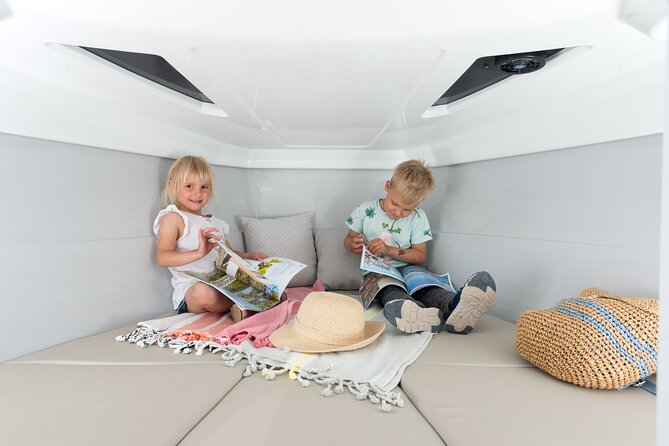
The standard cruise is about three hours. That is enough time for a broad introduction, including central Oslo, islands, southern waterfront areas, Bunnefjorden, and a return across the fjord.
Choose the shorter version if you have limited time in Oslo or want to combine the cruise with museums and city sightseeing. Three hours gives you a meaningful look at the fjord without taking most of your day.
The experience can last from three to six hours, so a longer booking makes sense for a group that wants a slower pace or a more tailored route. Extra time may allow more attention to Middagsbukta, the historic islands, bird sanctuaries, Dyna Lighthouse, or a boat-access restaurant.
Do not assume that a six-hour trip automatically includes every possible stop. The route is customizable, but your group should discuss the desired plan with the provider. Tell them whether your priorities are landmarks, history, wildlife, swimming areas, photography, or simply time on the water.
Is $1,600.20 a fair price?
The price is $1,600.20 per group of up to seven, not per person. With seven people, the cost works out to about $229 per person. With four people, it is about $400 each, and with only two people, the private format becomes a major splurge.
That price can be reasonable for a full group that values privacy, flexibility, and a longer time on the water. You are paying for the boat to yourselves, a private captain, and the ability to adjust the route. It is not the economical choice for a quick view of the central harbor.
The value improves if your party has a shared interest in the fjord and plans to use the full three to six hours. It also improves when you make good use of the customization. A fixed route on a private boat would waste some of the format’s main advantage.
I would compare this with your other Oslo plans. If you only want to photograph the Opera House and Akershus Fortress, a cheaper harbor cruise may cover those sights. If you want the islands, narrow waterways, residential shores, Middagsbukta, and a personal route, this experience offers something more specific.
Weather, timing, and practical details
The cruise requires good weather. If poor weather causes cancellation, you are offered another date or a full refund. That protection is useful, but you should still avoid placing the cruise on the final few hours of your Oslo stay.
You can cancel for a full refund up to 24 hours before the start time. Changes or cancellations made less than 24 hours before departure are not accepted and are not refunded. The cut-off uses Oslo local time.
Confirmation is provided when you book. The experience is offered in English, and mobile tickets are accepted. Service animals are allowed, the departure area is near public transportation, and most people can participate.
The available information does not state whether food, drinks, life jackets, shelter, or particular seating are included. If any of those details matter to you, ask the provider before booking. The same applies if someone in your group has mobility concerns, since general participation information is not a substitute for specific boat-access details.
Who will enjoy this Oslo cruise most?
This cruise suits a family or friend group that wants to stay together and prefers a private outing. It also works well for people who have already seen central Oslo and want to understand the fjord beyond the city streets.
Photographers will appreciate the changing angles on the Opera House, fortress, Barcode skyline, islands, bridges, lighthouse, and seaside homes. History fans should ask for more explanation around the fortress and historic islands.
It is also a good pick for anyone curious about local summer life. Middagsbukta, with its boats, swimming, picnics, and music, shows a side of Oslo that a standard city walk cannot provide.
I would hesitate to book it for a solo visitor or a couple on a tight budget. The group price is difficult to justify unless you can share the cost. I would also think twice if your main goal is a quiet nature outing, since Middagsbukta can be active during summer and the itinerary includes a faster open-water cruise.
Should you book the private Oslo Fjord cruise?
Book it if you can fill most of the seven places, want a private boat, and care about seeing more than Oslo’s central waterfront. The strongest reasons are the flexible route, the close approach to Dyna Lighthouse, the passage under Ormsund Bridge, the local summer scene at Middagsbukta, and the captain’s explanations of the fjord.
Skip it if you want the lowest-cost way to see a few city landmarks or if your schedule cannot handle a weather-related change. For the right group, this is a memorable and practical way to connect Oslo’s architecture with its islands, neighborhoods, history, and everyday life on the water.
FAQ
Where does the private cruise take place?
The experience takes place on the Oslo Fjord in Oslo, Norway.
How long does the cruise last?
The cruise lasts approximately three to six hours. The described sightseeing route takes about three hours.
How many people can join the private cruise?
The private boat accommodates one group of up to seven people.
What language is the cruise offered in?
The cruise is offered in English.
Which Oslo landmarks can I see from the boat?
You can see the Oslo Opera House, Akershus Fortress, and the Barcode skyline from the water.
Which islands and coastal areas are included?
The route can include Hovedøya, Ormøya, Nordstrand, Ulvøya, the historic islands at the entrance to the Oslo Fjord, and the bird sanctuaries of Skjælsholmene.
Does the cruise stop at Middagsbukta?
Middagsbukta is listed as a 40-minute stop. It is a popular anchoring and swimming area with boats, picnics, music, and other summer activity.
Can the route be customized?
Yes. The cruise can be tailored to your group’s wishes and ideas.
Can the boat get close to Dyna Lighthouse?
Yes. The cruise is designed to get closer to Dyna Lighthouse than larger boats can usually bring you.
What happens if the weather is poor?
The experience requires good weather. If it is canceled because of poor weather, you can choose another date or receive a full refund.
Recently added around Oslo
- The Vigeland Park in Oslo: Insta-Perfect Walk with a Local★ 5.0 · 3 reviews
- Oslo: Best of Oslo Walking Tour and Hop-on Hop-off Bus Tour★ 3.7 · 3 reviews
- Best of Oslo: Walking Tour with a local guide★ 4.6 · 3 reviews
- Afternoon Tea and Classic Concert on the Fjord★ 4.5 · 3 reviews
- Maral Kunst : Jewelry Bar Experience (Jewelry Making)★ 5.0 · 3 reviews
- Lake walk and campfire★ 4.7 · 3 reviews
- Oslo: Yoga & Hiking with a dog★ 5.0 · 3 reviews
- Oslo: Skjennungstoppen Wildlife Forest Hiking Tour★ 5.0 · 3 reviews
Oslo Tours, compared.
Scenic Fjord Cruise with Audio Guide Commentary
Read our review →

Guided Sightseeing Fjord Cruise on Premium Silent Boat
Read our review →
Browse the lists this tour appears in