Reviewed · HORSES
Lofoten: Guided Horse Riding Tour Over Hov and Hovsund
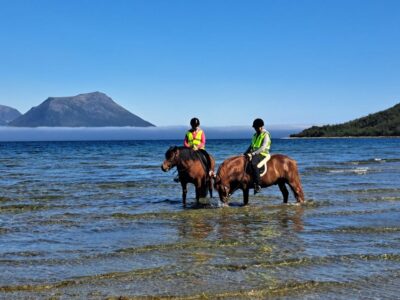
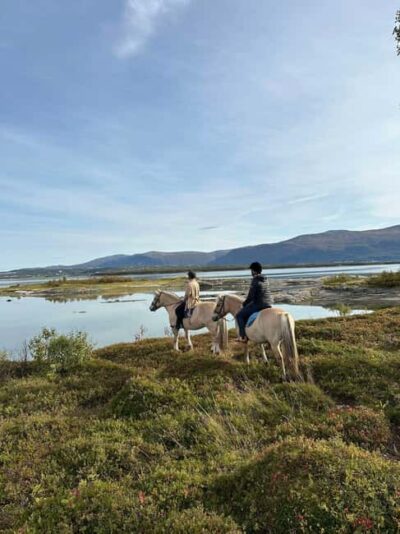
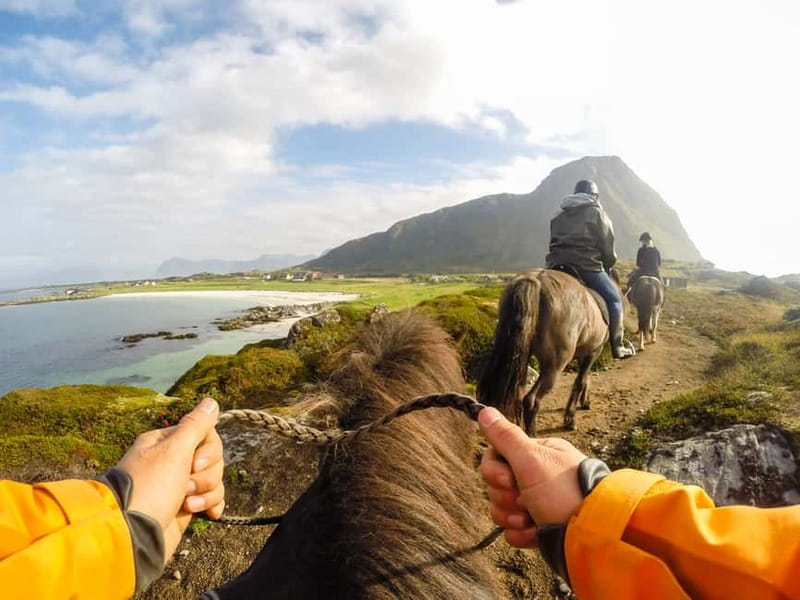
Lofoten’s coastline looks different from horseback. On this 1.5-hour ride from Hov Gård, you travel at a calm pace along Hov beach, climb gently toward Hovsund, and pass old Viking remains and traditional fish-drying racks. The scenery does the heavy lifting, while the Icelandic horses keep things steady.
I like the way this tour combines coast, culture, and local life in one short outing. I also like that the guides give you a proper introduction before leaving, with a helmet, gloves, boots, and weather gear included. The main drawback is clear: experienced riders may find the slow pace too tame, since the route cannot be adapted for faster or more advanced riding.
Key points to know before you book
- Ride across Hov beach: The tour begins on an Arctic beach, giving you open coastal views from the saddle.
- Friendly Icelandic horses: These trained horses are suited to beginners and riders who want a relaxed outing.
- See traditional fish-drying racks: The route offers a close look at an important part of Norwegian fishing culture.
- Pass Viking-era remnants: Ancient settlement remains add a layer of history to the coastal ride.
- Watch for sea eagles in summer: Local bird life can appear along the route, including the area’s large sea eagles.
- Bring the right clothes: Long pants and comfortable shoes are required, while rain and warm outfits are supplied.
Why horseback is a good way to see this part of Lofoten
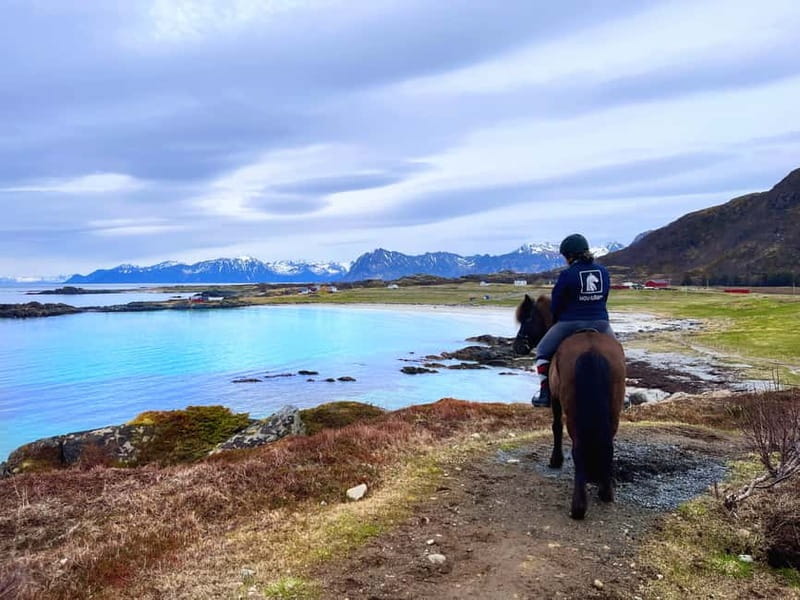
Many Lofoten outings are built around driving, walking, or taking photographs from the roadside. Horseback gives you a slower way to take in the shore. You have time to notice the changes underfoot, from beach to gentle rise, and to look outward toward the water instead of keeping your eyes on a trail map.
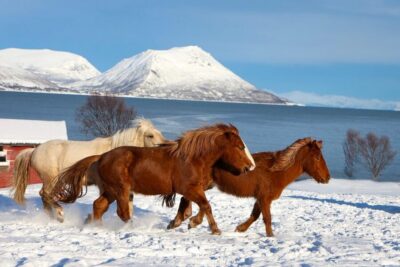
The horses are Icelandic, friendly, and trained for this kind of guided ride. That matters if you have little or no riding experience. You are not expected to arrive knowing how to handle a horse. Before setting out, the guide introduces you to your horse, fits your helmet, and explains how to use the reins.
I appreciate that preparation. A short briefing cannot turn a beginner into an expert, but it can help you sit correctly, understand the basic signals, and feel less nervous during the first few minutes. The guide remains with the group and keeps the ride at a relaxed pace.
This is not a riding lesson in the traditional sense, and it is not an athletic trail ride. You will not be asked to gallop or take on demanding terrain. The experience is about seeing Gimsøya Island from a different angle, with the horses providing the transport and the guide explaining what you pass.
A few more Norway half-days to weigh up
- Tromsø: Lyngen Horse Summer Riding Experience
★ 4.9 · 39 reviews - Tromsø: Horseback Riding Tour
★ 4.8 · 23 reviews - Tromsø: Lyngen Horse Winter Riding Experience
★ 5.0 · 13 reviews
Starting at Hov Gård in Gimsøysand
You meet your guide inside the stables at Hov Horse Farm in Gimsøysand. There is no hotel pickup or drop-off, so you need to arrange your own way to the meeting point. The activity also ends back at the stable, which makes planning easier if you are driving around the island.
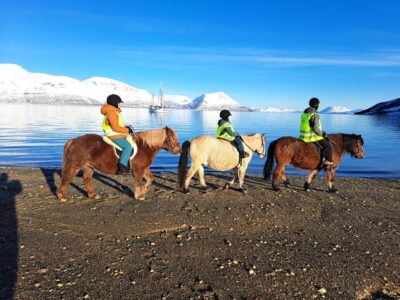
The first part is practical. You are introduced to your horse, fitted with a riding helmet, and given gloves and rubber boots. Rain and warm outfits are also available for the ride. That clothing provision is useful in Lofoten, where a bright start can still turn cool or wet along the coast.
You should arrive in comfortable shoes and long pants. Do not bring a backpack, and professional cameras are not allowed. A phone may be more practical for quick pictures, though you should keep your attention on the horse and the guide rather than treating the ride as a photography session.
The booking requires the rider’s name, weight, height, age, and experience level in English. This is not needless paperwork. The stable uses those details to maintain safe conditions for both horses and riders. The maximum rider weight is 95 kilograms, or 209 pounds, and children under 8 cannot join.
Learning the reins before leaving the stable
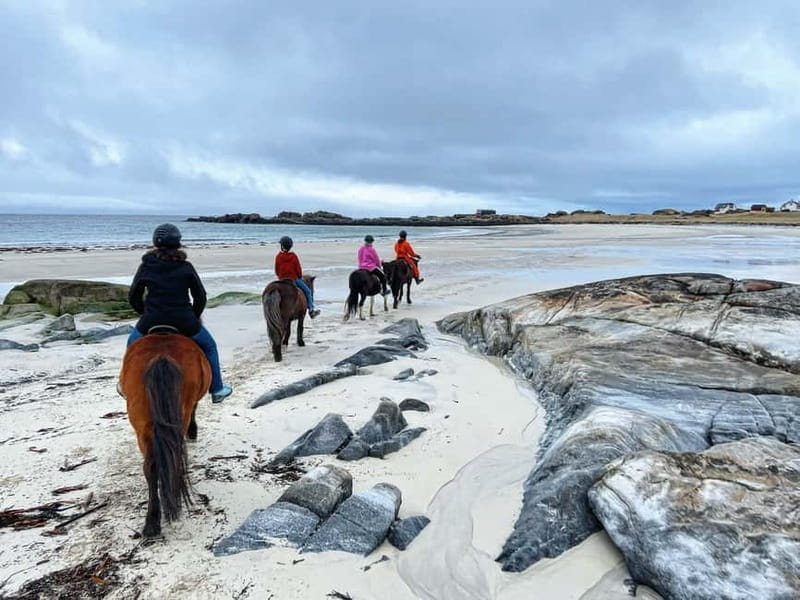
The safety briefing is one of the most important parts of the experience. You learn how to handle the reins and receive basic instructions for communicating with your horse. The tour does not require previous experience, so a first-time rider can take part.
I would still treat the first few minutes as a time to settle in. A horse may be calm and well-trained, but you need to learn its rhythm. Keep your hands steady, listen closely, and follow the guide’s instructions. The slow pace gives you room to gain confidence without feeling hurried.
For riders who already spend time on horseback, the same calm pace may be less exciting. The route cannot be changed to suit more experienced riders, and there is no faster section described. This tour is best for a mixed group, a beginner, or someone who wants a scenic ride rather than a technical challenge.
The guide speaks English. The live guidance is useful not only for riding instructions but also for the local details along the route. You can learn about the area while keeping your attention on the horse and the changing views.
Crossing Hov beach at a gentle pace
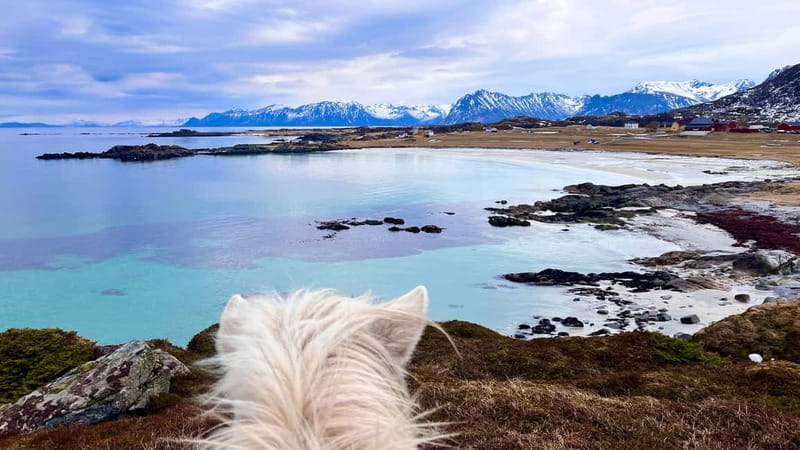
The ride moves first over Hov and its Arctic beach. This is the scenic heart of the outing. From the saddle, you get a broad view of the coast, with the beach providing an open setting for an easy start.
The slow speed is an advantage here. You have time to watch the shore, notice the weather, and take in the scale of the surroundings. Lofoten’s beauty is not limited to dramatic peaks. The quieter coastal spaces matter too, especially when you see them at the pace of a walking horse.
The beach section also helps beginners adjust. You are not immediately pushed into a difficult route. Instead, the group begins in a setting where the guide can monitor the horses and riders while everyone becomes comfortable.
Summer may bring sightings of local bird life, including the sea eagle. Nothing is guaranteed, so you should not book this as a wildlife trip. Still, the possibility adds a welcome bonus, especially when you are already moving slowly and have time to scan the coast.
A practical point: weather can shape the experience. The provider supplies rain and warm outfits, but you should still dress sensibly underneath. Long pants are required, and comfortable footwear will make the mounting and riding portions easier.
A different way to spend a day from here:
- From Bergen: The Original Fjord Cruise to Mostraumen
★ 4.7 · 8,440 reviews - Tromsø: Reindeer Sledding & Feeding with a Sami Guide
★ 4.8 · 6,417 reviews - Stavanger: Scenic Fjord Cruise to Lysefjord and Preikestolen
★ 4.6 · 5,791 reviews - Oslo: Scenic Fjord Cruise with Audio Guide Commentary
★ 4.5 · 5,375 reviews
Riding toward Hovsund fishing village
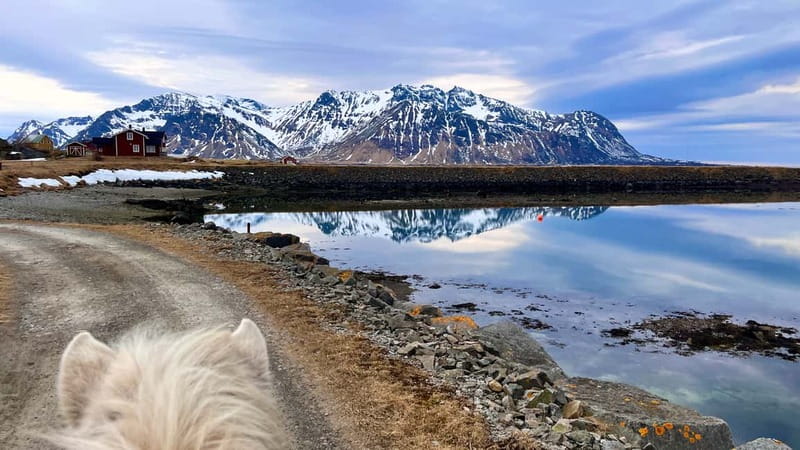
After Hov beach, the route heads toward Hovsund, a fishing village. The change from open shore to working coastal community gives the ride more variety than a simple beach loop.
Hovsund helps connect the scenery to daily life in Lofoten. Fishing is not just a theme for museums and postcards here. It remains part of the region’s identity, and the village setting gives you a chance to see that connection from the saddle.
The route includes a gentle climb with more broad views. This is not described as a demanding ascent, but it does add a small change in pace and height. You may find that the higher point gives you a better sense of the coast and the route you have already covered.
The guide’s presence is especially useful here. Instead of passing through without context, you can learn what you are seeing as you ride. The value is not in collecting a long list of facts. It is in understanding how the beach, fishing village, old settlement sites, and modern farm fit together in one small area.
Fish-drying racks and the story of stockfish
One of the most distinctive sights along the route is the traditional fish-drying rack. These wooden racks are associated with stockfish, the famous Norwegian dried fish that has long been important to northern coastal communities.
Seeing the racks in place is more useful than simply hearing about dried fish in a shop or museum. You can connect the product with the open air, the coastal climate, and the working traditions of Lofoten. The ride does not turn into a formal food tour, and food and drinks are not included, but this small detail gives the route real local character.
You may also catch glimpses of old Viking-era remnants. The remains are described as scattered along the route, so you should not expect a large, reconstructed settlement or a major archaeological site with extensive displays. Their value is in the setting. You see traces of earlier life while moving through the same coastal area that still supports fishing and farming today.
That mix of ordinary and ancient is one of the ride’s strongest features. The tour does not isolate history from the present. Viking remnants, fish-drying racks, the fishing village, and the horse farm appear as parts of one connected route.
Returning to the stable after 90 minutes
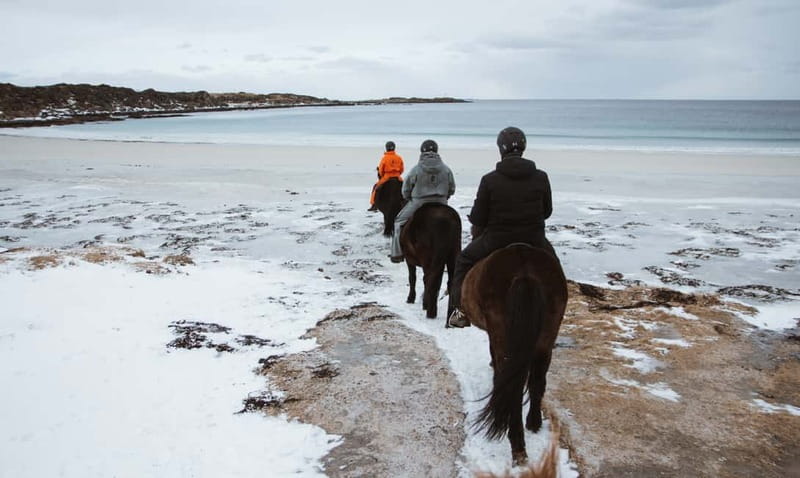
After the climb, coastal views, village section, fish racks, and Viking remnants, you return to Hov Gård. The full activity lasts 1.5 hours, and the return to the starting point means you do not need to arrange a second pickup.
Ninety minutes is a useful length for a holiday schedule. It is long enough to feel like a real outing, yet short enough to combine with other Lofoten plans. You can fit it into a day of exploring Gimsøya Island without giving up an entire afternoon.
The short duration also keeps the ride manageable for people who are new to horses. Sitting in a saddle uses muscles you may not normally notice, and a slow outing is easier to enjoy than a long one if you have limited riding experience.
The trade-off is that the tour cannot cover every corner of the area. You will see selected coastal sections rather than spend half a day ranging across the island. If you want a longer expedition, a faster pace, or more time in the saddle, this particular outing may feel limited.
Is the $126 price good value?
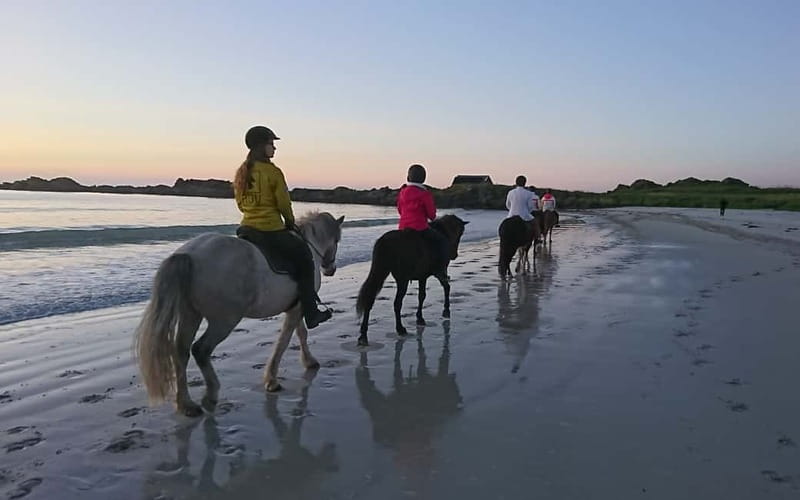
At $126 per person, this is not a budget activity. The price makes more sense when you consider what is included: the guide, Icelandic horse, helmet, gloves, rubber boots, and rain or warm clothing. You are paying for the horse, the stable operation, the safety preparation, and the guided route, not just a short rental.
The strongest value comes from the combination of several experiences in one outing. You get beach scenery, a fishing village, fish-drying racks, Viking remnants, and a guide who explains the area. A simple horseback session might offer only the ride itself. This one adds a sense of place.
The value is less convincing if you are an advanced rider looking for speed or technical riding. The tour is deliberately slow and cannot be adjusted for experienced riders. In that case, part of the price pays for a style of outing you may not need.
For a first-time rider, a couple seeking a quiet activity, or a family group with eligible children, the included equipment and instruction reduce the hassle. You do not need to rent riding gear separately, and the weather clothing is a practical benefit in northern Norway.
Free cancellation up to 24 hours before the activity also gives you some protection if your plans change. The reserve-now, pay-later option can help you keep a flexible schedule, though you should still check the available start times before building the rest of your day around it.
Who will enjoy this Hov Gård ride most?
I would recommend it most strongly to:
- Beginners: No riding experience is needed, and the guide explains the basics before departure.
- Scenery-focused visitors: The route favors beaches, coastal views, and a gentle pace over speed.
- Couples and small groups: The ride offers a shared outdoor activity with plenty to look at and discuss.
- Cultural sightseers: Fish-drying racks and Viking remnants add more depth than a purely scenic ride.
- Families with older children: Children must be at least 8 years old, and all riders must meet the weight limit.
- Visitors with limited time: The 90-minute duration fits neatly into a busy Lofoten day.
I would hesitate if you are pregnant, weigh more than 95 kilograms, dislike outdoor weather, or want an energetic ride. The activity is also not suitable for children under 8. Since there is no hotel transfer, you need to be comfortable reaching Hov Horse Farm in Gimsøysand independently.
The experience has a 4.8 rating from 97 reviews, and the strongest praise centers on the guides, the horses, and the views over the beach. That matches the practical design of the tour: the horses are trained, the instruction comes first, and the route places the coastline at the center.
Should you book the Lofoten horse ride?
Book this tour if you want a calm, scenic introduction to horseback riding with a clear local connection. The beach views are the main draw, but the fishing village, stockfish racks, and Viking remains keep the outing from feeling like a generic trail ride.
I would especially choose it for a first ride in Lofoten, or for a group with mixed experience levels. You receive the gear, learn the basics, and return to the same stable after a manageable 90 minutes.
Skip it if you are looking for speed, a long trek, or a riding challenge. For everyone else, the combination of gentle Icelandic horses, Arctic coast, and small pieces of Lofoten history makes the $126 price reasonable, provided you meet the age and weight rules and can reach Hov Gård on your own.
FAQ
Where does the horse riding tour start?
The tour starts in the stables at Hov Horse Farm in Gimsøysand on Gimsøya Island.
Where does the activity end?
The ride ends back at the Hov Horse Farm meeting point.
How long does the tour last?
The guided horse ride lasts 1.5 hours, or 90 minutes.
Is riding experience required?
No. The tour does not require previous riding experience, and the guide gives you an introduction to handling the reins before departure.
What type of horses are used?
The tour uses friendly, trained Icelandic horses.
What equipment is included?
The tour includes a guide, Icelandic horse, riding helmet, gloves, rubber boots, and rain or warm outfits for the ride.
What should I bring?
Bring comfortable shoes and long pants.
Can I bring a backpack or professional camera?
Backpacks and professional cameras are not allowed on the tour.
What is the maximum rider weight?
The maximum rider weight is 95 kilograms, or 209 pounds.
Can children join the tour?
Children must be at least 8 years old to take part. Pregnant women are not permitted to join.
Is hotel pickup included?
No. Hotel pickup and drop-off are not included.
What language does the guide speak?
The live guide speaks English.
Can experienced riders ride faster?
No. The tour is slow-paced and cannot be adapted for more experienced riders.
What can I see along the route?
The route includes Hov beach, the fishing village of Hovsund, traditional fish-drying racks, and remnants from the Viking age. In summer, you might also see local bird life, including a sea eagle.
What is the cancellation policy?
You can cancel up to 24 hours in advance for a full refund. You can also reserve now and pay later to keep your plans flexible.
Recently added around Norway
- The Vigeland Park in Oslo: Insta-Perfect Walk with a Local★ 5.0 · 3 reviews
- Mountain-climbing adventure in Mosjøen Via Ferrata★ 4.7 · 3 reviews
- Best of Trondheim: Private Walking Tour with a Local★ 4.7 · 3 reviews
- Brews and Views City Walking Tour in Tromsø with Beer Tasting★ 4.0 · 3 reviews
- Panorama Bus Tour with Audio Guide★ 4.0 · 3 reviews
- Geiranger by Royal route, 5 hours with visiting a high-mountain farm★ 5.0 · 3 reviews
- Arrival Private Transfer from Bergen Airport BGO to Bergen by luxury minivan★ 5.0 · 3 reviews
- Oslo: Best of Oslo Walking Tour and Hop-on Hop-off Bus Tour★ 3.7 · 3 reviews