
Reviewed · GEIRANGER TOURS
Geiranger: Zipline Park Experience
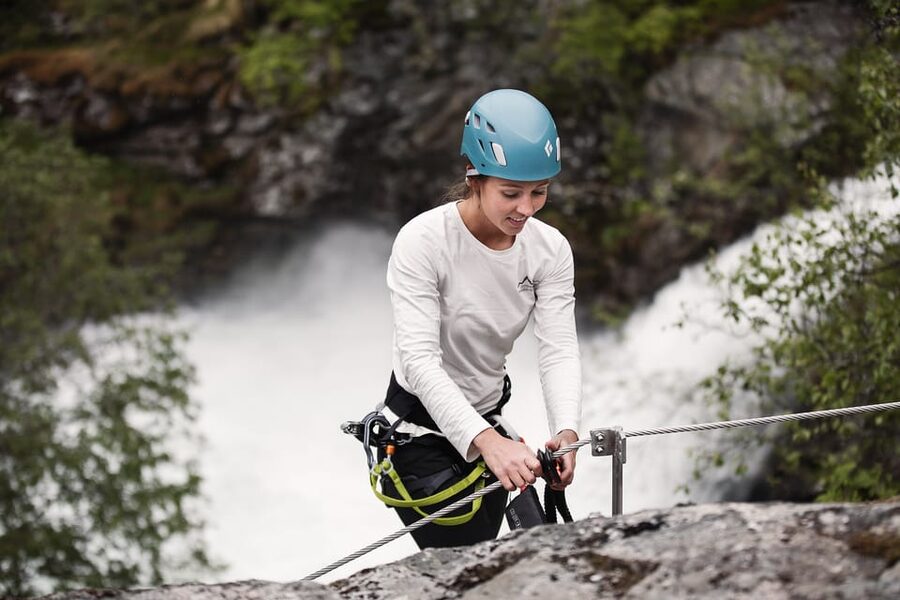
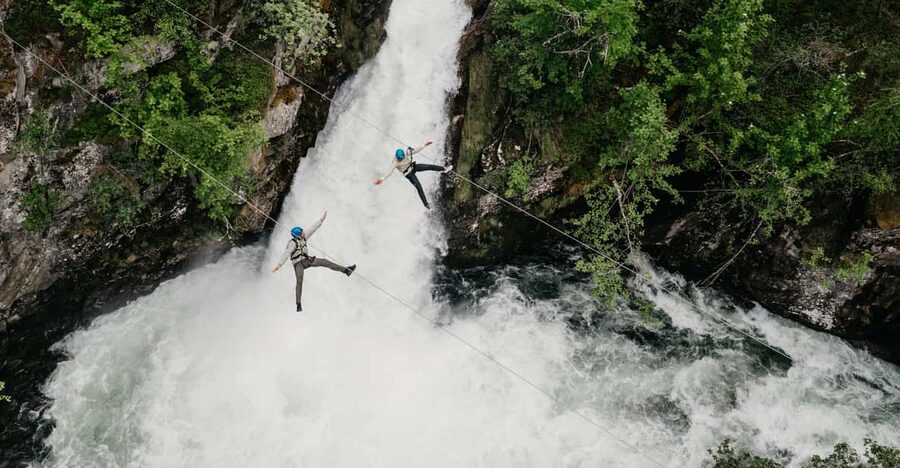
Geiranger’s Zipline Park puts you over rushing water fast. You cross the Geiranger River on Nepalese bridges, clip into a protected rock route, and fly above gorges and waterfalls on four double ziplines. I especially like the Dynamite Waterfall crossing and the fact that you can choose a short zipline-only outing or a tougher via ferrata circuit. Guides such as Jacob are friendly and encouraging, but the climbing route is largely self-guided, so you must be comfortable managing your own safety equipment.
I also like the small groups, limited to eight, and the easy choice between a roughly 30-minute zipline visit and a 1.5-hour combined course. The main caution is that the via ferrata is more strenuous than the word zipline may suggest. Expect ladders, metal footholds, rock sections, rope bridges, and upper-body work. It is not a gentle sightseeing ride.
Key points to know before you clip in
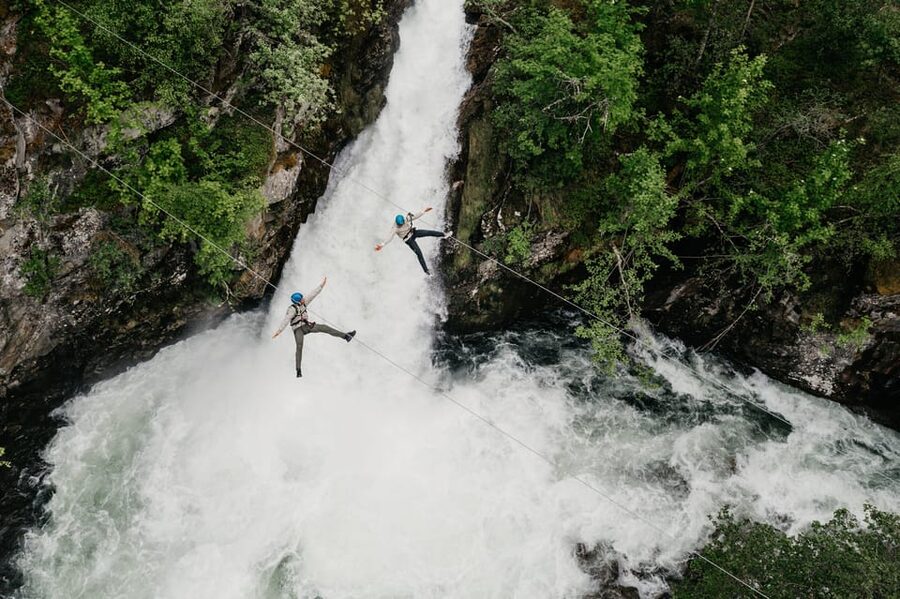
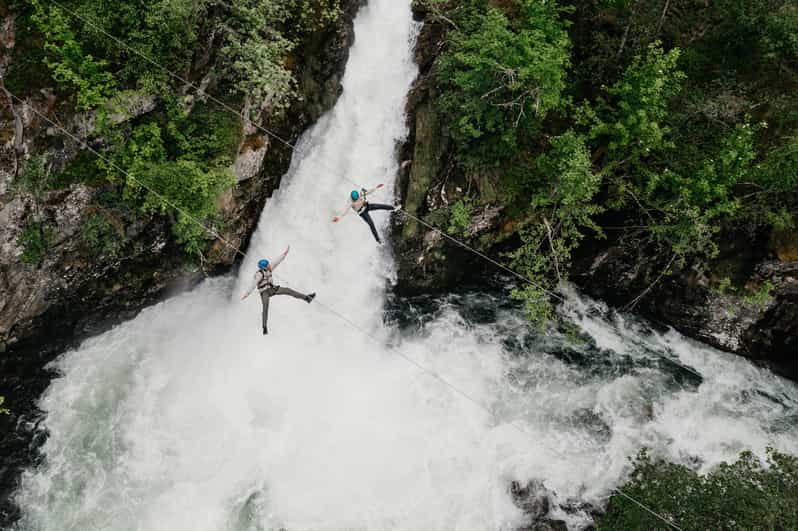
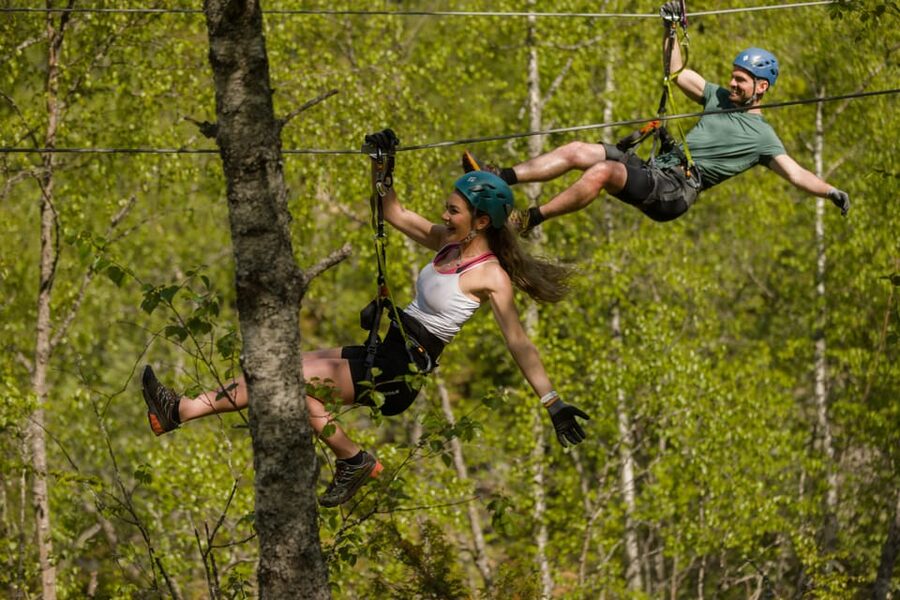
- Four double ziplines: Fly parallel to a companion above rivers, rocks, trees, and falling water.
- Dynamite Waterfall: Finish the zipline-only route close to the waterfall, with spray and river noise nearby.
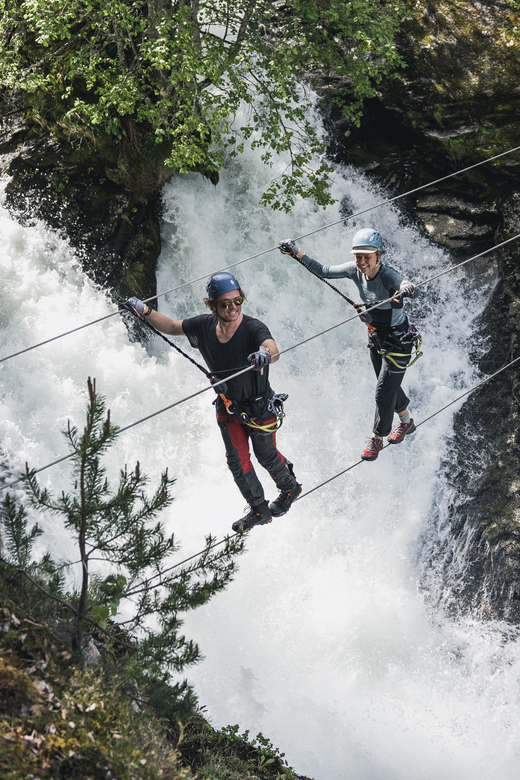
- Via ferrata option: Add four Nepalese bridges and a protected climbing trail for a longer, harder outing.
- Mostly self-guided course: You receive safety instruction, then follow the marked system at your own pace.
- Cruise-port access: The park is walkable from Geiranger’s port, but the route takes about 25 to 30 minutes and includes an uphill section.
- Physical limits matter: You must be at least 130 centimeters tall, weigh no more than 120 kilograms, and have no mobility impairment.
Four ziplines above the Geiranger River
The basic zipline experience is the easiest way to sample the park. You check in at the old black wooden cabin, collect your equipment, and walk into the course for a safety briefing at the first zipline. From there, you complete all four lines, each linked to the next part of the route.
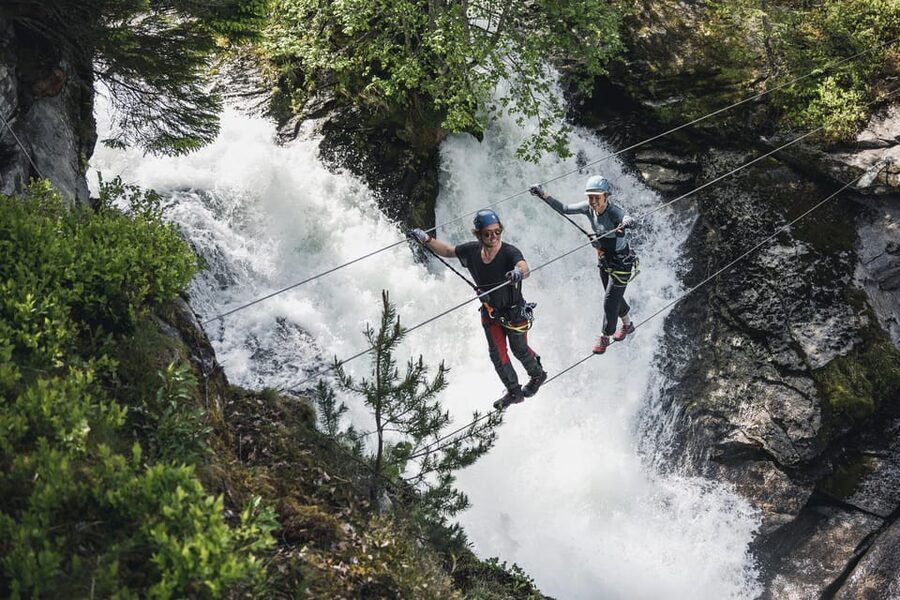
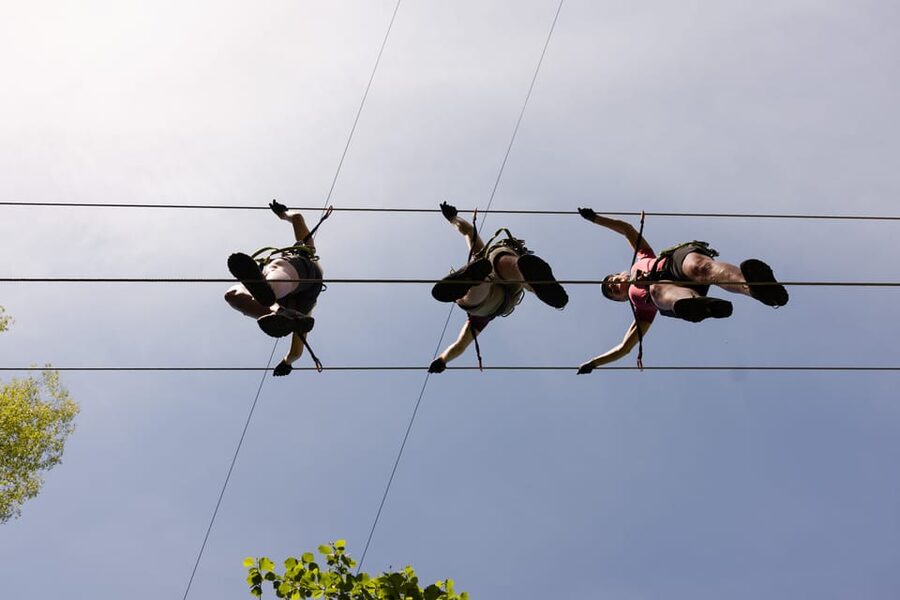
These are not long, isolated lines where you simply sit and watch the valley slide past. The course carries you over rocky gorges, the Geiranger River, tree cover, and cascading water. The double setup lets two people travel parallel to each other, which adds a social element without turning the ride into a race.
I like this format for first-time zipliners. You learn the process at the first line, then repeat it several times. That gives you a chance to settle your nerves and improve your technique. One useful detail is that the lines finish near Dynamite Waterfall, close to the ticket office, so the route feels compact and easy to manage.
The final section near the waterfall is the most memorable. You can feel cool freshwater spray while standing above the falling water, with the river and forest around you. It is a better finish than simply landing beside a parking area.
The zipline-only option usually takes about 30 minutes, though your actual time may vary with the group. At $78 per person, the price is not low for half an hour. Still, you are paying for the equipment, staff instruction, four lines, and a dramatic natural setting that would be hard to reproduce at a standard adventure park. The value is strongest if you want a focused activity during a short port stop.
A few more Geiranger half-days to weigh up
- Feel the adrenaline in Mosjøen Zipline
★ 4.5 · 8 reviews - Odda: Trolltunga Zipline Adventure
★ 4.7 · 6 reviews - Zipline Experience in Mosjøen
★ 5.0 · 5 reviews
The via ferrata adds the real workout
The combined via ferrata and zipline option usually takes about 1.5 hours. This is the choice for you if the zipline is only part of the appeal and you want to move through the forest and rock sections first.
A via ferrata is a protected climbing route. You wear a harness and use fixed safety lines, metal footholds, hand grips, ladders, and wooden walkways. The protection makes the route possible for people without formal climbing experience, but it does not remove the need for strength, balance, and comfort with height.
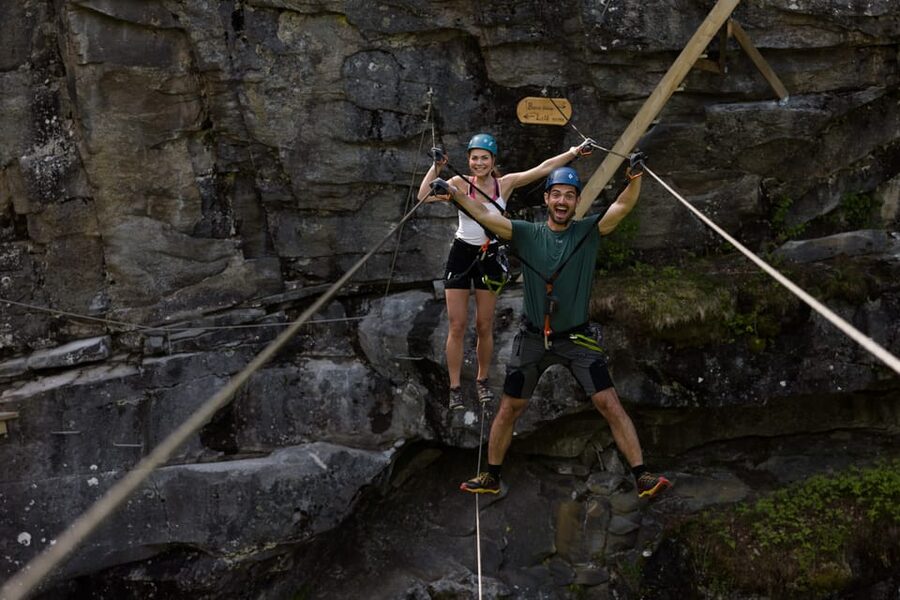
The first portion follows the Geiranger River and includes a Nepalese bridge. These bridges use suspended ropes and boards, so you balance above the water rather than crossing on a normal footbridge. There are four Nepalese bridges in total on the combined course, along with four double ziplines.
At one point, the route offers an easier direction or a more challenging climb. That choice matters. If you are new to climbing, short, or unsure about your upper-body strength, take the easier route. The harder section can involve awkward reaches and steep rock movement. A few people of different ages have completed it, including a nine-year-old and an 82-year-old, but those examples should not make you underestimate the course. Fitness, confidence, and individual mobility vary widely.
The course is not led step by step by a guide. You receive an explanation of the equipment and safety system, then progress through the protected route with your group. Staff are available around the activity, and the zipline sections receive another safety briefing, but you should not expect a guide to hold your hand through every climb.
That independence can be a plus. You move at your own pace, take in the setting, and feel that you solved the route yourself. It can also feel daunting at first, especially if you have never used a via ferrata system. Pay close attention to the briefing, and do not rush when transferring your clips along the safety line.
Dynamite Waterfall is more than a photo stop
The waterfall gives this course its character. You do not merely see it from a distant viewpoint. The route crosses above it, close enough for spray to reach you, and then continues through deciduous forest.
The sound can make instructions harder to hear. One useful tip is to ask the staff member to repeat anything unclear before setting off. A loud waterfall is impressive, but it is not ideal for a safety briefing.
The waterfall also gives you a sense of the water’s force. The Geiranger River is not scenery painted behind the course. It runs beneath bridges and ziplines, with rapids and falling water shaping the route. You get changing views as you walk, climb, and ride, rather than one fixed lookout.
The forest sections provide a welcome break from exposed rock and suspended bridges. They also mean the experience is not only about adrenaline. You are moving through a natural green setting inside the UNESCO-listed Geiranger Park, with the fjord scenery opening up around the course.
What the route feels like underfoot
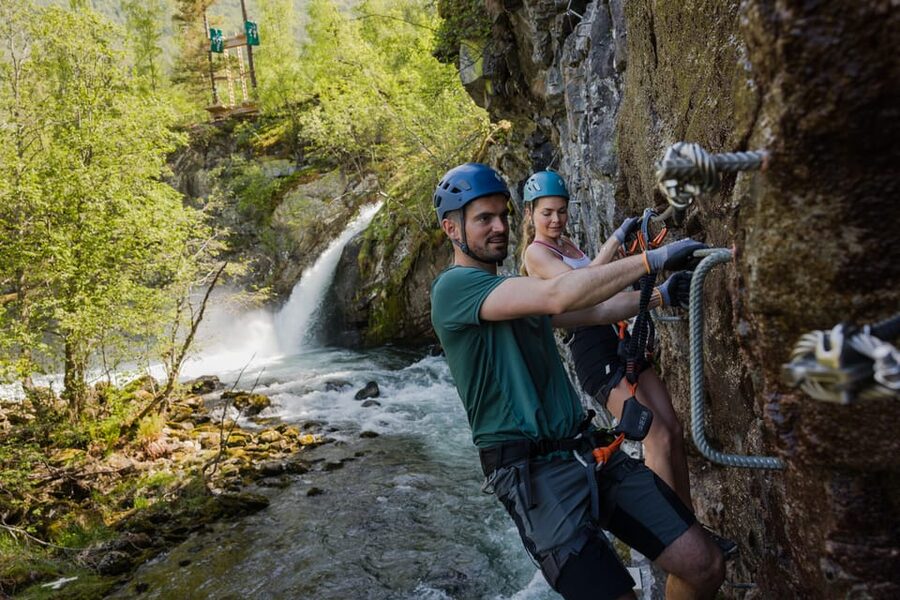
The course asks more of you than a typical zipline park. You may walk on wooden platforms, climb up and down rock, use metal hand and foot grips, and pull yourself onto the structures after each line. Shorter participants can find some holds or steps awkwardly placed, and the repeated climbing can tire your arms.
Good footwear is important. Wear sturdy hiking shoes or boots with a secure grip, particularly if rain has made the rocks or walkways wet. Climbing gloves are useful for the fixed cables and grips. Gloves can be purchased at the park for a small fee, listed in one account as 5 Norwegian kroner.
You should also bring water. Food and drinks are not included, and there is no food or drink available at the top of the route. The combined outing can take close to two hours for some groups, especially when people pause or move cautiously. A small snack and a change of clothes are sensible for a warm or wet day.
Rain does not automatically cancel the activity. The park operates in rain or shine, so waterproof layers can make a big difference. Strong wind or thunderstorms can close the park, since those conditions affect the safety of suspended lines and bridges.
A different way to spend a day from here:
- Geiranger: Dalsnibba, Flydalsjuvet, Eagle Bend & Fjords Tour
★ 4.6 · 2,329 reviews - RIB Geiranger – Fjordsafari
★ 4.8 · 807 reviews - Geiranger: Guided Geirangerfjord Boat Tour
★ 4.7 · 728 reviews - Geiranger: City Sightseeing Hop-On Hop-Off Bus Tour
★ 3.7 · 546 reviews
Getting there from Geiranger’s cruise port
The meeting point is easy to identify once you are on the main road. Look for a large gate with banners and beach flags, walk through it, and continue about 30 meters. The ticket office is an old black wooden cabin on the right, beside a parking lot.
From the cruise ship area, the walk takes roughly 25 to 30 minutes and climbs uphill. Part of the route follows the main road, which has no sidewalk in places. You can also use the scenic stairs beside the waterfall, near the campground, though you should allow enough time and be ready for steps.
A hop-on hop-off bus stops close to the start, according to activity information provided to visitors. Hotel transfer is not included, so arrange your own way to the park. If you have a tight cruise schedule, check the walking time before booking and leave a generous margin for returning to the ship.
The walk itself can be part of the appeal. You get a closer look at Geiranger’s rushing water before the activity begins, and the route helps you warm up. It is less appealing if you are carrying heavy bags or already have a full day of hiking planned.
Is $78 a fair price?
At $78, the zipline-only option is a premium short activity. Its value depends on what you want from your time in Geiranger. If your priority is a quick, organized thrill with fjord scenery, four lines and professional equipment make the cost reasonable. If you are comparing it with a longer hike or a full-day excursion, the half-hour format may feel expensive.
The combined via ferrata option gives you more for the same listed activity price structure, but it also demands more from you. You are paying for a physical challenge, not just additional minutes. The bridges, climbing sections, and waterfall crossing make it a better choice for active visitors who want a sense of accomplishment.
The small-group limit of eight helps. You are not joining a large crowd, and the safety explanation should be easier to follow. Staff friendliness is another strong point. Guides including Jacob have been singled out for being patient, encouraging, and fun, while the owner has helped accommodate large family groups.
Do not book solely because the price includes a zipline. Book because the setting and the activity match your interests. The scenery is part of the value, but you still need to be ready to work for it.
Who should choose each option?
Choose zipline only if you are new to aerial adventure, short on time, or mainly want to fly above the river and waterfalls. It is also the better fit if rock climbing and ladders make you uneasy. The zipline section still involves platforms and equipment, but it avoids the longer climbing route.
Choose via ferrata plus zipline if you are physically fit, comfortable with heights, and keen on a challenge. You do not need stated climbing experience, but you do need patience and enough strength to use the grips and ladders. The route can be especially rewarding for teens and adults who enjoy active outings.
Families need to judge children individually. The minimum weight is 25 kilograms, and the minimum height is 130 centimeters. One nine-year-old completed the via ferrata, while older children have also enjoyed it, but the course is not automatically suitable for every child who meets the measurements.
The activity is not suitable for pregnant women, people with mobility impairments, anyone under 130 centimeters, or anyone over 120 kilograms. It is also a poor match if you are afraid of heights or want a calm sightseeing stop.
Small details that make the day easier
Book a starting time that leaves room for the walk from the port. Check the weather, but remember that ordinary rain does not stop the course. Strong wind and thunderstorms can close it.
Wear clothes that can get wet or dirty. The combination of water spray, rain, exertion, and forest paths can leave you sweaty. Bring a water bottle and a snack, since neither food nor drinks are included.
Listen closely at the first briefing. The zipline instructions are repeated at the first line, but the via ferrata is largely self-guided. If the waterfall makes the guide difficult to hear, ask for the explanation again.
Do not assume the easier option means effortless. Even the zipline route may require climbing ladders and getting onto raised platforms. The stopping action at the end of the lines can feel rougher than on some other zipline courses, so follow the staff’s instructions and keep your body position controlled.
Free cancellation is available up to 24 hours before the activity, and you can reserve now and pay later. That flexibility helps when your Geiranger plans depend on cruise timing or changing mountain weather.
Should you book Geiranger Zipline Park?
Book it if you want more than a fjord photo and like the idea of earning your views. The zipline-only route is a good, compact choice for first-timers and busy port days. The via ferrata combination is better for active people who want bridges, rock work, and a proper physical test before the four lines.
Skip it if you need a fully guided outing, dislike heights, have mobility limits, or want a relaxed activity with no climbing. The course is scenic, friendly, and rewarding, but the via ferrata is not a soft adventure. Come with sturdy shoes, water, and realistic expectations, and you will be set up for one of Geiranger’s more memorable active experiences.
FAQ
How long does the Geiranger Zipline Park experience take?
The zipline-only option usually takes about 30 minutes. The via ferrata plus zipline option usually takes about 1.5 hours, though some groups may take longer.
How many ziplines are included?
The experience includes four double ziplines. You can cross parallel to friends or family members.
Is the via ferrata guided?
You receive a safety briefing and instructions, but the via ferrata is largely self-guided. You follow the protected route and manage your own movement through the climbing sections.
What is included in the price?
Equipment, a safety briefing, and the zipline experience are included. The via ferrata is included if you choose that option. Food, drinks, and hotel transfer are not included.
How do I find the meeting point?
Look for a large gate with banners and beach flags on the main road. Walk through the gate and continue about 30 meters. The ticket office is the old black wooden cabin on the right.
Is the park open in bad weather?
The park operates in rain or shine. It closes during strong winds or thunderstorms for safety reasons.
Are there age, height, or weight restrictions?
Participants must be at least 130 centimeters tall and weigh no more than 120 kilograms. The activity is not suitable for children under 25 kilograms, pregnant women, or people with mobility impairments.
Recently added around Geiranger
- From Geiranger: Dalsnibba & Eagle Road Private Tour & Picnic★ 5.0 · 4 reviews
- Geiranger to Ålesund Bus Tour (one way)★ 4.3 · 4 reviews
- Hellesylt to Norangsdalen: Scenic E-Bike Tour★ 3.6 · 6 reviews
- Geiranger: Rappelling tour with epic view★ 5.0 · 6 reviews
- Hellesylt-Geiranger Sightseeing (one way ticket)★ 4.0 · 7 reviews
- All About the Fjords, in one tour by boat & bus from Ålesund★ 4.3 · 7 reviews
- Ljøen, Hellesylt: Ljøen Farm Tour★ 4.6 · 24 reviews
- Geiranger Fjord: Private Double Kayak Rental★ 4.1 · 35 reviews
Geiranger Tours, compared.
Dalsnibba, Flydalsjuvet, Eagle Bend & Fjords Tour
Read our review →

Browse the lists this tour appears in