
Reviewed · CANOES & KAYAKS
Færvik: Raet National Park Sea Kayaking Trip
Raet National Park is an unusual place to explore by kayak because 98 percent of the park lies below water. From Hove, you paddle through clear coastal water, past islands shaped by ice more than 12,000 years ago, and along sea routes used since the 1500s. It is a close-up look at Norway’s Southern Skerries, not a quick photo stop from shore.
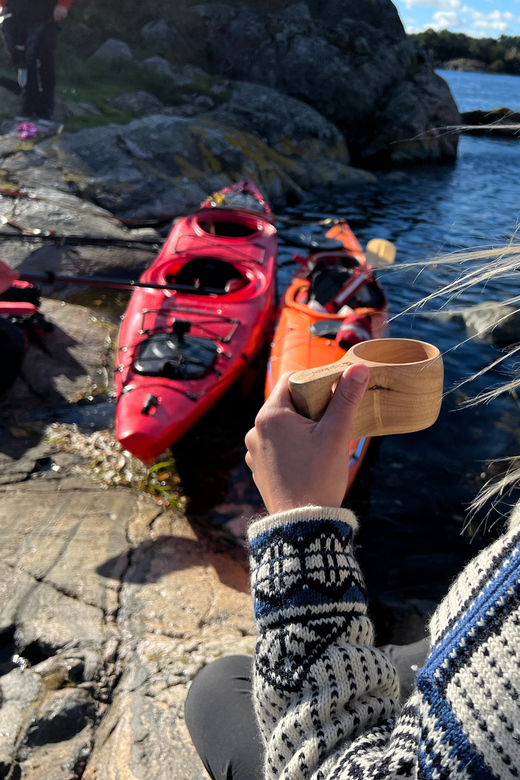
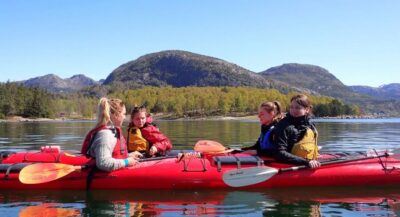
I like the careful start: you get protective clothing, a safety briefing, and paddle practice before the group sets off. I also like the flexible guiding. Pat, one of the named guides, adjusted the outing to suit the people present, even in rain. The main consideration is effort: you will paddle for two to three hours, and the water can feel demanding even on a sheltered route.
Key points to know before booking
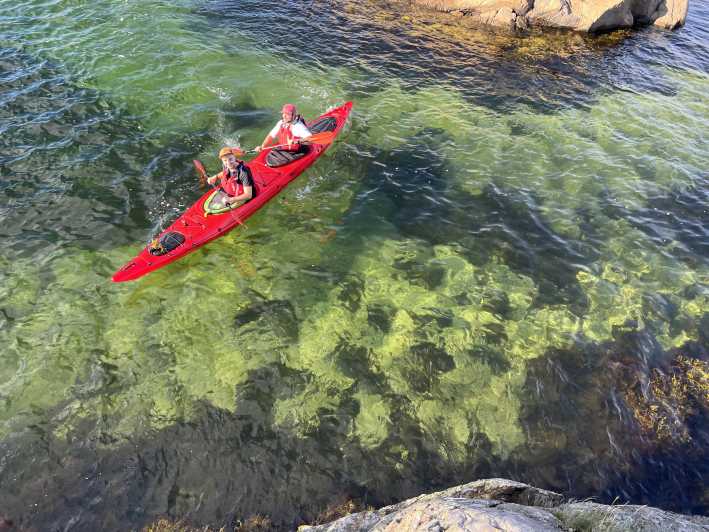
- Raet is best seen from the water: The park’s most unusual feature is its mostly submerged marine area, which you experience from a low kayak seat.
- The route links several islands: You pass Gjessøya, Merdø, St. Helena, Badeholmen, Lille Brattholmen, and Torjusholmen.
- Beginners get a proper introduction: The guide covers safety and paddle technique before the trip begins.
- The scenery has an ice-age story: Smooth rocks, islands, and shallow skerries reflect glacial forces from over 12,000 years ago.
- Merdø can add history to the outing: Depending on conditions and the route chosen, you may paddle toward the historic island for lunch or a museum visit.
- You need basic fitness and swimming ability: This is not a passive boat ride, and it is not suitable for non-swimmers or children under 12.
Starting at Hove, where the park meets the sea
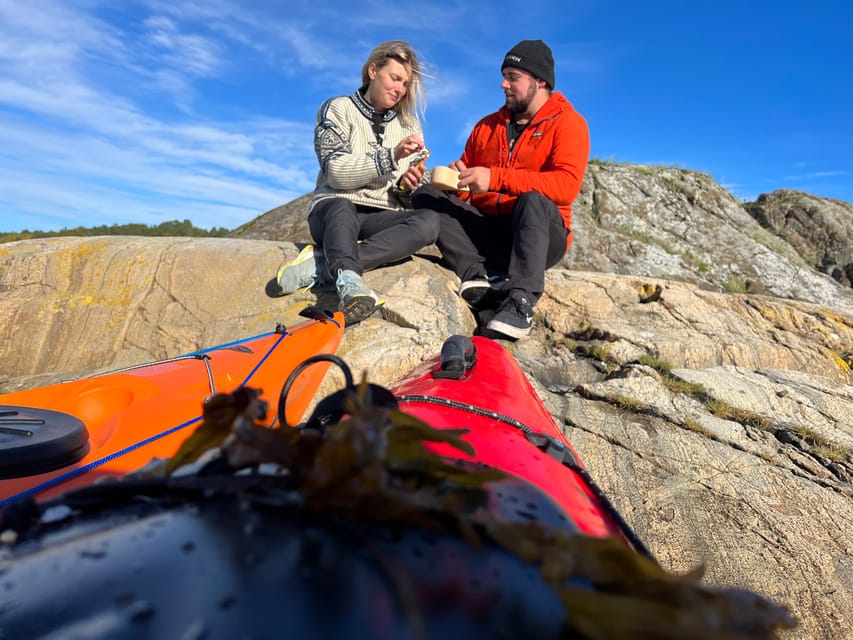
The meeting point is the Beach House at Hove, at Hoveveien 108 on Tromøya. This puts you right beside the water rather than requiring a long transfer to the launch site. Before you paddle, the team provides water equipment and protective clothing, then explains the route and basic safety rules.
The formal safety briefing takes about 20 minutes at Hoveodden 80. That time matters. Sea kayaking is simple to understand but different from sitting in a large tour boat. You control a narrow craft with a double-ended paddle, and the guide needs to make sure everyone knows how to steer, stop, and keep a stable rhythm.
You then get about 30 minutes of paddle instruction and practice. I see this as one of the strongest parts of the outing for first-time kayakers. You are not expected to arrive with polished technique, and you have time to get comfortable before the route begins in earnest.
Bring comfortable shoes, warm clothing, a swimsuit, wool underclothes, a towel, and a full change of clothes. Bare feet are not allowed. The supplied information also asks you to bring jogging shoes, which makes sense for moving around the launch area and keeping your feet protected.
More paddling around Norway:
- Tromsø: Winter Sea Kayaking Tour with Wildlife Sightings
★ 4.9 · 333 reviews - Eggum: Lofoten Islands Midnight Sun Kayak Tour
★ 4.9 · 322 reviews - Stavanger: Guided Kayaking in Lysefjord
★ 4.9 · 200 reviews
Why Raet National Park works so well from a kayak
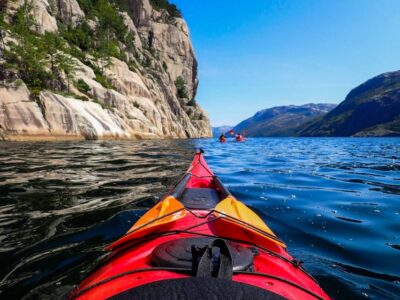
Raet is a marine national park, so the water is not merely the gap between scenic islands. It is the main setting. From a kayak, you sit close to the surface and can take in the clear water, rocky skerries, small islands, and maritime life at a much slower pace than from a motorboat.
The park’s 98 percent underwater character gives this trip its central idea. You are not just looking toward Raet. You are moving through it. The guide can point out features of the sea routes, explain the island communities, and connect the visible rock formations with the glacial forces that shaped them.
Those formations date back more than 12,000 years, when retreating ice left behind the rounded rocks, low islands, and shallow waters of the coast. You do not need a geology lesson to appreciate the result. The point is that the scenery has a clear story, and the kayak gives you time to notice it.
The sea routes also have a human story. Ships and small craft have used these waters since the 1500s. As you move between the islands, the guide explains local history and points out places that might otherwise look like ordinary rocks on the horizon.
Paddling toward Gjessøya and Merdø
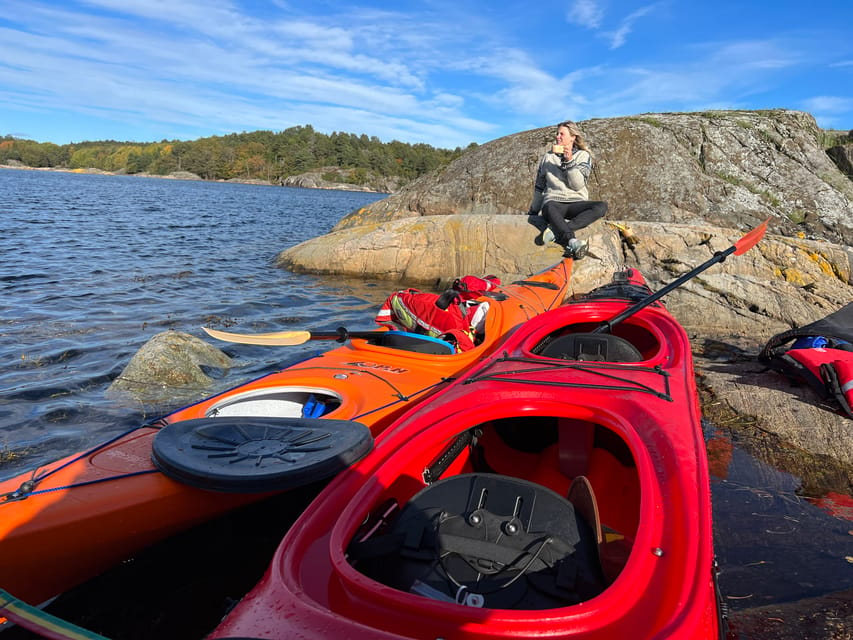
The main route heads southwest toward Gjessøya and Merdø. The early section lets you settle into the kayak and find a comfortable stroke. You should expect a steady pace rather than a race. The guide demonstrates how to paddle, but you still need to maintain your own rhythm for much of the outing.
Gjessøya is passed during the route, with roughly 10 minutes noted for that part of the trip. It is one of several island views that give the excursion its sense of movement. You are not stopping at every rock or shoreline. Instead, you pass through a chain of coastal places, with the guide adding context as the group travels.
Merdø receives more attention, with around 30 minutes of kayaking associated with this section. The island has historic interest, and the route may include time for lunch or a museum visit if the trip follows that option. The available details do not promise a fixed museum stop on every departure, so you should treat it as a possible part of the route rather than a guarantee.
That flexibility is useful in a sea environment. Weather, wind, group ability, and water conditions can affect what is practical. The operator reserves the right to move or cancel an outing in bad weather, and that is a sensible rule for a kayaking activity.
St. Helena, Badeholmen, and the sandy bay
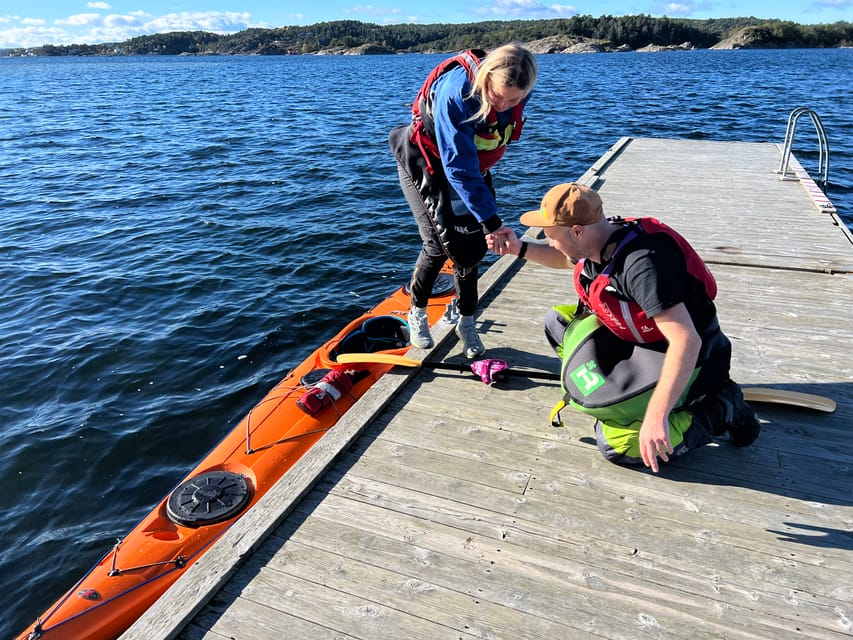
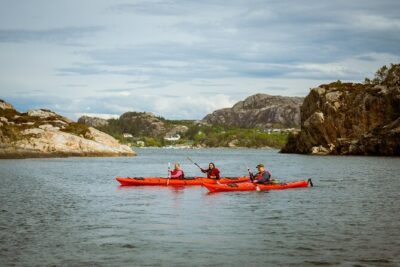
After the route passes toward the outer islands, it moves through sheltered archipelago water. St. Helena and Badeholmen are among the places you pass before reaching Gjessholmen. These sections are less about one major attraction and more about the changing view as the kayak moves between low islands and open channels.
The stop at Gjessholmen is especially appealing because the route enters a pretty sandy bay. A sandy shore gives the trip a welcome change from rock and open water. It also offers a natural place to pause, look around, and take in the quieter side of the skerries.
You may find the bay relaxing, but do not mistake the sheltered setting for a completely effortless outing. The activity description makes clear that the paddling can be strenuous and takes two to three hours in open water. Even calm conditions require repeated upper-body movement and attention to the kayak.
The itinerary also lists Lille Brattholmen, with about 30 minutes of kayaking, followed by Torjusholmen, with about 40 minutes. These names matter because they show the scale of the route. This is a real coastal journey through several points, not a short lesson followed by a brief paddle near the beach.
More national park days near Norway:
- From Bergen: Folgefonna National Park & Glacier Lake Tour
★ 4.9 · 589 reviews - Musk ox Safari in Dovrefjell National Park, Oppdal Safari
★ 5.0 · 524 reviews - Bergen Day Tour to National Park Folgefonna and Glacier Lake
★ 5.0 · 408 reviews - From Tromso: Arctic Wilderness Snowmobile Daytime Tour
★ 4.5 · 174 reviews
What the three-hour schedule feels like
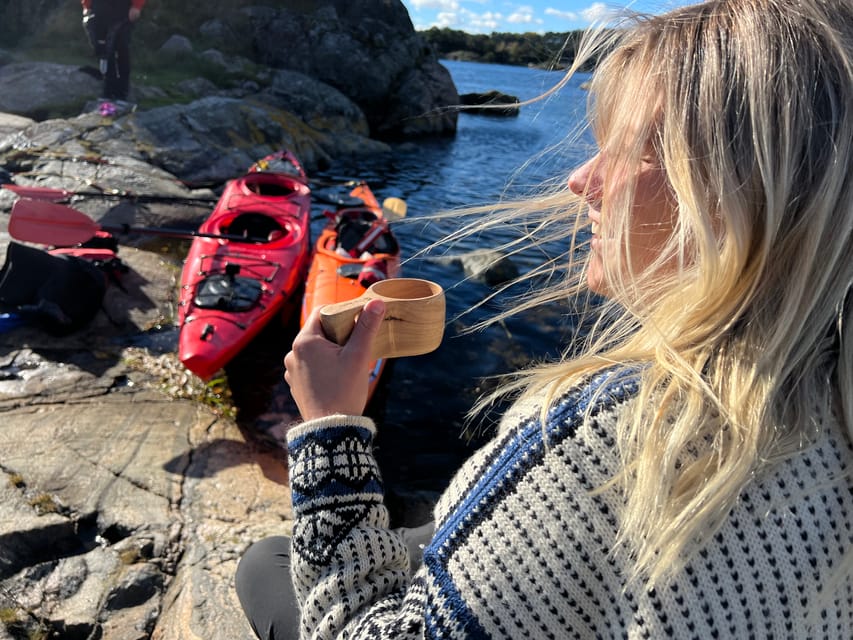
The full activity lasts three hours. About 20 minutes are set aside for the safety briefing, and another 30 minutes cover paddle training and practice. That leaves roughly two hours for the coastal route, including time around the islands and the return to Hove.
The schedule gives you enough time to learn and then travel, but it does not leave much room for a long shore visit at every stop. If you want an outing built around extended time at a museum or a leisurely meal on Merdø, confirm the planned route when booking.
I like this format for a first sea-kayaking experience. The introduction is long enough to reduce nerves, while the route is long enough to show why the area is special. You get instruction, local history, island scenery, and a meaningful amount of time on the water in one half-day activity.
The pace will depend on the group. A guide can adapt the tour to the people taking part, as Pat did on one outing, but the basic demands remain. You should be able to swim, be in good physical health, and manage sustained paddling. The tour is for ages 12 and up, and the stated upper weight limit is 243 pounds, or 110 kilograms.
Weather, clothing, and the practical side
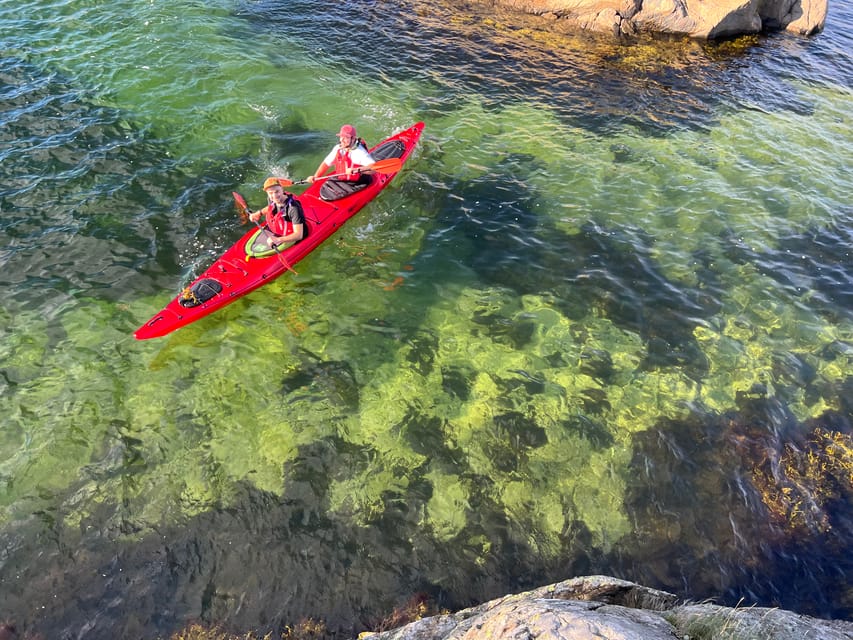
Southern Norway’s coast can be beautiful in rain as well as sun, but rain changes how you experience a kayak trip. Wet hands, cool air, and damp clothing can make a long paddle feel harder. Bring wool underclothes and warm layers rather than relying only on a swimsuit and light summer clothing.
Protective clothing and water equipment are included. You still need your own towel, shoes, and dry clothes for afterward. Pack those items so changing is easy at the end. A towel is not a minor detail here, since even careful paddling can leave you wet.
Smoking, alcohol, drugs, chewing gum, and drones are not allowed. Intoxication is also prohibited. These rules are practical on a small kayak, where balance, clear communication, and attention to the guide all matter.
The guide speaks Norwegian and English. Pictures taken by the guide are included, which is a useful touch because taking your own phone photos while paddling can be awkward. You can focus on the water and still receive images from the day.
What the guiding adds
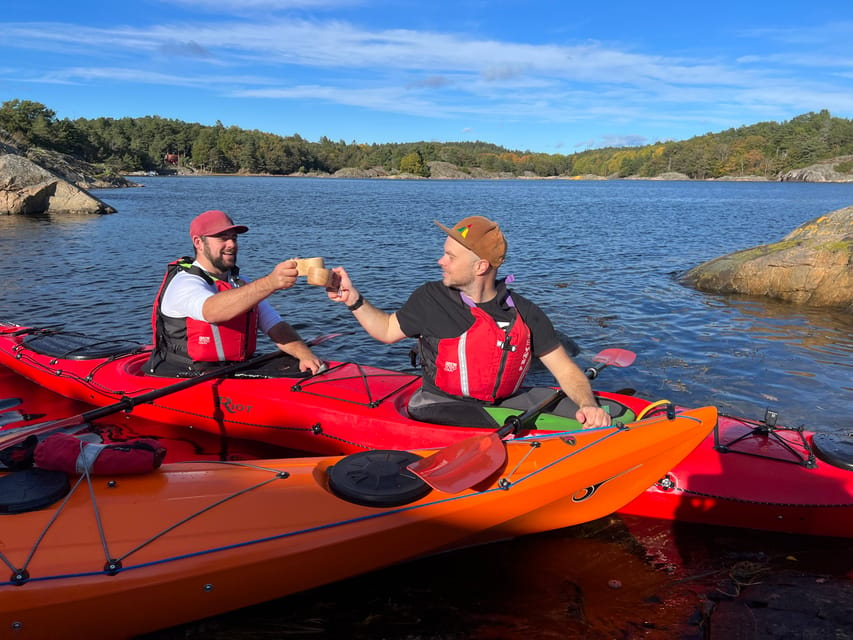
The guide does more than lead the kayaks from one island to another. The route includes local history, the old sea routes from the 1500s, and points of interest around the islands. That information gives the scenery a human frame.
The strongest evidence about the guiding is the specific praise for Pat. The guide was described as well prepared, helpful, engaging, and able to adjust the trip to the group, even during rain. Another outing was personalized according to the people present and the weather.
That matters because beginner kayaking can feel exposed at first. You want a guide who watches the conditions, explains the technique clearly, and notices when the group needs a change of pace. The supplied information does not give a fixed guide name for every departure, so Pat may not lead your particular trip. Still, the guiding approach described here is what you should look for: clear instruction, local interpretation, and sensible decisions in changing weather.
Is $125 a fair price?
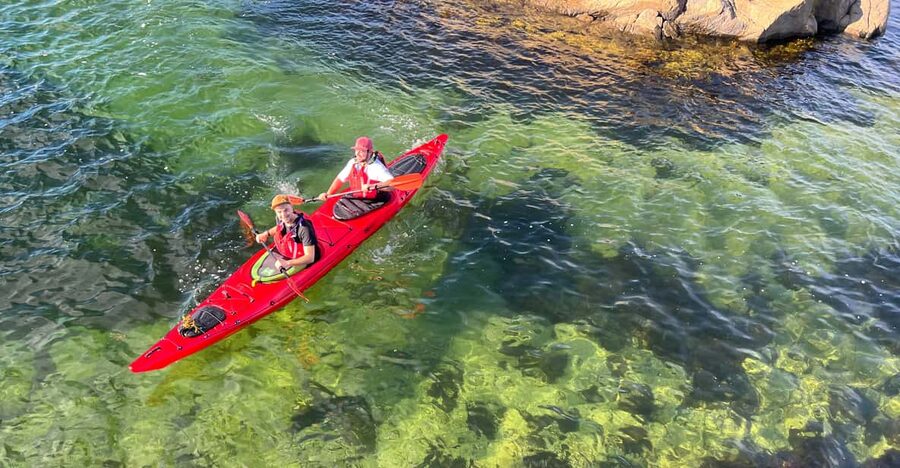
At $125 per person, this is not the cheapest way to spend three hours near Arendal. You are paying for more than kayak rental, though. The price includes the water equipment, protective clothing, paddle training, safety instruction, guiding, local history, and pictures taken by the guide.
The value is strongest if you are new to sea kayaking or do not want to arrange equipment on your own. Buying or transporting your own kayak would make little sense for a short visit. You also get access to a route linking several parts of Raet National Park, rather than simply paddling in a small area beside the launch beach.
The price is less compelling if you already have full equipment, know the waters, and mainly want independent paddling. In that case, the included instruction and guiding may be less important to you. For a visitor seeking a structured introduction to the Norwegian Skerries, however, the package is reasonably complete.
Free cancellation is available up to 24 hours before the activity for a full refund, and you can reserve now and pay later. Since weather can force a change or cancellation, that flexibility is useful. Check the available starting times because the activity lasts three hours but does not list one universal departure time.
Who should book this kayak trip?
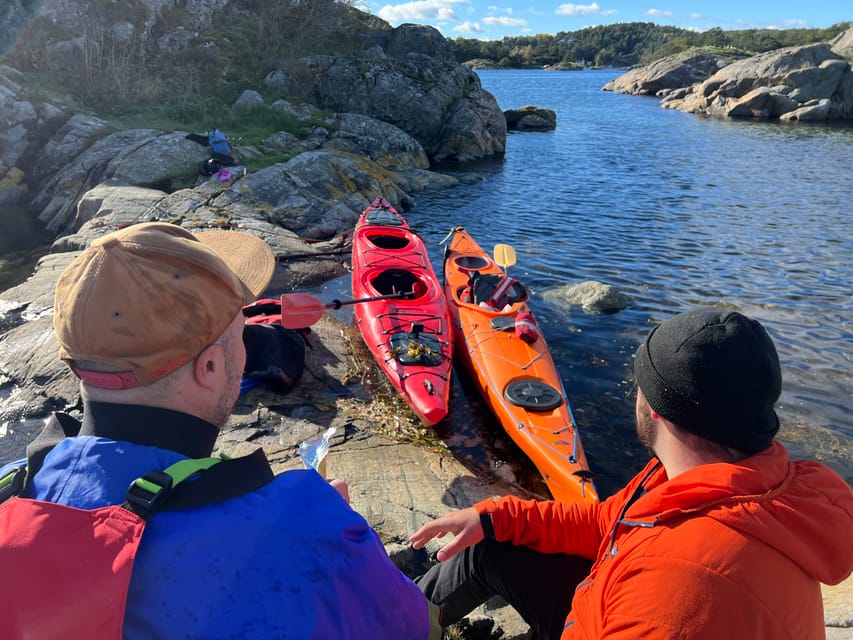
This tour suits a first-time sea kayaker who wants a guided outing rather than a rental. The instruction, protective clothing, sheltered archipelago sections, and English-language guiding make the experience approachable, provided you are comfortable swimming and have reasonable fitness.
It also suits anyone interested in the link between natural history and coastal history. You get glacially shaped islands, marine life, clear water, old sea routes, and island stories in a single route.
You should think twice if you dislike repetitive physical activity or want a fully dry excursion. Two to three hours of paddling is a serious part of the outing. Pregnant women, non-swimmers, children under 12, and people over 110 kilograms are not eligible according to the stated restrictions.
Rain should not automatically stop you from booking, but you need the right clothing. The experience can still work in wet weather, as shown by the outing led by Pat, yet the water and air will feel less forgiving if you arrive in thin clothes with no change of outfit.
Should you book the Raet sea-kayaking trip?
Book it if you want to see Raet National Park from its natural viewpoint, the water, and you like the idea of combining gentle island exploration with steady exercise. The route offers a fine mix of clear water, maritime life, glacial rock, historic sea lanes, Gjessholmen’s sandy bay, and the possibility of Merdø’s museum or lunch stop.
Skip it if you want a short, effortless cruise or if you cannot swim. The three-hour schedule is active, and the weather may lead to a changed route or cancellation. For fit beginners who bring warm clothing and accept that the sea sets the terms, this is a well-rounded way to meet the Southern Norwegian Skerries.
FAQ
Where does the Raet National Park kayaking trip start?
The tour starts at the Beach House at Hove, at Hoveveien 108 on Tromøya.
How long does the kayaking experience last?
The activity lasts three hours, including the safety briefing, paddle instruction, practice, route, and return to Hove.
Is the tour suitable for beginners?
Yes. The guide provides a safety talk, explains the route, demonstrates paddle techniques, and allows time to practice before the main trip.
Do I need previous kayaking experience?
No previous kayaking experience is required. You should still be able to swim, be in good physical health, and manage two to three hours of paddling.
Which places does the kayak route visit?
The route explores Raet National Park and passes or paddles near Gjessøya, Merdø, St. Helena, Badeholmen, Gjessholmen, Lille Brattholmen, and Torjusholmen.
Can the trip include Merdø’s museum?
The route can paddle to historic Merdø for lunch or a museum visit. The available details do not state that this stop is guaranteed on every departure.
What equipment is included?
All water equipment, protective clothing, paddle training, safety instruction, local history, and pictures taken by the guide are included.
What should I bring?
Bring comfortable or jogging shoes, warm clothing, wool underclothes, a swimsuit, a towel, and a change of clothes.
Who cannot take part?
The activity is not suitable for children under 12, pregnant women, non-swimmers, or people over 243 pounds, or 110 kilograms.
What happens if the weather is bad?
The operator may move or cancel the activity because of bad weather. You can cancel up to 24 hours in advance for a full refund, and the booking option allows you to reserve now and pay later.
Recently added around Norway
- The Vigeland Park in Oslo: Insta-Perfect Walk with a Local★ 5.0 · 3 reviews
- Mountain-climbing adventure in Mosjøen Via Ferrata★ 4.7 · 3 reviews
- Best of Trondheim: Private Walking Tour with a Local★ 4.7 · 3 reviews
- Brews and Views City Walking Tour in Tromsø with Beer Tasting★ 4.0 · 3 reviews
- Panorama Bus Tour with Audio Guide★ 4.0 · 3 reviews
- Geiranger by Royal route, 5 hours with visiting a high-mountain farm★ 5.0 · 3 reviews
- Arrival Private Transfer from Bergen Airport BGO to Bergen by luxury minivan★ 5.0 · 3 reviews
- Oslo: Best of Oslo Walking Tour and Hop-on Hop-off Bus Tour★ 3.7 · 3 reviews
Canoes & Kayaks, compared.
Winter Sea Kayaking Tour with Wildlife Sightings
Read our review →
Browse the lists this tour appears in