
Reviewed · STAVANGER TOURS
Stavanger: Prison Island Adventure Game
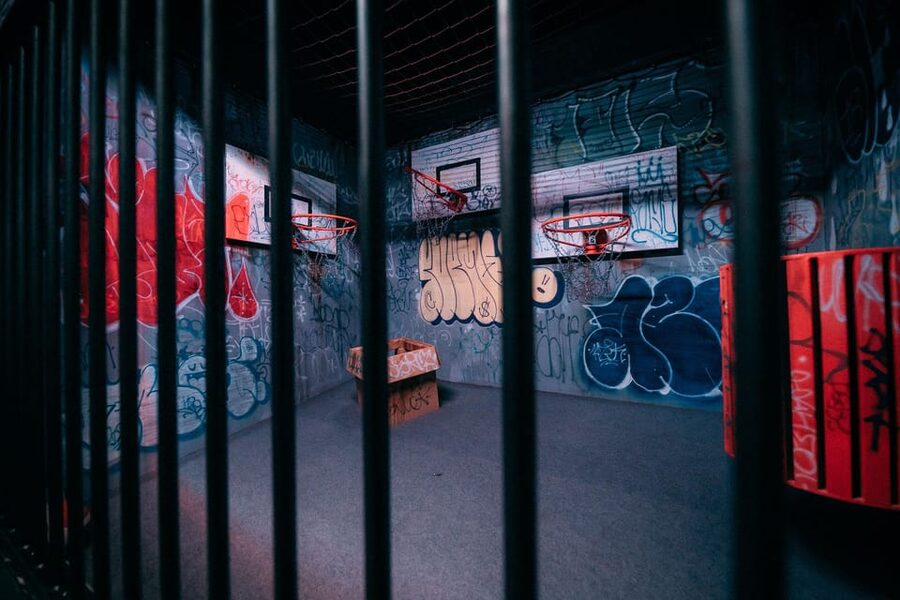
Fangene på Fortet turns a former prison idea into a fast-moving team game, with 46 challenge rooms packed with puzzles, physical tests, and odd little tasks. You move from room to room, collect points, and find out quickly who communicates well under pressure.
I like the freedom to try rooms again, and I like the wide mix of challenges. A family can split up and tackle different strengths, while a work team can see who listens when the clock is running. The main catch is that some tasks may not be immediately clear, and one player found that a few seemed not to work properly.
Key points to know before you go
- 46 rooms create plenty of choice: You can try a broad mix of puzzle and action challenges instead of committing to one escape-room theme.
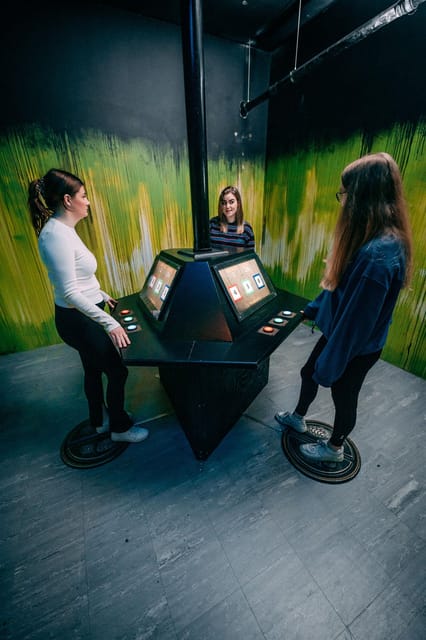
- Teams stay small: Groups are made up of 2 to 5 people, so everyone has a job to do.
- Your score matters: A team scorecard turns each room into a friendly contest and gives you a reason to improve on a second attempt.
- The booking can stretch: The advertised visit lasts 1 to 2.5 hours, and a one-hour booking may lead to a longer stay if rooms are available.
- English is used in the game: The host or greeter speaks English or Norwegian, but the actual game is played in English.
- Come ready to move: Comfortable clothing and shoes for physical activity will make the experience much easier.
Inside Fangene på Fortet Stavanger
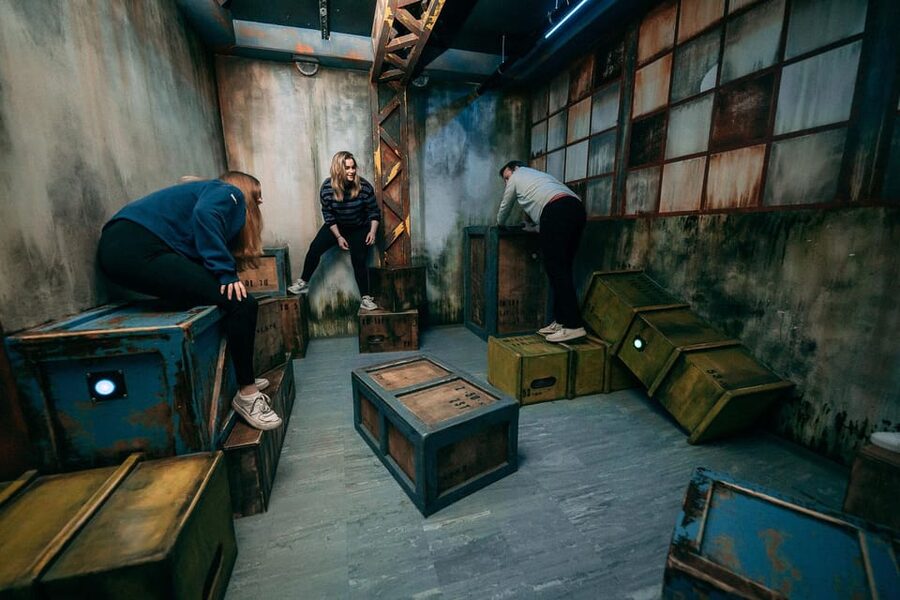
The setup borrows from escape rooms and television challenge shows, but it does not lock you into one long puzzle. Instead, your team enters a series of separate rooms, each with its own target.
One room may test logic. Another may ask you to coordinate your movements, react quickly, or complete a task before time runs out. You do not need to be an expert puzzle solver, and you do not need a single brilliant person to carry the team. Success usually depends on sharing ideas, assigning jobs, and noticing what your teammates miss.
That format is the main reason I would choose Prison Island over a standard escape room for a mixed group. A traditional escape game can leave one person watching while two strong puzzle solvers take over. Here, the range of rooms gives you more chances to find your own role.
You may be the person who spots patterns. You may have the best balance, memory, patience, or sense of timing. Since the rooms vary in difficulty, nobody has to be good at everything.
A few more Stavanger half-days to weigh up
- Stavanger: Scenic Fjord Cruise to Lysefjord and Preikestolen
★ 4.6 · 5,791 reviews - Stavanger: Fjord Cruise to Lysefjord and Pulpit Rock
★ 4.8 · 1,357 reviews - From Stavanger: RIB Tour to Lysefjord
★ 4.9 · 1,288 reviews
The welcome briefing and team setup
Meet at the Fangene på Fortet reception. You should arrive 15 minutes before your booking for the briefing, a small detail that matters because the activity works best when everyone understands the rules before the clock starts.
Teams can include 2 to 5 people. A team of two will need to share the work closely, while a full team of five can divide tasks more easily. Larger groups will need to split into several teams, which can make the scorecard useful for a friendly competition.
The game is played in English. The host or greeter can speak English or Norwegian, but the available information does not include a personal guide who accompanies your group from room to room. You should expect to follow the instructions in each challenge and manage your own team.
That setup gives you independence, but it also means you should speak up if an instruction is unclear. One piece of practical feedback points to a real issue: some tasks may not make immediate sense, and a few may seem faulty. Ask the staff for help when needed rather than losing too much time guessing.
How the challenge rooms work
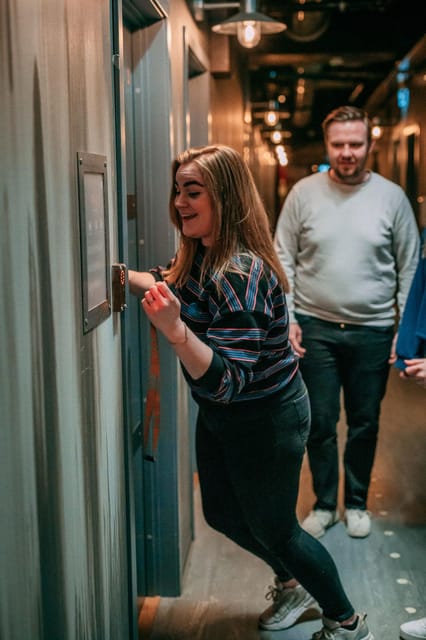
The scorecard gives the visit a clear purpose. Your team tries to complete as many rooms as possible and earn as many points as it can within the available time.
The points add a competitive edge, but you do not need to treat the activity like a serious contest. I would suggest using the first room or two to learn how your team communicates. Who reads the instructions? Who checks the obvious answer? Who rushes ahead? Who notices that the simple approach is often the right one?
Once you know your habits, divide the work. If one person is struggling with a physical task, let another teammate try. If a puzzle is going nowhere, change roles instead of repeating the same approach. The game rewards quick thinking, but it also rewards knowing when to stop and reset.
The room variety is important here. You may be excellent at one kind of challenge and poor at another. That keeps the session from feeling repetitive, and it gives you a reason to try again. You are not simply solving one puzzle and leaving. You are building a team score across many short contests.
Why the 46-room format changes the experience
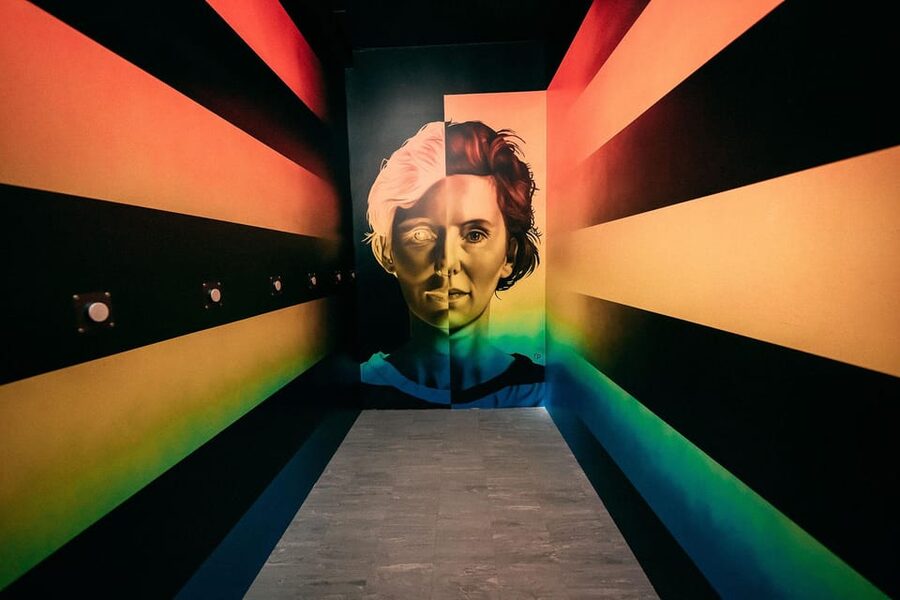
Having 46 rooms is one of the most useful facts to know before booking. It suggests that you can make different choices on different visits, rather than completing a single fixed route.
You may not reach every room during one session. That is not a problem if you think of the activity as a collection of challenges instead of a one-time story. A return visit can become a score chase, with your team trying to improve on rooms that caused trouble the first time.
The repeat-play option also helps explain why several people found the time passed quickly. You are constantly making decisions about what to try next, how to improve, and when to move on. A room that seemed impossible at first may become manageable once you understand the basic idea.
Still, more choice can bring a small drawback. If the instructions are not clear or the room does not function as expected, you may spend precious minutes trying to work out the problem. Keep the staff nearby in your mind, and do not let one confusing task sour the whole visit.
A different way to spend a day from here:
- From Stavanger: Lysefjord Sightseeing RIB Boat Tour
★ 4.9 · 821 reviews - Lysefjord RIB Safari from Stavanger
★ 5.0 · 665 reviews - Haugesund Shore Excursion: Åkrafjorden & Langfoss waterfall
★ 4.5 · 554 reviews - Guided hike to Pulpit Rock Preikestolen
★ 5.0 · 390 reviews
Physical effort, mental effort, and group chemistry

This is not a quiet sit-down puzzle activity. You should wear comfortable clothes and shoes suitable for physical activity, because the rooms include obstacles and tasks that require movement.
The information does not give a precise fitness level or list every physical demand, so you should not assume every room will feel the same. Some may call for more action, while others may rely mainly on logic or communication. That variation makes the experience easier to share across age groups and ability levels.
The activity is described as suitable for all ages and skill levels, and it is wheelchair accessible. That does not mean every individual room will suit every participant in exactly the same way, so it is sensible to ask staff about any specific access needs before starting.
For families, the game offers a useful change from sightseeing. Teenagers can take the lead without being handed a screen, and adults get a chance to join in rather than simply supervise. For school groups, the tasks put communication and cooperation into practice without making the lesson feel like a lesson.
For company groups, the activity can reveal team habits in a harmless setting. You learn who explains clearly, who listens, and who stays calm when a plan fails. Just keep the competitive spirit friendly. A scorecard should add fun, not create a workplace argument over a puzzle room.
How long should you allow?
The stated duration is 1 to 2.5 hours, with starting times depending on availability. That wide range reflects the flexible room format rather than a fixed sightseeing schedule.
If you want a short activity between other plans, one hour may be enough to sample several rooms. If you are visiting with teenagers, friends, or a work group that wants to keep playing, plan closer to the longer end when possible.
One family group paid for about 1.5 hours, while another group booked one hour and ended up staying for more than two hours. That does not guarantee an extension for every booking, so check the time offered when you reserve. Still, it shows how quickly the session can grow once your team starts chasing a better score.
I would avoid placing this immediately before an important timed reservation. Arrive early for the briefing, then leave yourself some breathing room afterward. The activity is easy to underestimate because each room is short, but several rooms add up fast.
Is $30 a fair price?
At $30 per person, the value depends on how long you play and how actively your group uses the rooms. For a quick one-hour session, it is a moderate price for an organized indoor activity. If your group stays closer to 1.5 or 2 hours and returns to improve scores, the value becomes stronger.
You are paying for access to multiple challenge rooms, not a guided tour or a single escape-room storyline. The scorecard gives the visit a lasting goal, and the large number of rooms means you have more material than you can probably use in one short session.
The best value comes for groups that enjoy competition and replay. If your family or friends like trying again after a near miss, the repeat option gives you more from the same venue. If you only want one carefully staged puzzle with a clear narrative, this may feel less focused.
Transportation is not included, and no personal guide is included. You need to make your own way to Fangene på Fortet and handle the game with your team. Those limits are easy to understand at this price, but they matter if you are looking for a fully hosted experience.
Free cancellation is available up to 24 hours before the booking for a full refund, and you can reserve now and pay later. Those policies are useful if your Stavanger schedule is still shifting.
Who will enjoy this most?
I would recommend Prison Island for friends who want an active indoor contest, families with children or teenagers, corporate teams, and school groups. It works especially well when people have different strengths and enjoy switching between physical and mental tasks.
Teenagers seem likely to appreciate the pace and the chance to compete. A family can also choose a relaxed approach, treating the rooms as a series of small games rather than worrying about the final score.
Friends should decide in advance how competitive they want to be. If everyone agrees to help one another, the scorecard adds energy. If one person insists on controlling every room, the format will be less fun for everyone else.
It is also a good option for a rainy day in Rogaland. Since the activity takes place indoors, you are not dependent on clear skies. You still need to dress for movement, but you do not need outdoor gear.
When I would choose something else
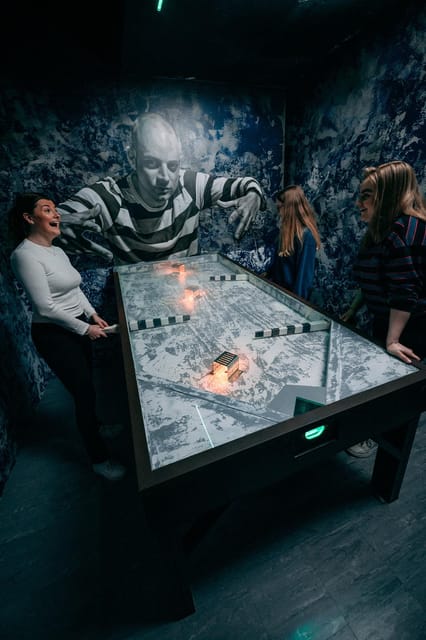
I would skip this activity if your group dislikes timed games, physical tasks, or noisy competition. It is designed around challenge and teamwork, so people who prefer a calm cultural visit may find it tiring rather than entertaining.
I would also think twice if your group has a strong language barrier. The host or greeter can speak English or Norwegian, but the game itself is in English, and understanding instructions quickly can affect your score.
Finally, do not book it expecting a polished personal tour with a guide explaining every room. The appeal is active problem solving with your own team. The less your group wants outside direction, the better this format fits.
Practical advice for a smoother session
Arrive early. The 15-minute briefing gives you time to understand the rules and start without a rushed first attempt.
Wear shoes and clothes that let you move comfortably. You do not need to dress for a formal outing, and restrictive clothing will only make physical rooms harder.
Choose teammates who communicate well, not just people who are good at puzzles. A calm listener can be as valuable as the person who finds the answer first.
Do not waste the whole session on one room. If a task is confusing, ask for help or move on when possible. You have many rooms to choose from, and the goal is to build the best overall score.
Keep track of your score and remember which rooms you want to retry. The chance to return to difficult tasks is one of the venue’s strongest features.
Should you book Stavanger Prison Island?
Book it if you want an indoor group activity with a strong mix of puzzles, movement, competition, and teamwork. The 46-room setup gives you variety, the 2 to 5 person teams keep everyone involved, and the option to retry rooms adds value beyond a single pass.
I would be most comfortable recommending it to families with active teenagers, groups of friends, and work teams that enjoy a little friendly pressure. At $30 per person, it is a sensible choice when you can use at least 1.5 hours and take advantage of the repeat-play format.
Go in knowing that not every task will be instantly clear, and that this is a self-directed game rather than a guided experience. Arrive early, speak up when instructions confuse you, and focus on working as a team. Do that, and Fangene på Fortet can provide one of Stavanger’s more playful breaks from ordinary sightseeing.
FAQ
Where does the Prison Island game take place?
The activity takes place at Fangene på Fortet Stavanger in Rogaland, Norway. Meet at the Fangene på Fortet reception.
How much does the experience cost?
The listed price is $30 per person.
How long does the activity last?
The stated duration is 1 to 2.5 hours. Available starting times depend on the date and booking availability.
How many people can join one team?
Teams can include 2 to 5 people.
What language is used during the game?
The game is played in English. The host or greeter can speak English or Norwegian.
Is a personal guide included?
No. Entry to multiple challenge rooms and a team scorecard are included, but a personal guide is not.
What should I wear?
Wear comfortable clothing and shoes suitable for physical activity.
How early should I arrive?
Arrive 15 minutes before your booking time for the briefing.
Is the activity wheelchair accessible?
Yes, the activity is listed as wheelchair accessible.
Can I cancel my booking?
You can cancel up to 24 hours in advance for a full refund. Reserve now and pay later is also available.
Recently added around Stavanger
- Kjerag Low-Season Hike + Packed Lunch★ 5.0 · 3 reviews
- Stavanger: Guided Winter Hike Pulpit Rock Preikestolen★ 5.0 · 3 reviews
- Stavanger: Guided Sunrise Hike to Pulpit Rock★ 4.2 · 5 reviews
- Guided hike to Florli 4,444 steps★ 5.0 · 5 reviews
- Discover Private+ Stavanger Guided City Tour★ 4.8 · 5 reviews
- Boat Cruise to Lysefjorden and The Pulpit Rock, Fixed tour price★ 5.0 · 6 reviews
- Discover Sensational Stavanger: Self-Guided Audio Tour★ 3.5 · 7 reviews
- Lysefjord (Stavanger): Boattrip to Preikestolen from Forsand★ 5.0 · 7 reviews
Stavanger Tours, compared.

Scenic Fjord Cruise to Lysefjord and Preikestolen
Read our review →


Haugesund Shore Excursion: Åkrafjorden & Langfoss waterfall
Read our review →

Lysefjorden & Pulpit Rock RIB-Safari from Stavanger
Read our review →Browse the lists this tour appears in