
Reviewed · TROMSØ TOURS
Skjervøy: Orca and Whale-Watching comfort heated Boat Trip
Orcas can turn an ordinary boat trip into a front-row wildlife show, and this Skjervøy outing is built around finding them in the Barents Sea. Captain Jacob and nature guide Filippo use a covered, heated boat with a broad outdoor terrace, so you can watch from outside without giving up a warm cabin when the Arctic air bites.
I like the stable boat and heated cabin, especially for photographers who need time to wait between sightings. I also like the quiet approach to wildlife: when a pod comes near, the crew can cut the engine and let the animals decide the distance. The main consideration is simple: wildlife is never guaranteed, and rough sea conditions can still affect your comfort.
Key points at a glance
- Four possible whale species: Look for orcas, humpback whales, minke whales, and fin whales in the waters around Skjervøy.
- Warm shelter between sightings: The covered boat has heating, an outdoor terrace, and a toilet, so you do not need a special flotation suit.
- Made for photography: Bring a camera and telephoto lens if you have one, then use the guide’s advice on timing and framing.
- Quiet wildlife watching: The crew switches off the engine near whales when appropriate, helping you observe without needless disturbance.
- Useful onboard tools: A hydrophone can let you hear underwater sounds, while a night-vision camera adds another way to watch marine life.
- A compact Arctic outing: The experience lasts about 3.5 hours, with hot drinks included and English or Italian guiding available.
Why this Skjervøy whale trip feels different
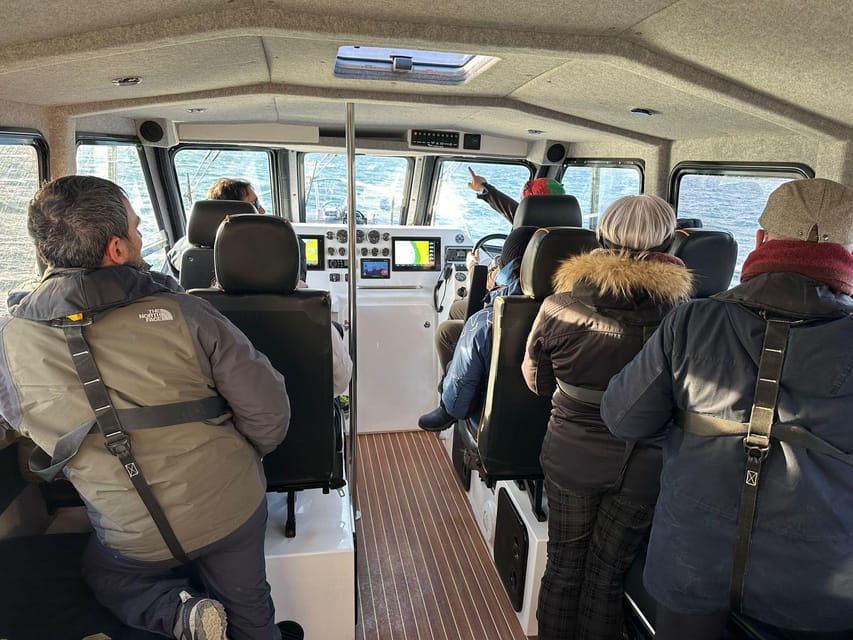
Many whale safaris ask you to choose between warmth and a good view. You may sit inside and miss a fin breaking the surface, or stand outside in cold spray for the whole trip. This boat gives you both options. The cabin is covered and heated, while the terrace offers open views when the action begins.
That matters in northern Norway. Even a calm day can feel cold once the boat is moving, and waiting for wildlife often involves stretches of quiet water. You can warm your hands, have a hot drink, and step back outside when the guide spots a pod.
The boat is designed for speed, but comfort is the more important feature for most people. Its stability is described as better than a traditional RIB, which should make the ride less jarring and give photographers a steadier platform. That does not make the sea perfectly smooth, so anyone prone to seasickness should take suitable medication in advance, usually about two hours before departure.
The experience has a clear wildlife focus. You are not simply taking a scenic cruise and hoping something appears. The captain and guide search for orcas, humpback whales, minke whales, and fin whales, while explaining animal behavior and the marine environment around Skjervøy.
More Boat Trips in Tromso
- Tromsø: Whale Watching Tour by Hybrid-Electric Boat
★ 4.5 · 4,217 reviews - Tromsø’s Top-Rated Fjord & Fishing Cruise – All-Inclusive
★ 4.7 · 4,017 reviews - Tromsø: Arctic Fjord Cruise With Stop On Land At Fish Racks
★ 4.5 · 2,268 reviews
Meeting the boat at the Skua Nature flag
The meeting point is marked by a Skua Nature banner or flag at the stated starting location. The activity returns to this same meeting point, which keeps the outing simple and avoids a separate pickup or drop-off arrangement.
The route begins from the Skjervøy area and heads out toward the whale-watching grounds. The exact direction and animal locations will depend on conditions and sightings that day. This is one reason a wildlife safari cannot follow a rigid sightseeing schedule.
The published duration is about 3.5 hours. One route description also refers to around four hours of whale watching, so I would allow a little flexibility rather than planning a tight connection immediately afterward. Check the available start times when booking, since the departure schedule can vary.
Before leaving, you receive a short safety briefing and orientation. Listen closely, even if you have taken boat trips before. Arctic water is cold, the boat may move quickly between sightings, and the guide’s instructions matter most when everyone moves to the outdoor terrace or the animals approach the boat.
Children under six and pregnant women are not permitted on this activity. That restriction should be part of your planning before you pay.
The boat: warmth, space, and better viewing
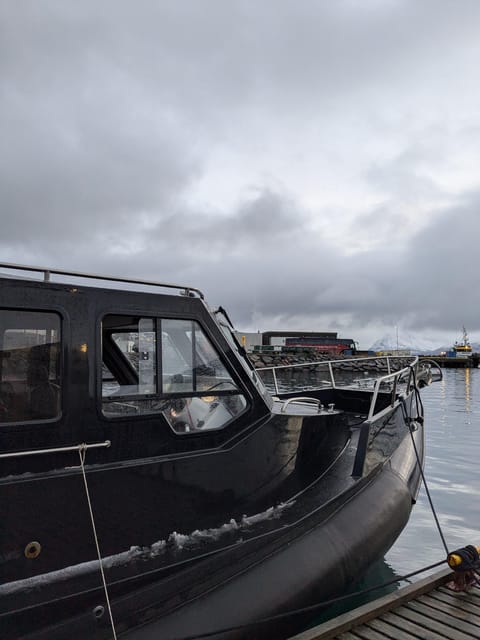
The covered and heated boat is the strongest practical feature here. You can spend much of the trip outside when conditions allow, then return indoors without needing to wear a bulky special suit. Warm clothing is still sensible, but the boat reduces the need to dress as if you were heading onto a glacier.
The outdoor terrace is especially useful for photographers. It gives you a more open view than a row of cabin windows, and it lets you follow a whale as it surfaces and moves away. You will want to keep your camera ready, because whale sightings can be brief and unpredictable.
The boat also has an onboard toilet. That sounds like a small detail until you are several hours into a cold-water safari with no shore stop available. It adds comfort and makes the half-day format easier for families with older children, couples, and anyone who prefers not to rough it.
A heated cabin does not mean you should wear light clothing. Bring layers, waterproof outerwear, gloves, and a hat if you plan to spend time on the terrace. The supplied information says special suits are not needed, but it does not say that normal cold-weather clothing is unnecessary.
Searching for orcas and humpback whales
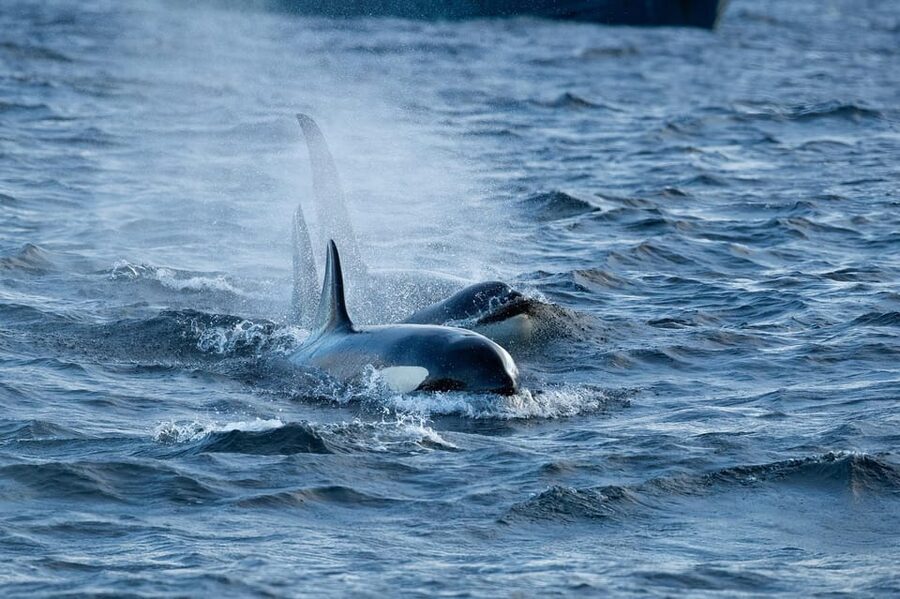
The central part of the outing is a moving search across the waters near Skjervøy. The guide watches for blows, dorsal fins, splashes, and changes in the water, while the captain positions the boat safely for a view.
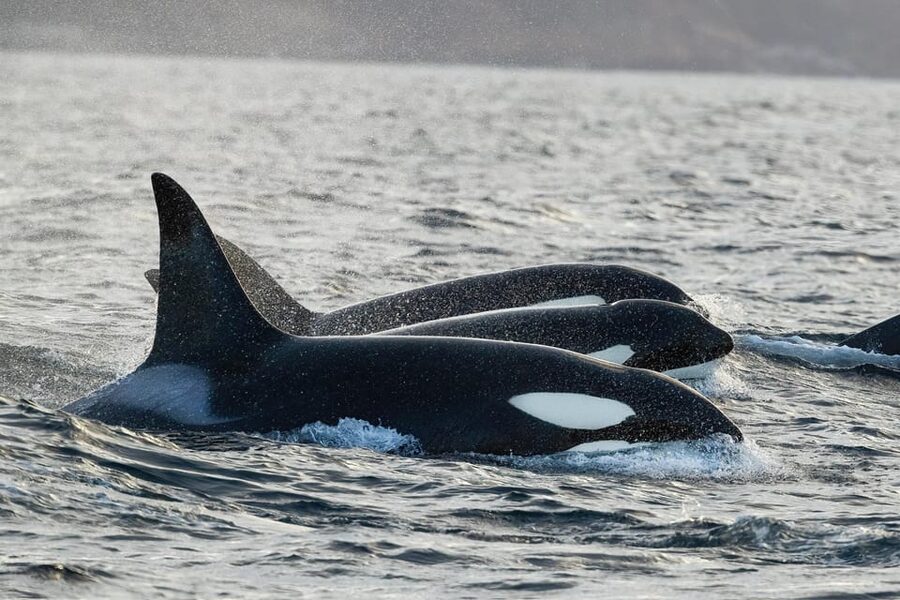
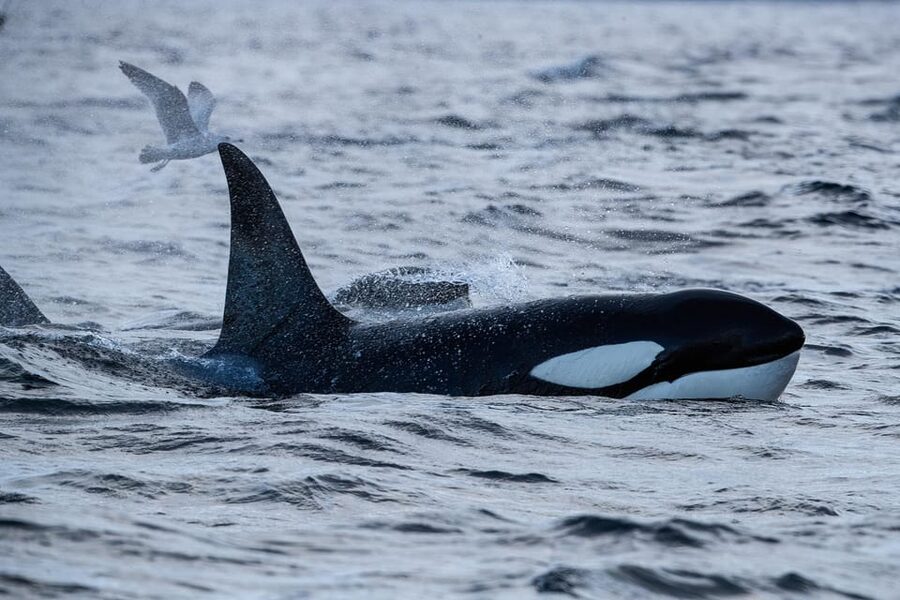
Orcas are the headline sighting. A pod may travel in a tight group, spread out, or surface in a loose line. You might see only a few fins at first, then realize that several animals are moving together. The experience is much better when you resist the urge to expect a perfect breach. A dorsal fin, a synchronized rise, or the sudden appearance of a pod can be a fine sight in its own right.
Humpback whales add a different rhythm. They are larger, slower-moving animals, and you might spot a blow before seeing the whale itself. Minke and fin whales are also possible, though no species is promised on a particular departure.
The guides explain behavior and habitat as you go. That information helps you understand what you are seeing instead of treating each appearance as a random splash. You will also receive practical photography advice, including tips intended to help you react quickly when an animal surfaces.
A strong example of the crew’s approach is their use of the engine near whales. When conditions allow, they switch it off and wait. That gives you a quieter viewing moment and allows the animals to come closer on their own terms. On one highly successful outing, several pods approached after the engine was stopped, with each pod containing roughly 10 to 15 orcas. That kind of sighting is possible, not promised, but the respectful method is valuable even on a quieter day.
The crew also avoids staying too long with one pod. That keeps the encounter from becoming intrusive and allows the boat to continue searching for other wildlife.
More Whale Watching in Tromso
- Tromsø Whale Safari with MS Gabriele
★ 4.3 · 1,937 reviews - From Tromsø: All-Inclusive Whale & Orca Safari
★ 4.5 · 1,221 reviews - Silent Whale Watching by Hybrid-Electric Boat from Tromsø
★ 4.5 · 1,017 reviews - Tromsø Whale Safari with MS Keiser Wilhelm
★ 4.3 · 161 reviews
Photography from the open terrace
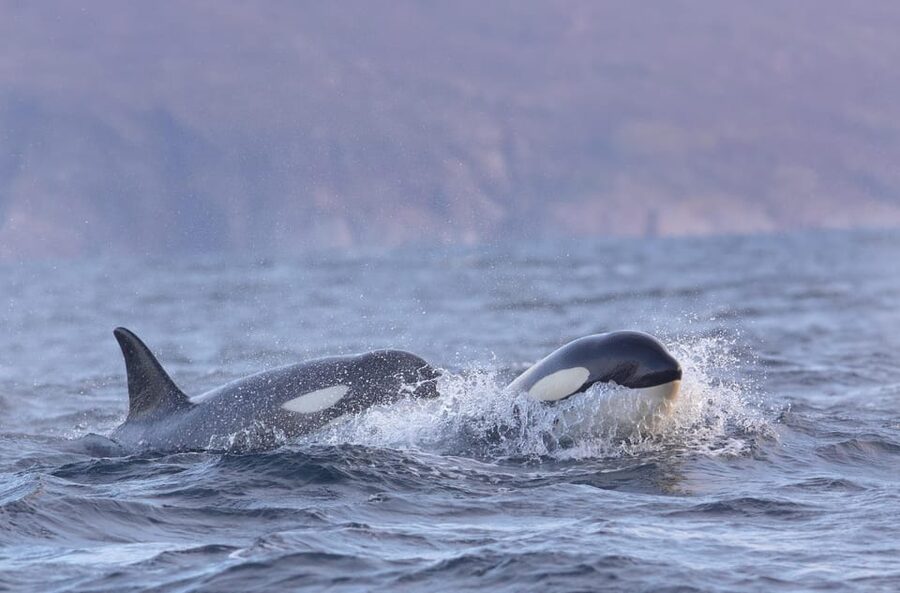
This trip is aimed more directly at photography than a standard sightseeing cruise. You are encouraged to bring a camera and telephoto lens if you have one. A long lens helps you fill the frame without asking the boat to move too close to the animals.
The terrace gives you unobstructed views, but photography on water still calls for realistic expectations. The boat moves, whales surface without warning, and Arctic light can change quickly. Use a fast shutter speed if your camera allows it, keep your focus set for moving subjects, and take more frames than you think you need.
The guide’s tips may be most useful for beginners. You will learn where to stand, when to watch rather than stare at the camera, and how to prepare before the whale surfaces. Keep one eye on the sea. The best photograph is often the one you are ready to take, not the one you try to arrange.
You do not need expensive equipment to enjoy the trip. A phone can record the atmosphere and close views if the animals approach, while a telephoto lens gives you a better chance of capturing distant fins and blows. Protect your equipment from spray and cold, and bring spare batteries if you have them. Those are practical precautions rather than requirements from the operator.
The boat’s night-vision camera and hydrophone add interest beyond standard photographs. The night-vision system helps the crew observe in low light, while the hydrophone can transmit underwater sounds, including the haunting calls of orcas and other marine life. These tools make the outing more than a surface-level search.
What the guides add to the day
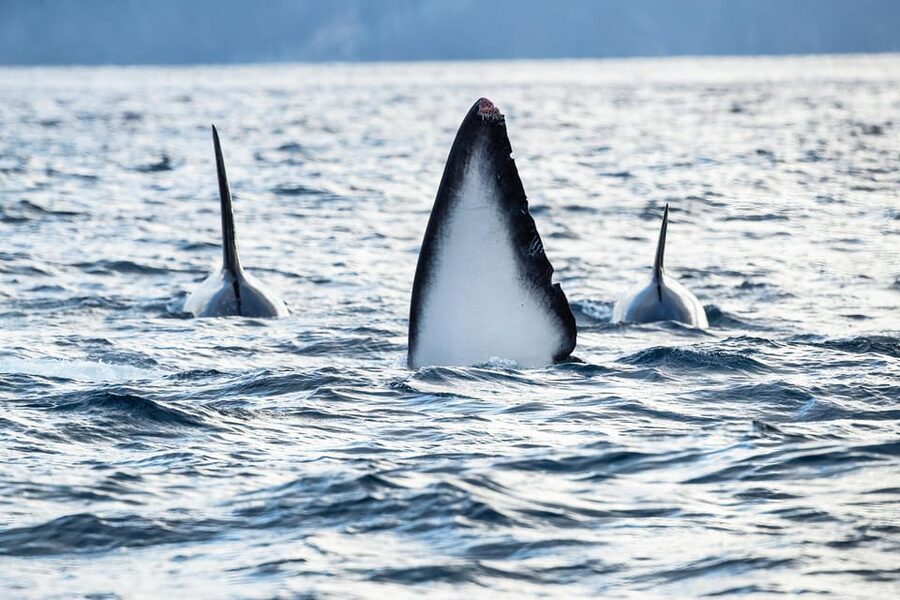
Captain Jacob handles the boat, while Filippo serves as the environmental guide. Their roles work together: one focuses on safe, efficient movement, and the other helps you read the water and understand the animals.
Filippo’s photography guidance is useful if you want more than a quick snapshot. He can help you prepare for a sighting and make sense of animal behavior. Jacob’s experience as a Svalbard captain adds a strong Arctic boating background to the trip.
The human side of the experience matters because whale watching involves waiting. A silent stretch of sea can feel long if nobody explains what the crew is looking for. Good guiding turns that pause into part of the experience, with information about habitat, movement, and the reasons for changing course.
The available languages are English and Italian. If you need a particular language, confirm that the chosen departure suits you when checking availability.
The value of $301 per person
At $301 per person, this is not a casual budget boat ride. The price makes more sense if you value a smaller-feeling, comfort-focused vessel, expert guiding, photography help, and a serious search for wildlife.
You are paying for more than transport across the water. The fare includes the boat cruise, captain, environmental guide, heated covered cabin, terrace, toilet, safety orientation, photography tips, hot drinks, and the chance to look for four whale types. Those inclusions reduce the need to bring special gear or pay for extras onboard.
The heated boat is especially important when comparing this outing with a cheaper RIB safari. A RIB can offer speed and a low position close to the water, but it usually leaves you more exposed to wind, spray, and cold. This boat may suit you better if comfort and time outdoors matter equally.
The price is harder to justify if you mainly want a guaranteed whale sighting. No operator can promise that, and the sea may not cooperate. You should book this as a well-equipped search in a wild setting, not as a guaranteed wildlife performance.
Free cancellation up to 24 hours before departure and the option to reserve now and pay later add useful flexibility. They do not remove the need to check the weather, your schedule, and the age restrictions before committing.
Weather, seasickness, and what to bring
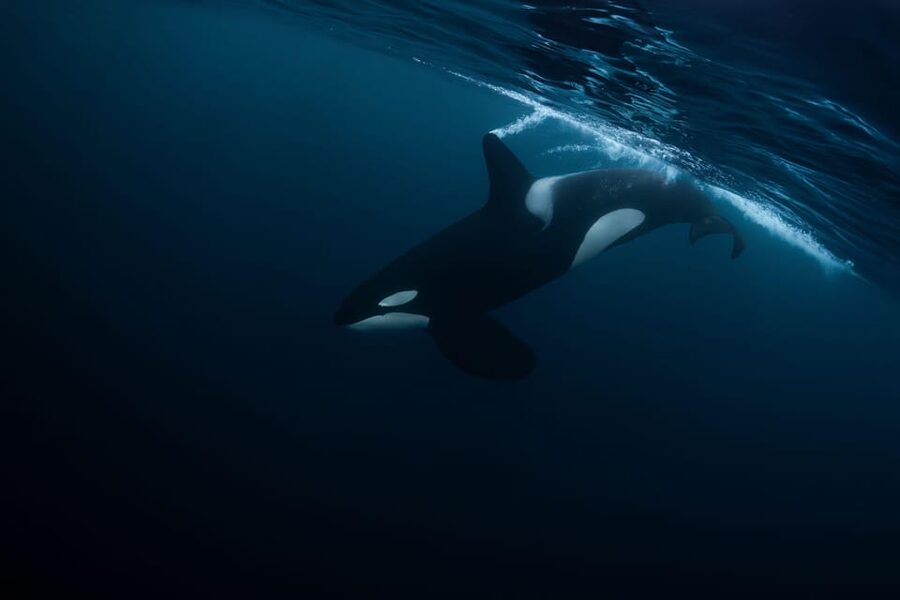
Weather can change quickly in Arctic waters. One departure described in the supplied material began under a poor forecast, then cleared enough for the group to find an orca pod and later a humpback. That is a good reminder not to judge the entire day by the forecast alone, while still taking bad conditions seriously.
If you are prone to seasickness, take appropriate medication ahead of time, generally about two hours before the trip. The stable boat should be more comfortable than a traditional RIB, but stability is not the same as a flat sea.
Bring:
- A camera and telephoto lens if available
- Warm layers, gloves, and a hat
- Waterproof outerwear for terrace viewing
- Any seasickness medication you normally use
- A charged phone or camera battery
Hot drinks are included. No other extras are listed, so do not assume that food, specialty equipment, or personal clothing is provided.
Who should book this whale safari?
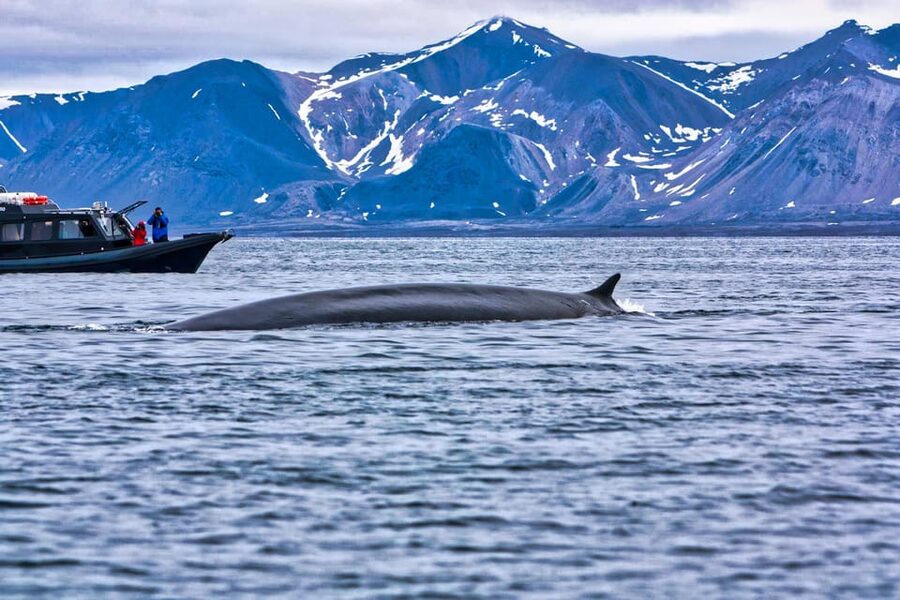
I would recommend this trip to photographers, wildlife fans, couples, and anyone who wants a more comfortable alternative to an exposed inflatable boat. The terrace gives you a serious viewing position, while the cabin means you can warm up without ending the outing.
It also suits people who care about responsible wildlife watching. Cutting the engine near whales and moving on rather than lingering with one pod show a sensible approach to animal encounters.
This may not be right for you if you need guaranteed sightings, dislike open water, or have very limited time before another fixed booking. Children under six cannot join, pregnant women cannot join, and people with strong seasickness should plan carefully.
The 3.5-hour length works well as a half-day activity. You get enough time to search properly, but the trip does not take an entire day away from Skjervøy or the surrounding region.
Should you book the Skjervøy orca trip?
Book it if you want a serious wildlife search with warm indoor shelter and open-air photography space. The combination is hard to beat for comfort, especially in Arctic weather, and the crew’s quiet approach gives the animals room to choose the encounter.
I would hesitate only if $301 is beyond your budget or if a sighting is essential to your plans. Orcas and whales are wild, and the boat cannot control the sea. For everyone else, the heated cabin, terrace, hydrophone, expert crew, and chance to see several whale species make this a strong choice for a focused Skjervøy safari.
FAQ
How long does the Skjervøy whale-watching trip last?
The activity lasts about 3.5 hours. The route information also describes around four hours of whale watching, so allow some flexibility around the stated duration.
Where does the tour start and finish?
You meet at the Skua Nature banner or flag at the stated starting point. The boat returns to the same meeting point at the end.
Which whales might I see?
The possible sightings include orcas, humpback whales, minke whales, and fin whales. Wildlife sightings are not guaranteed.
Is the boat heated?
Yes. The boat is covered and heated, with a cabin where you can warm up between sightings.
Do I need to wear a special suit?
No special suit is required for the covered boat. You should still bring suitable warm and waterproof clothing for time on the outdoor terrace.
Are photography tips included?
Yes. The guide provides photography tips and insights to help you capture wildlife. Bring a camera and telephoto lens if you have one.
What languages are available?
The live guides speak English and Italian.
Is the trip suitable for young children?
No. The activity is not suitable for children under six years old.
What happens if I get seasick?
If you are prone to seasickness, the operator strongly recommends taking suitable medication in advance, usually about two hours before departure.
Recently added around Tromsø
- Brews and Views City Walking Tour in Tromsø with Beer Tasting★ 4.0 · 3 reviews
- 3 Hours Private Walking Food Tour in Norway★ 4.0 · 3 reviews
- Lyngenalps: Northern Lights Snowmobile Safari★ 4.4 · 3 reviews
- Tromsø: Aurora Quest Minibus Adventure★ 3.4 · 3 reviews
- Tromsø: Adult Only Aurora hunt with Citizen Science★ 4.3 · 3 reviews
- From Tromsø: Private Northern Lights Experience★ 5.0 · 3 reviews
- Tromsø: City Walk & Polar Museum (Private or Shared)★ 3.7 · 3 reviews
- Tromsø: Northern Lights Hunt. Local Guide and Basecamp.★ 4.6 · 3 reviews
Tromsø Tours, compared.
Reindeer Sledding & Feeding with a Sami Guide
Read our review →
Fjords and Sommarøy Islands Tour with Salmon Picnic
Read our review →
Reindeer Camp and Sami Cultural Tour with Lunch
Read our review →
Reindeer Sled, Dinner, and Chance of Northern Lights
Read our review →Browse the lists this tour appears in