Reviewed · ALTA TOURS
Alta: Reindeer – A carrier of Sámi Culture
The best part of this Alta outing is simple: you get close enough to hand-feed reindeer while a Sámi guide explains why these animals matter so much to Sámi life. This is not just a quick animal photo stop. The hour links the animals to an indigenous culture, a working tradition, and daily life in northern Norway.
I like the mix of hands-on time and thoughtful storytelling. I also like that guides such as Mi, Mia, Jack, and Ann-Kristine share personal knowledge rather than giving you a dry nature talk. The main consideration is the short one-hour format. It works well as a focused introduction, but anyone wanting a long cultural program or a broad outdoor excursion will find it limited.
Key points to know before booking
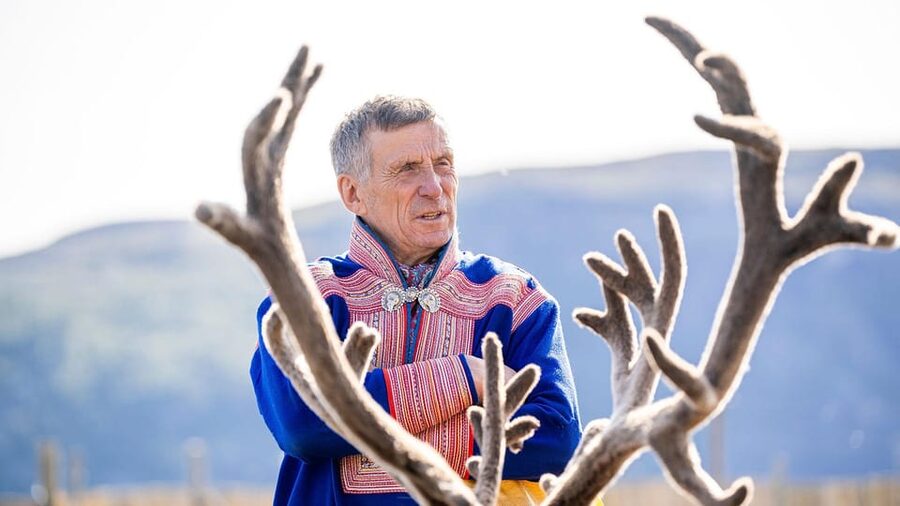
- Hand-feeding is the star: You can feed, pet, and photograph the reindeer at close range.
- The cultural talk adds meaning: Guides explain Sámi traditions, history, daily life, and reindeer husbandry.
- A lavvu tent may be part of the visit: Time in the traditional tent provides a calmer setting for questions and stories.
- The animals remain at Sami Siida year-round: Some arrive in autumn, while others are born there in spring.
- The tour is short and practical: Plan for one hour, with English and Norwegian guiding.
- Public transport can work: A bus stop is reported to be right in front of the Sami Siida restaurant, but service is not frequent.
Meeting reindeer at Sami Siida
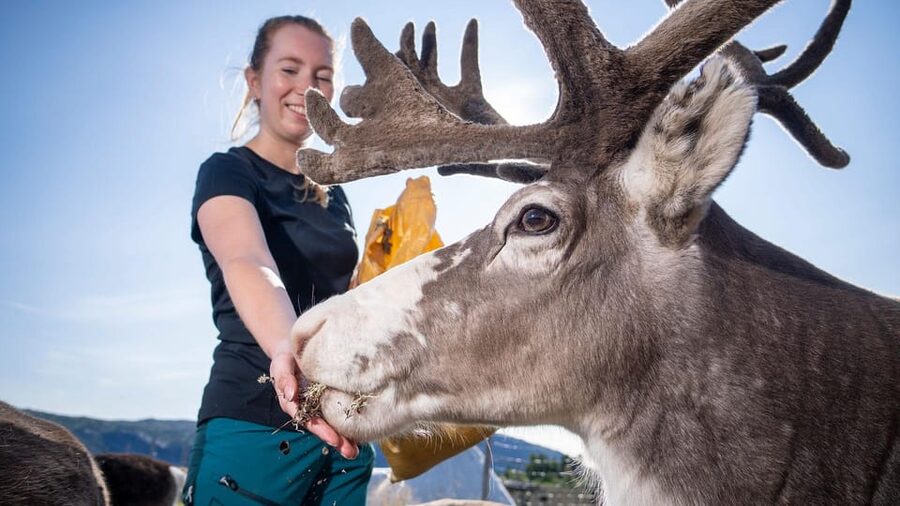
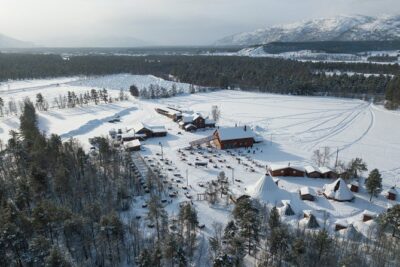
At the main entrance, you begin with the people and place behind the activity. Sami Siida is both the meeting point and the setting for learning about reindeer, the animals that have supported Sámi communities for generations.
The reindeer are kept at the site throughout the year. Some arrive in autumn, and some are born there in spring. That detail matters because it helps you see the herd as part of an ongoing way of life, not as a temporary display arranged only for tourists.
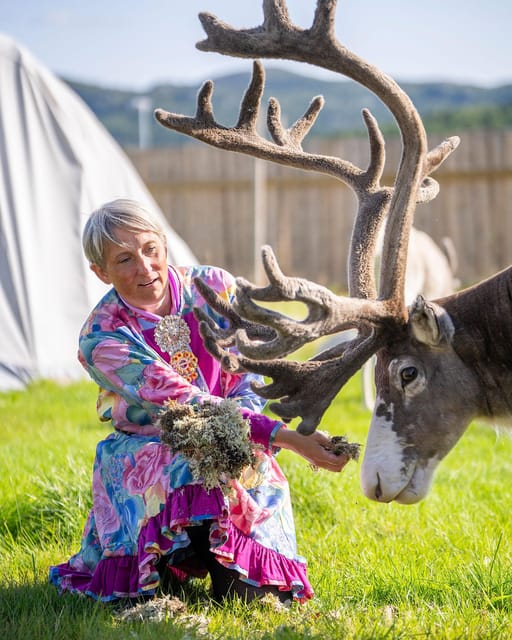
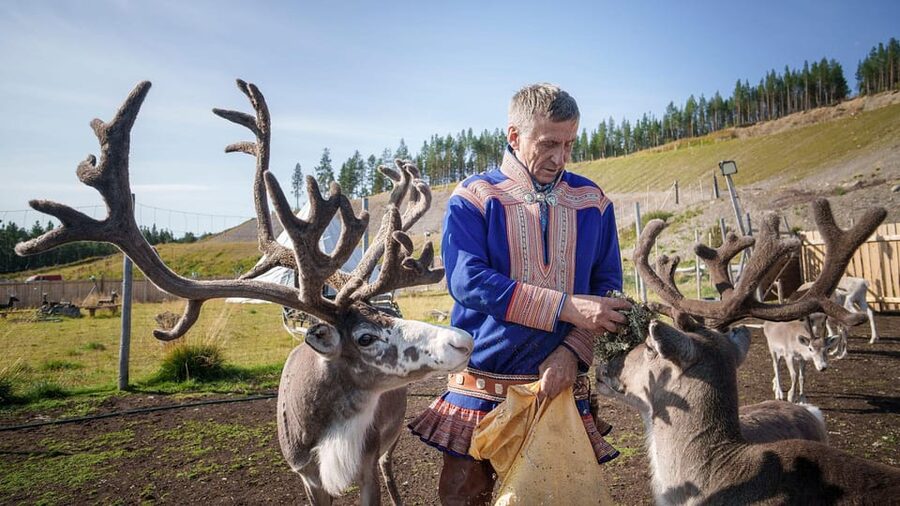
You will usually be taken toward the enclosure, where the reindeer are ready for feeding. Guides explain how to approach them and how to offer the food. The animals are accustomed to people, and the close contact is the part that makes this outing especially appealing to families, photographers, and anyone who has never seen reindeer at arm’s length.
The animals may come right up to you for food. You can pet them when appropriate, watch their behavior, and take photographs. Several guides also make a point of helping with pictures, which is useful if you are traveling alone or want a photo of the whole family with the herd.
Keep your expectations sensible. This is an opportunity to meet and feed reindeer, not a wildlife safari. The animals are cared for at Sami Siida, and the setting gives you a controlled, close encounter rather than a search for wild animals across open country.
More Reindeer and Sami Experiences in Alta:
- Alta: Sami Cultural Experience with Lavvu and Reindeers
★ 4.8 · 27 reviews - Tromsø: Reindeer Sledding & Feeding with a Sami Guide
★ 4.8 · 6,417 reviews - Tromsø: Reindeer Camp and Sami Cultural Tour with Lunch
★ 4.7 · 3,326 reviews
Feeding time is more than a photo stop
Feeding the reindeer is easy to understand, but it is not a throwaway activity. When one animal reaches for food from your hand, you notice its antlers, rough coat, steady movements, and surprising gentleness. That direct contact gives the later cultural talk a real point of reference.
The guides explain what reindeer mean to Sámi communities and how reindeer husbandry works in Norway. Their role is not limited to naming the animals or telling you amusing facts. They connect the herd to food, clothing, work, family life, and cultural identity.
I particularly like that the guides emphasize care for the animals. The reindeer are described as a top priority among the Sámi, and the visit gives you a clearer sense of the responsibility involved in looking after a herd through the seasons.
The food itself is described as moss and nutritious pellets. You should follow the guide’s instructions rather than bring anything of your own. Smoking is not allowed, and comfortable shoes are sensible around the enclosure.
For photographs, warm clothing matters more than dressing for style. Even if you visit during a bright day, you are spending time outdoors in northern Norway. Bring a camera, but do not let it turn the feeding into a rushed photo session. The most rewarding part is watching how the animals respond.
Inside the lavvu, Sámi stories take shape
After the animal encounter, the visit may move into a lavvu tent, a traditional Sámi shelter. This change of setting is important. The enclosure gives you movement and excitement, while the tent provides a quiet place to sit, listen, and ask questions.
The tent contains artifacts connected with Sámi life. You might find that the objects make more sense after you have met the reindeer. A guide can explain how traditional practices relate to the animals and to survival in northern Norway.
The cultural portion varies in feel depending on your guide. Mi is repeatedly described as warm, funny, and generous with her time. Mia has been praised for explaining Sámi life and her own experience in reindeer work. Jack has guided visitors through both the animals and Sámi culture, while Ann-Kristine has been noted for her welcoming approach.
Those personal details are valuable because Sámi culture is not a museum exhibit frozen in the past. The guides discuss traditions and present-day life, including the difficult periods Sámi people have faced. You are given room to ask questions rather than being pushed through a fixed speech.
One useful warning: you may spend a fair amount of the hour standing, especially around the animals. Some people with limited mobility would appreciate more seating during the talk. Sami Siida is listed as wheelchair accessible, but if you need a chair for the cultural presentation, it is sensible to ask ahead or tell the guide when you arrive.
What you learn about reindeer husbandry
The tour gives you an introduction rather than a full course, but it covers the basic idea clearly. Reindeer husbandry is a working practice tied to the Sámi way of life. The animals are not simply admired for their appearance. They are part of a system that has helped Sámi communities live in northern Norway for generations.
Your guide can explain the bond between the herd and the people caring for it. You also learn that the animals at Sami Siida are present through the year, with seasonal changes in the herd. Spring births and autumn arrivals give the site a sense of continuity.
The strongest guides bring personal experience to the subject. One guide described by visitors is himself a reindeer herder, and others speak about their own traditions and work. That first-hand connection helps turn broad statements about Sámi culture into something more specific and human.
I would encourage you to ask questions. The guides have been praised for taking time with questions, and some sessions run longer when the conversation is flowing. That can be a bonus if your schedule is open. If you have a bus, meal, cruise departure, or another activity to catch, keep an eye on the clock.
You will leave with a better understanding of why reindeer are central to Sámi identity and survival. You will not cover every part of Sámi history in one hour, and the tour should not be sold as a complete cultural education. Its value is that it gives you a grounded starting point.
A few more Alta half-days to weigh up
- From Alta: Whale and Seabird Cruise
★ 4.6 · 136 reviews - Alta: Small-Group Guided Northern Lights Tour
★ 4.6 · 112 reviews - Northern Lights tour with Alta Adventure
★ 4.5 · 110 reviews - Alta: Altafjord Whale Watching in a Heated Boat
★ 5.0 · 80 reviews
How the one-hour schedule works
The advertised duration is one hour, but the order can vary. A typical visit includes:
- Arrival at the main entrance
- A walk to the reindeer enclosure
- Feeding, petting, and photographing the animals
- Time in a lavvu tent or another Sami Siida setting
- A talk about Sámi culture and reindeer husbandry
- Questions for the guide
- Sometimes a hot drink afterward
Some groups begin with the animals and then sit in the tent. Others may spend time learning first. The activity is small enough in scope that the guide can respond to the group, which is one reason the personal contact works well.
The one-hour length is a good fit for a port day or a busy Alta schedule. You get a memorable animal encounter without giving up half a day. On the other hand, the short format means you should not expect a long walk, a large museum visit, or a detailed study of Sámi crafts and history.
The visit can also run beyond the stated hour if the guide continues answering questions. That sounds appealing, and it is, but it can create a problem if you have tight transport plans. Build in extra time if you need to reach a bus, restaurant, airport, or cruise ship.
Getting there from Alta
The meeting point is the main entrance. The Sami Siida restaurant is a useful landmark, and a bus stop is reported to be directly in front of it. Public transport can be a practical choice, but bus service is not frequent, so check the return journey before setting out.
Taxis are another option, especially from a cruise ship or the Alta visitor centre. The transfer is described as easy, but taxis in Norway can be expensive. If you are watching your budget, compare the taxi fare with the bus timetable before booking the tour.
The transport issue is the main practical weakness of an otherwise short activity. The tour itself lasts only an hour, but the full outing takes longer once you add the journey in both directions. Cruise passengers should allow plenty of margin for rough weather or delays, since the ability to reach the site can depend on disembarking.
If you are arriving early, the hosts may be able to welcome you before your scheduled time, but do not rely on that when planning a tight day. Arrive at the main entrance and make yourself known to the staff.
Is $73 a fair price?
At $73 per person, this is not the cheapest way to spend an hour in Alta. You are paying for more than a look at reindeer, though. The price includes a guided visit, the chance to feed and photograph the animals, and an introduction to Sámi culture and reindeer husbandry.
I consider the cost reasonable if the cultural explanation matters to you. A short animal encounter alone would feel expensive at this price. The guides are the reason the outing earns its value. When a guide shares personal experience, answers questions, and explains the meaning behind the herd, the activity becomes a useful cultural visit as well as a photo opportunity.
The value is also better for people who want a compact program. You do not need to commit a whole morning or afternoon. If you are in Alta for a short stay, this gives you a direct connection to the region and its indigenous culture in a manageable block of time.
It is less suitable if your priority is getting the lowest possible price, spending hours outdoors, or seeing reindeer in a remote setting. You are paying for access, care, instruction, and a close encounter at Sami Siida.
Free cancellation up to 24 hours before the start and the option to reserve now and pay later make the booking less risky. Still, check your transport before finalizing the day.
Clothing, mobility, and who should book
Wear warm clothing and comfortable shoes. The activity includes time outside with the reindeer, and you will get more from it if you are not distracted by cold feet or a thin jacket.
Bring a camera, but keep your hands free enough to feed the animals safely. Smoking is not allowed. People with animal allergies should not book, and the activity is not suitable for children under two.
The tour suits:
- Families with older children
- First-time visitors to Alta
- Cruise passengers with a reliable transport plan
- Couples looking for a short shared activity
- Anyone curious about Sámi culture
- Photographers who want close animal portraits
It is also a good opening activity for a stay in Alta. Learning about Sámi culture early can help you understand other northern Norwegian experiences with more context.
The activity is listed as wheelchair accessible, but ask about seating if standing is difficult. The enclosure and cultural talk may involve different surfaces and positions, so clear communication with the provider is worthwhile.
My verdict on the Sami Siida experience
I would book this if you want a short, personal introduction to Sámi culture with a genuine hands-on highlight. The reindeer are charming, but the guides make the visit worthwhile. Mi, Mia, Jack, and Ann-Kristine are among the guides associated with especially warm, personal explanations, and the strongest sessions leave plenty of time for questions.
Book it with realistic expectations. You will spend about an hour at Sami Siida, not a full day among herding communities. Transport needs planning, buses may be infrequent, and the $73 price is easier to justify when you value the cultural conversation as much as the animal encounter.
For most first-time visitors to Alta, the combination is hard to beat: feed a reindeer, hear how the animals fit into Sámi life, warm up with a drink if offered, and leave with more than a handful of photographs.
FAQ
Where does the reindeer experience meet?
The meeting point is at the main entrance of Sami Siida.
How long does the tour last?
The advertised duration is one hour. Some visits may run longer if the guide continues answering questions.
What languages are available?
The tour is offered in English and Norwegian.
Can I feed and pet the reindeer?
Yes. You have the opportunity to feed the reindeer by hand and, when appropriate, pet them and spend time close to them.
Can I take photographs?
Yes. Photographing the reindeer is part of the activity, and you should bring a camera.
Is the activity suitable for young children?
It is not suitable for children under two. The activity can suit older children, particularly those interested in animals and Sámi culture.
Is the tour wheelchair accessible?
The activity is listed as wheelchair accessible. If you need a chair during the cultural talk, ask the provider in advance because some visitors have found that standing for long periods can be difficult.
What should I wear?
Wear warm clothing and comfortable shoes. You should also bring a camera. Smoking is not allowed.
Can I cancel the booking?
You can cancel up to 24 hours in advance for a full refund. A reserve-now, pay-later option is also available.
Recently added around Alta
- Alta to North Cape Day Tour★ 5.0 · 3 reviews
- Northern Lights Hunt★ 4.0 · 4 reviews
- From Alta: Experience Seiland National Park★ 4.3 · 4 reviews
- Private Aurora Hunting with Professional Photographer from Alta★ 5.0 · 5 reviews
- Winter North Cape Tour From Alta★ 5.0 · 5 reviews
- Alta Fjord Whale Watching on a Heated Boat★ 5.0 · 6 reviews
- Historical Snowmobile Tour Across Finnmarksvidda★ 5.0 · 7 reviews
- Alta: Igloo Ice Hotel and Hiking to the Frozen Waterfall.★ 5.0 · 8 reviews